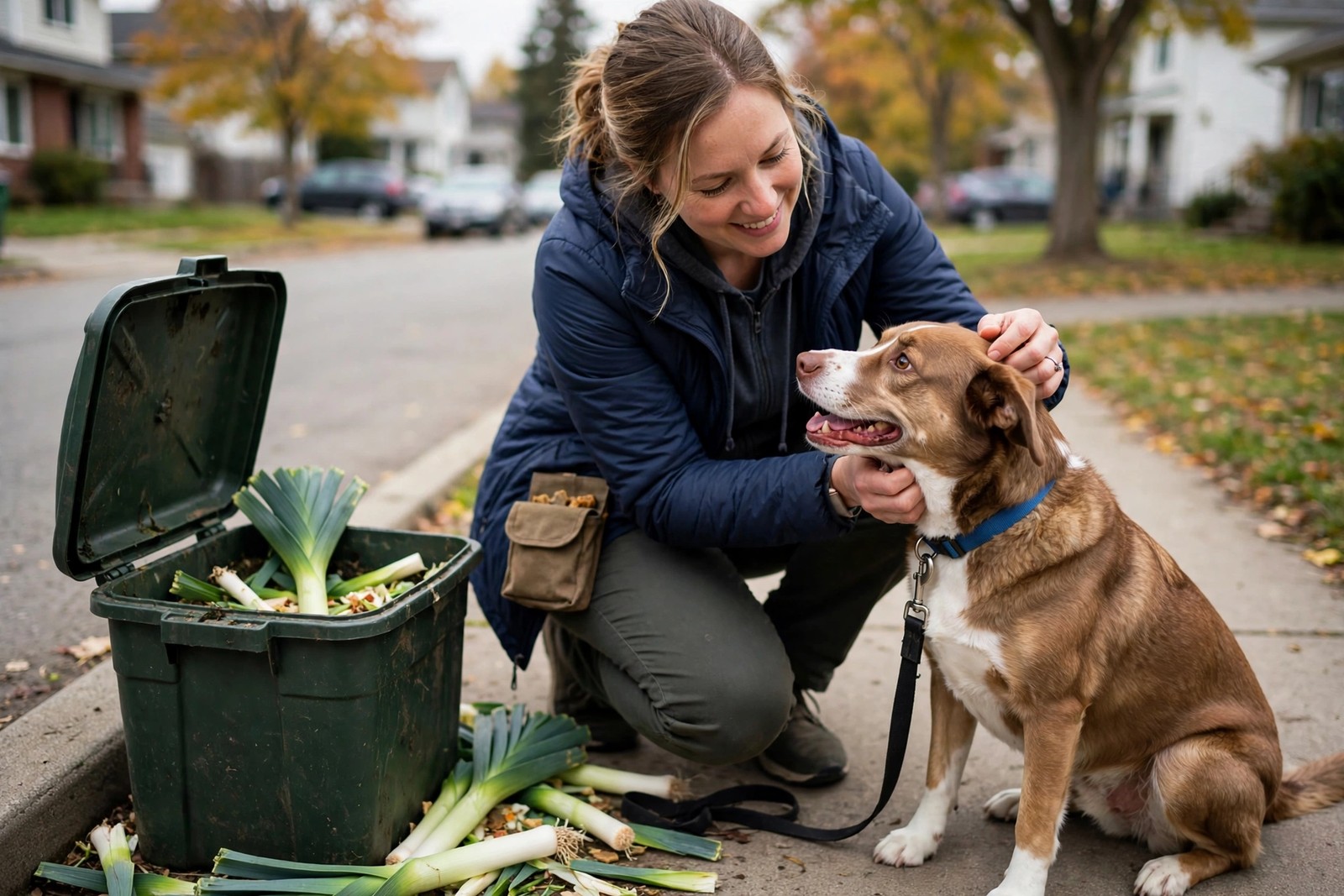
Call your veterinarian the same day when a dog raids leek tops from a compost caddy. Leeks belong to the allium family, and they can injure a dog's red blood cells in the same broad way onions and garlic do. Owners often discount the green tops as trimmings, yet the tops are part of the plant and count fully when you estimate what was eaten. A caddy raid also differs from a single stolen mouthful at the counter.
Estimating a raid you did not witness
Work backwards from the caddy itself. Count the tops you trimmed into it, look at what remains, and note whether whole lengths vanished or only the ends were shredded. Write down when the trimmings went in, when the dog was last seen away from the kitchen, and when you found the caddy disturbed. Tell your veterinarian about other contents too. Compost can hold mouldy food, coffee grounds, fruit stones, and other vegetable scraps, and the full contents shape the advice you receive.
Delayed signs after allium exposure
A dog who raids leeks may seem well that evening, and that calm start does not close the matter. Red-cell injury can build over the following days, and the signs owners notice often reflect developing anaemia. Watch for unusual tiredness, reluctance to climb stairs or finish a walk, and gums that look paler than usual in natural light. Reduced appetite, faster breathing while resting, a rapid pulse, dark or red-brown urine, and wobbliness all deserve a prompt call. Treat collapse as an emergency.
What to avoid while you wait for advice
Do not make your dog vomit unless a veterinarian directs that step for this dog and explains how it should happen. Do not add supplements, special tonics, or rich food in an attempt to protect the blood, and do not decide the tops were harmless simply because the white part stayed in the cooking pot. Move the caddy out of reach at once, wipe the floor where scraps fell, and keep your dog out of the kitchen until the container is secured. If other dogs share the home, check whether they joined the raid. Two dogs at one caddy means two estimates, two watch lists, and a call that covers both animals rather than only the dog you caught in the act.
A watching plan for the days ahead
Agree the watching period with your veterinarian, then spread checks across the day so they actually happen. A morning gum check in daylight, an appetite note at each meal, a breathing check while your dog sleeps, and a urine colour note on the first toilet trip of the day cover the signs that matter without turning the house into a ward. A single tired afternoon means little on its own, while three days of notes showing falling energy and paler gums give a clinician a pattern to act on. Phone promptly if the pattern moves the wrong way, and go straight to emergency care for collapse, laboured breathing, or white gums at any point in the watching period.
Ending the caddy habit, not just this raid
A dog who has raided once has learned the caddy pays out, so the fix has to remove the reward permanently. Choose a caddy with a locking lid, store it inside a closed cupboard or on a high worktop, and empty it to the outside bin on the day you fill it with strong-smelling trimmings. Put a gate or a closed door between dog and kitchen during prep, and teach a settled place away from the counters with rewards paid there, so waiting becomes a job of its own. The notes from this raid belong inside KinsLe, where Care Teams holds the dated gum, appetite, and breathing checks together until the watching period ends.