
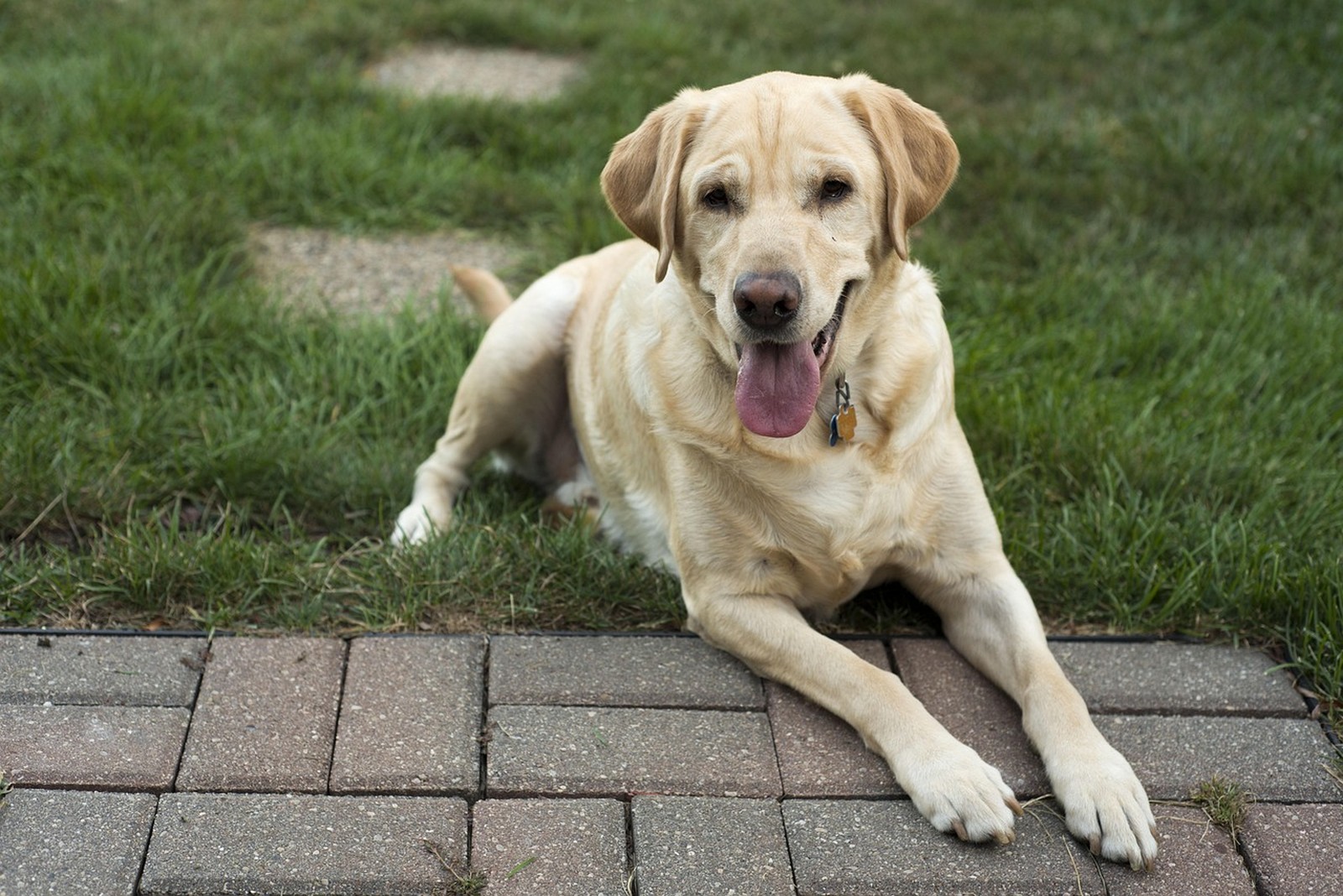
Two Meals a Day for an Adult Labrador
Most adult Labrador Retrievers should eat two meals a day, one in the morning and one in the evening, each holding half the measured daily ration. Two meals suit a Lab's digestion and day: the dog is refuelled after the night, fed again after the day's activity, and never asked to process one oversized portion. Labs are also deep-chested enough that the smaller-meals pattern is the sensible default, with a rest after eating rather than an immediate dash around the garden.
One meal a day creates a very long, very hungry gap in the breed least able to ignore it — expect scavenging, bin raids, and counter theft to fill the vacancy.
Puppies and the Path Down to Two
Labrador puppies eat four small meals a day when they first come home, then three, then two from around six months. Labs grow fast and heavy, and steady growth protects joints better than rapid growth: use a food formulated for large-breed puppies, follow its guide, and weigh the puppy regularly. A Lab puppy should feel ribby under your fingers with a light covering — if you cannot feel ribs, the meals are too generous however the puppy protests otherwise.
During the step-down, enlarge the remaining meals slightly as you remove one, over a week or two, so total daily food stays constant while the schedule changes.
The Labrador Appetite Is the Real Subject
Meal frequency is almost a side issue with Labradors; appetite management is the issue. Many Labs have an exceptionally strong food drive — research has even identified a genetic quirk behind some Labs' relentless hunger — and they gain weight with dismaying ease. Two meals only works as a plan if both are measured honestly: same scoop or scale, treats subtracted from the day's total, and no topping up for good behaviour at the fridge.
Slow-feeder bowls or scattering part of a meal in the grass can stretch a ninety-second inhalation into a satisfying few minutes. Pair the routine with exercise, because a Lab's ration assumes an active dog; if activity drops through injury or age, the bowls must shrink too. Ask your veterinarian to score body condition at routine visits — owners of well-coated Labs routinely underestimate how much dog is under the coat.
When the Schedule Needs a Vet, Not a Tweak
Most Lab feeding questions are portion questions, but some are veterinary ones. A Labrador who is gaining despite honestly measured meals, losing weight on a fair ration, drinking far more than usual, vomiting repeatedly, or going off food entirely — a remarkable event in this breed — should be examined rather than rescheduled. Likewise, sudden ravenous hunger paired with weight loss deserves a check-up.
Senior Labs generally remain on two meals, with the amount trimmed to match a slower life. If an elderly Lab's stomach prefers smaller portions, three light meals can be arranged, discussed at a senior check; the daily total, not the count, is what protects the waistline.
Defeating the Double Dinner
The single most common Labrador feeding accident is the duplicated meal: a dog who performs starvation so convincingly that two household members each feed a full dinner. Multiply that by a few weeks and the mystery weight gain is solved. The cure is evidence — a shared note of who fed, what, and when, visible to the whole household.
KinsLe Care Teams provides exactly that for your Labrador, turning breakfast and dinner into assigned duties for named family members, each marked complete with a timestamp the moment the bowl goes down.