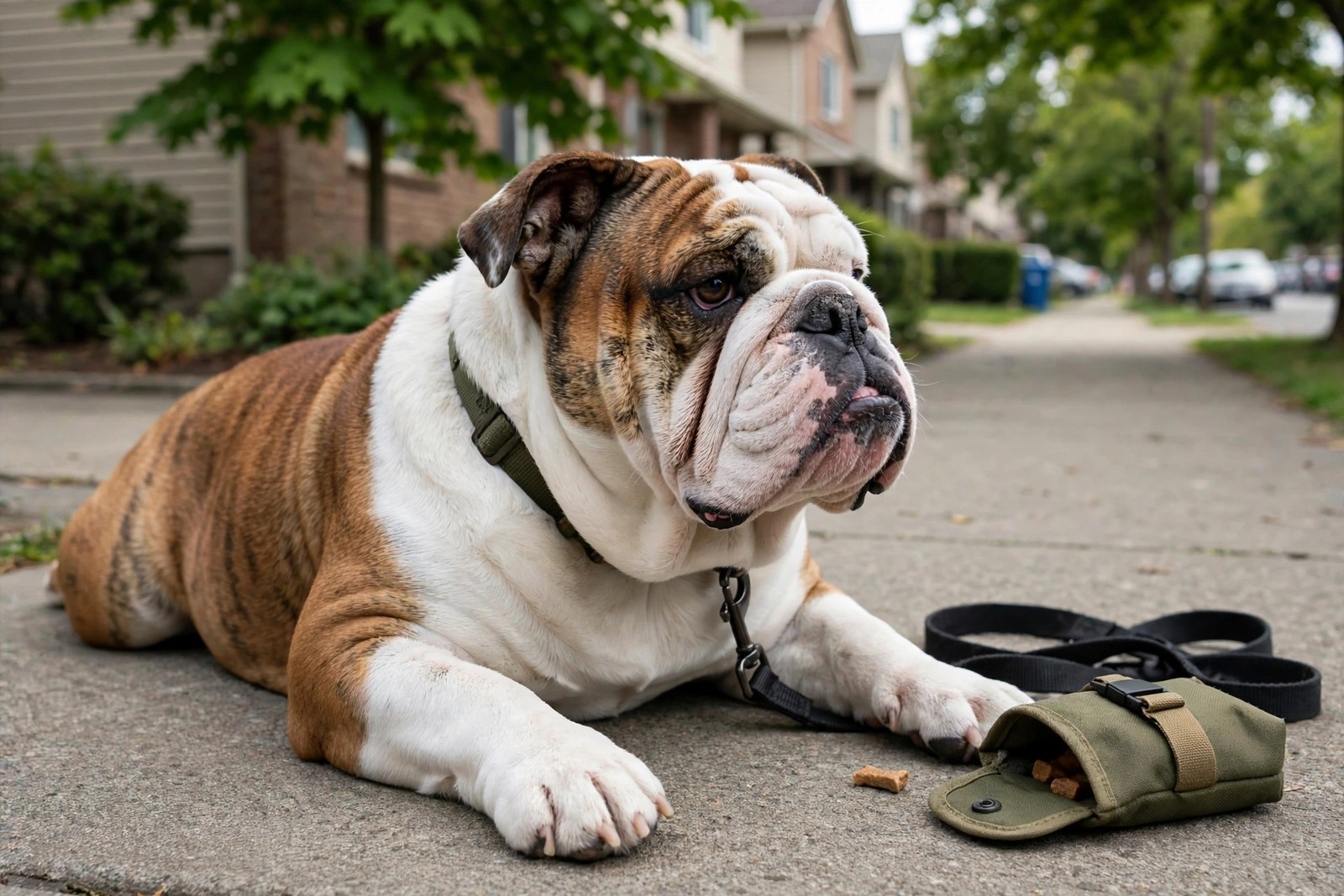
An adult English Bulldog typically weighs 18 to 25 kg (40 to 55 lb). Females usually fall at 18 to 23 kg (40 to 51 lb), and males usually fall at 23 to 25 kg (51 to 55 lb). That is a compact span for a dog who looks so substantial, and the breadth comes from bone, shoulder width and a deep chest rather than height. Two Bulldogs can share a scale reading and carry it very differently, and one can be lean at 25 kg (55 lb) while another is overfat at 21 kg (46 lb). Your hands and your vet settle which dog you have.
Finding Condition Under Breadth and Folds
Stand your Bulldog on a flat floor and look down from directly above. A dog in good condition shows a gentle narrowing behind the ribs before the hips, even though the breed never shows the tucked outline of a running dog. From the side, expect a level back and a belly that does not sag below the chest. Run your palms firmly along the ribcage and expect to find ribs under a thin fat cover with moderate pressure.
Skin folds complicate the picture around the neck and shoulders. A thick roll over the shoulders can be loose skin in one dog and stored fat in another, and only the rib feel separates the two. Check the tail pocket area and the folds on the face during the same handling session, and keep those folds clean and dry as part of routine care. A Bulldog who feels soft everywhere and shows no waist from any angle needs a portion review even when the scale sits inside the range.
Why Extra Weight Hits This Breed Hard
A Bulldog airway is compact by design, and fat around the neck and chest gives that airway less room to work. Extra weight also reduces heat tolerance in a breed that already struggles to cool down in warm weather. Watch breathing at rest and after gentle exercise, and note snoring changes, reluctance to walk and slow recovery after mild effort. Share those notes with your vet, who can investigate breathing, joints and other possible causes and can judge how much of the picture weight explains.
Exercise for condition in this breed means short, frequent, gentle walks in cool parts of the day rather than long outings. Measure meals, count the treats that visitors hand over, and keep table scraps out of the routine entirely. Small daily discipline protects comfort far more than an occasional strict week.
Portions, Weigh-Ins and Vet Partnership
Weigh your Bulldog monthly on the same scale, ideally at the vet clinic where large platform scales make the job calm and repeatable. Record the reading beside a one-line rib-feel note, and review the pair together rather than either alone. A rising weight with a softer rib feel calls for a small portion trim and a recheck in a fortnight. A stable weight with a firmer feel tells you the current ration fits the current life.
Lifting a Bulldog onto scales can strain both dog and owner, so many households weigh the person alone, then weigh the person holding the dog, and subtract. Use that method on the same floor each month if clinic visits are rare, and note the method beside the figure so later readings stay comparable. A harness that fit in spring and strains in autumn also delivers data, and fit changes at the chest deserve a rib check on the same day.
Ask your vet to set a personal target weight for your dog and write that figure down. Breed ranges guide strangers, and a personal target guides feeding. With KinsLe Care Teams, the person who feeds, the person who walks and the person who books vet visits can each hold a named duty, and the timestamped record keeps a Bulldog weight plan honest between appointments.