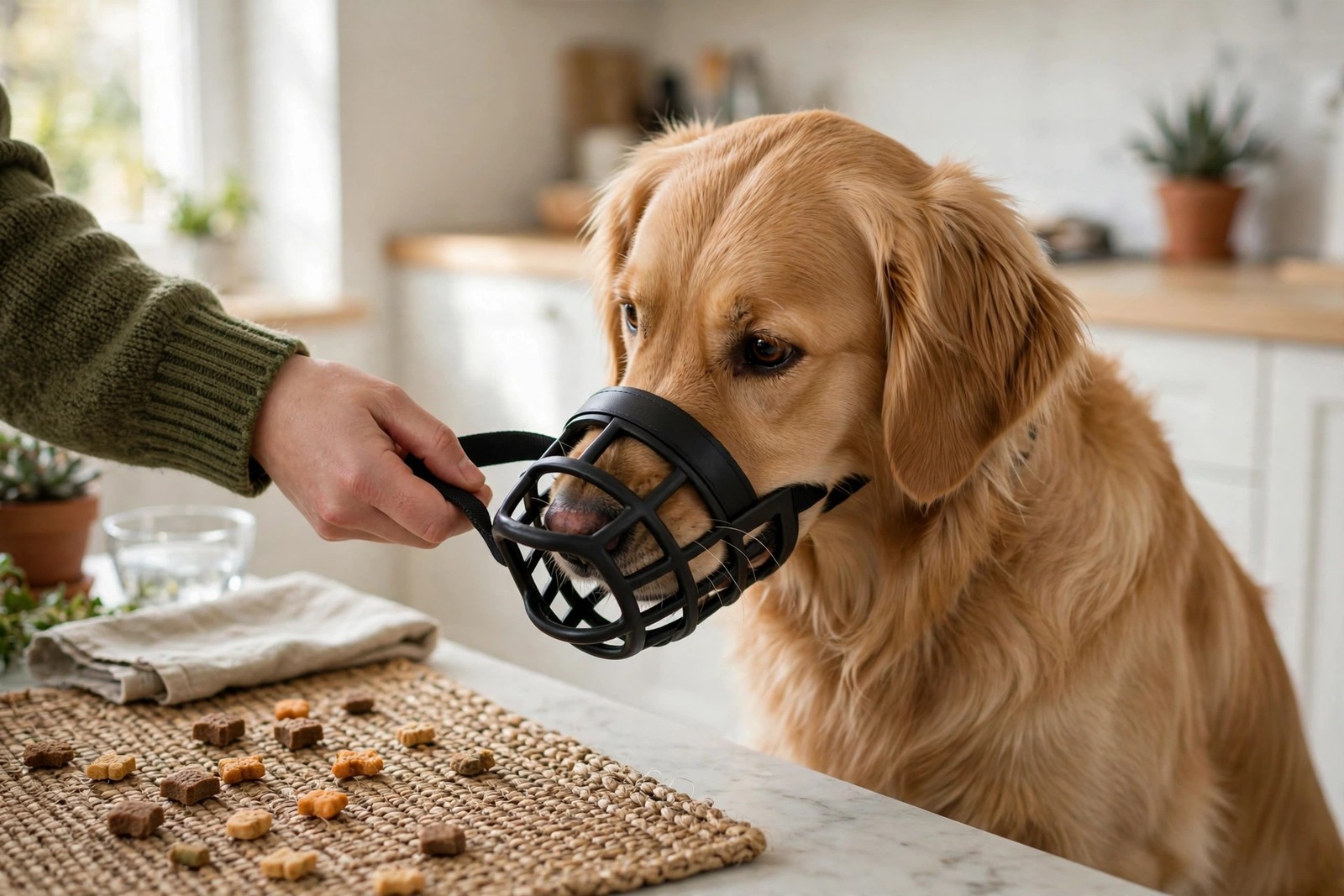
Every dog benefits from learning to wear a muzzle calmly before the day one is unavoidable — an injured dog at the vet, a groomer visit after a bite scare, travel rules, or a dog who scavenges dangerous rubbish on walks. A muzzle produced for the first time at the worst moment of a dog's life adds panic to pain. The same muzzle introduced at home, at the dog's pace and full of food, becomes a familiar object the dog pushes his face into willingly. That difference is the whole reason to train it now, while nothing is wrong.
Choose a Basket Muzzle That Allows a Full Pant
Fit matters more than speed of training. Choose a basket style — rigid plastic, coated wire, or sturdy silicone — with enough room for the dog to open his mouth fully, pant, drink water, and accept small treats through the basket. A fabric sleeve that holds the mouth closed is an emergency-only device for minutes at a time, because a dog wearing one cannot pant properly and can overheat; it is not suitable for walks or training sessions. Measure the length and width of the muzzle as the maker directs, check that the basket does not press into the eyes or rub the top of the nose, and expect long-nosed and flat-faced dogs to need very different shapes.
Stage the Training Like a Feeding Game
Work in sessions of one to two minutes, once or twice a day, ending before the dog has had enough. First, present the muzzle and pay every look and sniff with a treat delivered beside it. Next, smear something soft and lickable inside the basket and let the dog push his own face in to clean it out — you hold the muzzle still and the dog does all the moving. Then feed a stream of small treats through the front of the basket while he keeps his face in voluntarily, building from one second of contact to five, then ten.
Only when the dog shoves his face in eagerly and stays should you introduce the strap: bring it behind the ears, treat generously, and take it straight off again. Over the next sessions, leave the strap fastened for a few seconds, then half a minute, always paired with food arriving through the basket. If the dog paws at the muzzle, he is telling you the current step is too long — shorten the wear, raise the treat rate, and build again. Pawing is feedback, not disobedience, and scolding it teaches the dog the muzzle predicts trouble.
Add Movement, Then the Real World
A dog who accepts a muzzle standing still in the kitchen may still hate it on a walk, so generalise gradually. Play a short game in the garden wearing it, practise familiar cues like sit and hand-target for treats, then take it on an ordinary enjoyable walk — clipped on at the door, off again partway, so wearing it predicts the walk rather than replacing it. Practise at the vet clinic on a happy visit if your clinic allows: muzzle on in the car park, treats, muzzle off, home.
Keep the Skill Alive
Skills fade, so refresh briefly every week or two: muzzle out, face in, a few treats, a short game, done.
Note which stage you have reached and what your dog earned for it, because a partner or dog walker picking up practice mid-plan needs yesterday's detail, and KinsLe Care Teams makes that easy by holding the short muzzle sessions as scheduled duties that each helper marks complete with a timestamp.