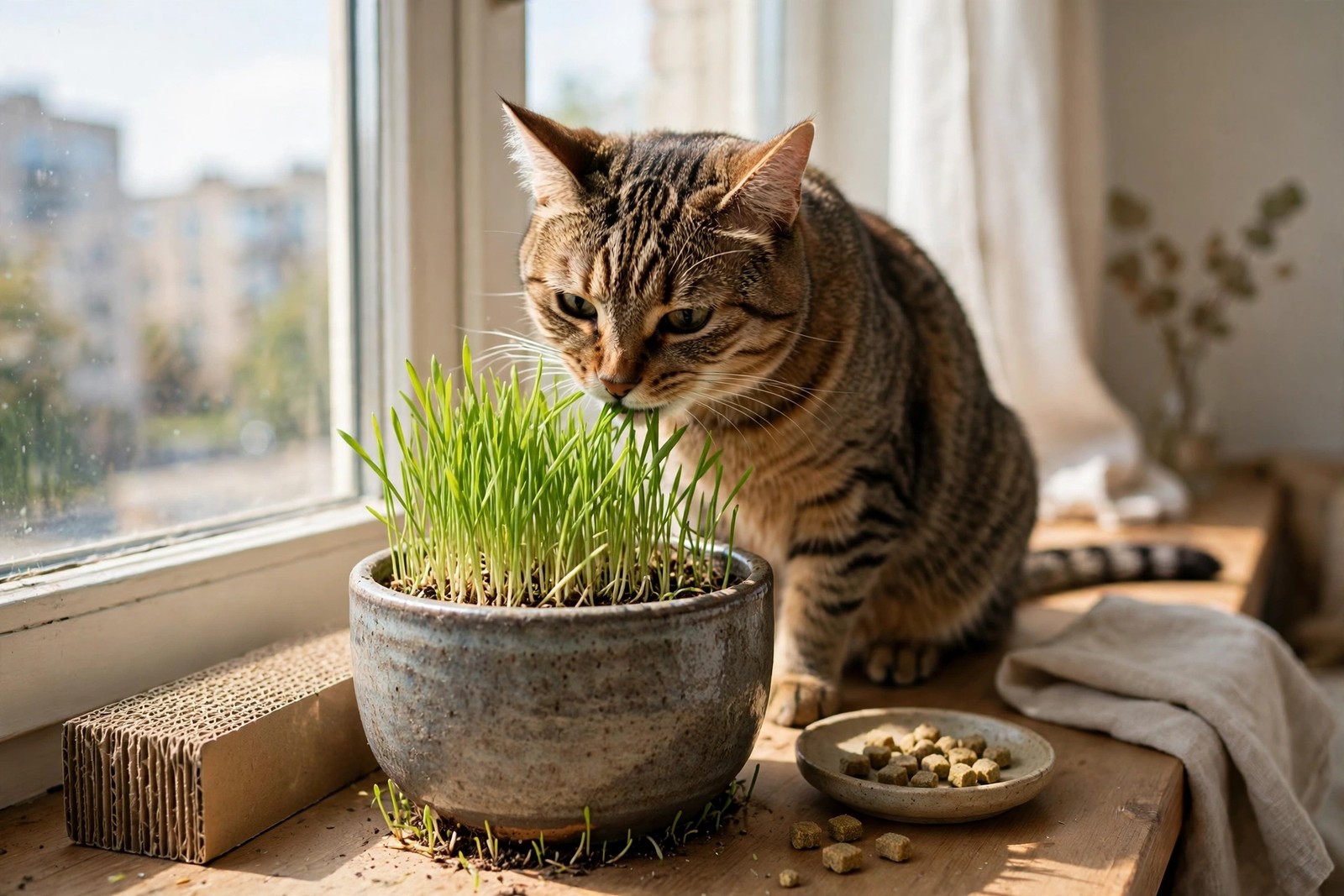
Cat grass and catnip do different jobs, so introduce them one at a time. Grass gives an indoor cat something green to chew, rub against, and investigate. Catnip is a scent event: a short burst of rolling, rubbing, and play for cats who respond to it, then interest fades for a while. Adding both in the same week tells you nothing about which one your cat actually values.
Start With a Pot of Grass
Cat grass is usually young wheat, oat, or barley grass grown in a shallow pot. Sow a first pot and let it reach a few inches tall before offering it, which often takes about a week indoors. Set it somewhere stable and reachable, away from houseplants, especially any that may have been sprayed, and choose a heavy pot or a tray that a determined cat cannot tip. Most cats nibble a little at a time across the day rather than grazing a pot bare in one sitting.
Expect the pot to have a short life. Blades yellow, roots crowd, and the soil can grow stale, so a second pot sown a few days after the first keeps a fresh supply rotating. A little grass brought back up now and then is common and usually no concern, but repeated vomiting, appetite loss, or grass eaten frantically alongside other signs belongs in a call to your veterinarian. Grow your own from seed or buy pots grown for pets, and rinse bought grass before serving, since you want the cat eating grass rather than whatever was sprayed on it.
Add Catnip as an Occasional Extra
Catnip sensitivity is inherited, so a meaningful share of cats never respond to it at all, and young kittens often show little interest until they are older. For a cat who does respond, a small pinch of dried catnip rubbed onto a scratching post, a cardboard scratcher, or the inside of a paper bag is enough. A catnip-filled toy works the same way, and a toy put away between sessions keeps its scent stronger than one left on the floor permanently.
Once or twice a week is a sensible rhythm for most cats. More often, and a responsive cat may simply stop reacting for longer stretches, because the effect is brief and the nose needs a break afterward. Treat catnip products as enrichment, not nutrition: they sit outside the day's food, and a cat who gets overexcited should have the toy retired calmly rather than being teased further. Dried catnip keeps best sealed and away from light, and a batch that no longer smells like much has usually lost its pull.
Run It as a Household Rotation
Enrichment fails quietly when it depends on memory. Two pots at different growth stages, a scratcher refreshed on set days, and toys swapped rather than added endlessly will carry an indoor cat further than a basket of novelties nobody maintains. That rotation is exactly the kind of small, recurring work worth writing down: who sows the next pot, who waters, who refreshes the scratcher, and who notes whether the cat is actually using any of it.
In KinsLe, those jobs sit inside the pet's care plan, where the Care Teams assignments name a person for each task and mark it done, so a housemate can see at a glance that the grass was watered and the catnip toy is due back out. Keep treats, including catnip treats, to a small share of the day, and let the cat's response set the pace: a cat who walks away has voted, and the routine should respect the vote.
Fresh grass ready before the old pot fades, a scratcher that smells interesting again, and notes on what the cat truly uses are what turn two novelties into a lasting routine, and the Care Teams schedule on KinsLe is where that rotation stays visible to everyone in the home.