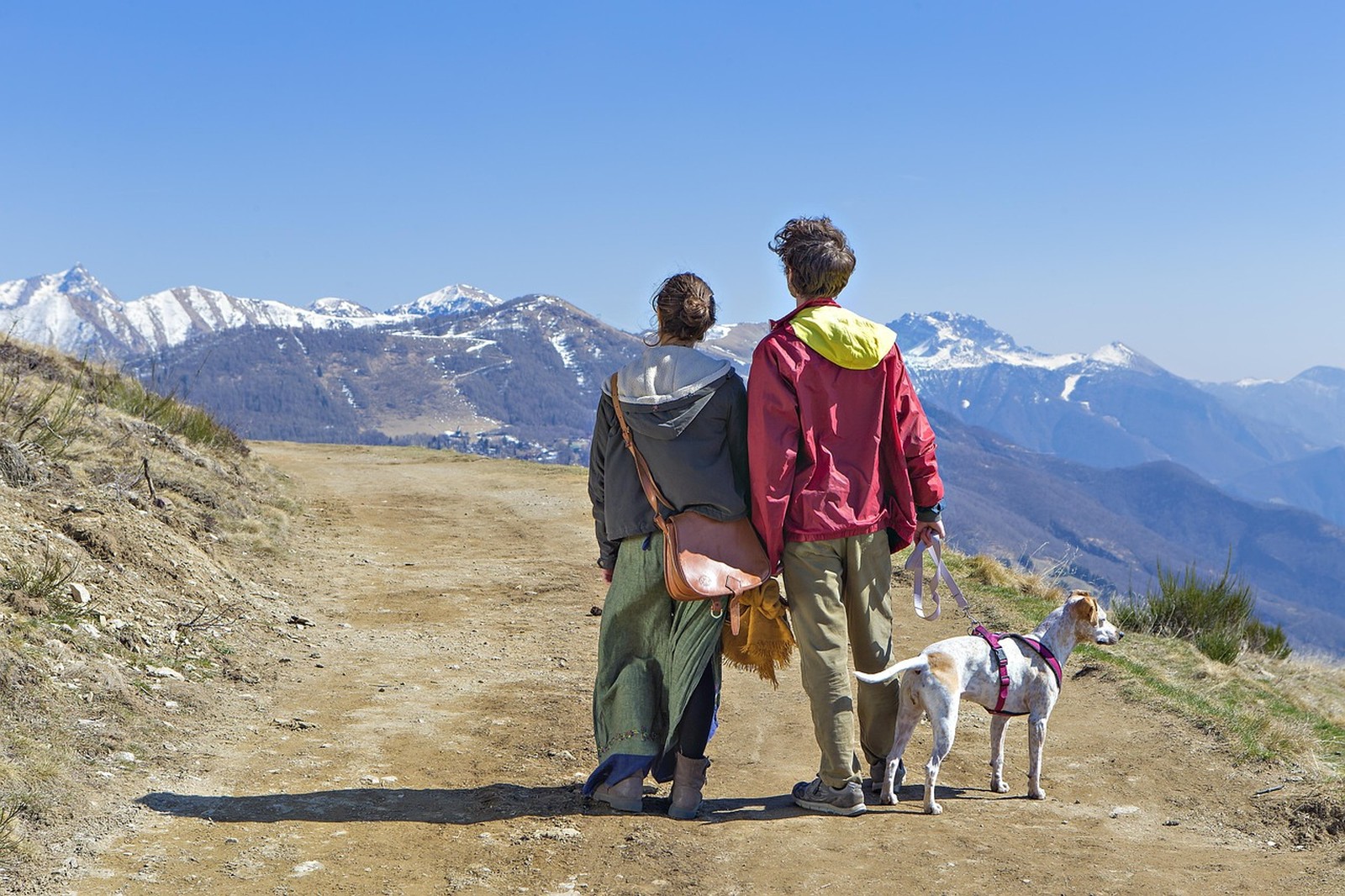
A dog does not experience a new partner or roommate as exciting household news. It experiences a stranger who smells unfamiliar, appears at strange hours, moves furniture, and competes for your attention in the dog's own territory. Managed well, most dogs accept a new person within days to weeks and often end up devoted to them. Managed badly, with a forced first greeting in the hallway and an overnight stay the same evening, the dog can decide early that this person predicts disruption, and early decisions are the ones you spend months undoing.
First Meetings Belong Outdoors
Meet on a walk, in a park, or on another neutral route your dog already enjoys. Walk in parallel at first, with the new person nearby but not focused on the dog, chatting with you while the dog absorbs their presence as background. Let the dog close the distance when it chooses. A dog that approaches, sniffs, and moves away has gathered what it needed; a dog that is led over, reached for, or crouched over by a stranger is being put under pressure it did not choose.
Have the new person scatter a few treats on the ground rather than hand-feeding at first, avoid direct staring and looming, and keep voices ordinary. Repeat the walk a few times before the person spends real time indoors, so by the first home visit the dog already files them under familiar and safe.
Build Value Through Care, Not Just Presence
Once meetings are relaxed, let the new person become a source of the good routines. They can prepare and put down meals, hold the lead for part of a walk, throw the ball in a game you supervise, and learn the dog's existing cues and words from you rather than inventing their own versions. Dogs bond through repeated care far more reliably than through attempts at affection, and a nervous dog that will not accept a stroke will often happily accept dinner.
Respect the dog's existing loyalties and spaces while this develops. Its bed, crate, or usual sofa spot should stay exactly where it was, feeding and walk times should stay predictable, and the new person should not be the one to deliver corrections or move the dog off furniture during the early weeks. All the mildly annoying jobs belong to you at first; the new person gets to be associated with walks, food, and calm.
Stage the Move-In Itself
If the person is moving in, stage it. Belongings arriving in several smaller loads disturb a dog less than a single day of vans, boxes, and open doors. Let the dog investigate new furniture and bags after they arrive rather than guarding them from it, and keep doors and gates managed during the chaos so an unsettled dog cannot slip out. For the first nights, keep the dog's sleeping arrangement unchanged, even if that is not the eventual plan; one change at a time.
With a roommate rather than a partner, agree the household rules in plain terms before move-in day: whether the dog is fed by others, which doors stay closed, what happens with guests, and who is responsible during holidays. Most dog-and-roommate friction is really people friction about unclear expectations, discovered too late.
Watch for Strain and Slow Down
Lip-licking, avoiding the new person, guarding you or a room, changed appetite, or new barking at household sounds are signs the pace is too fast. The remedy is almost always more distance, more routine, and more of the value-building care above, not more forced togetherness. If guarding or aggression appears, bring in a qualified behaviour professional early rather than hoping it settles.
When the new person is ready to share real care duties, KinsLe's Family Sharing lets you pass them your dog's profile, feeding routine, cues, and quirks in one place, so the dog hears the same words and keeps the same rhythm from both of you.