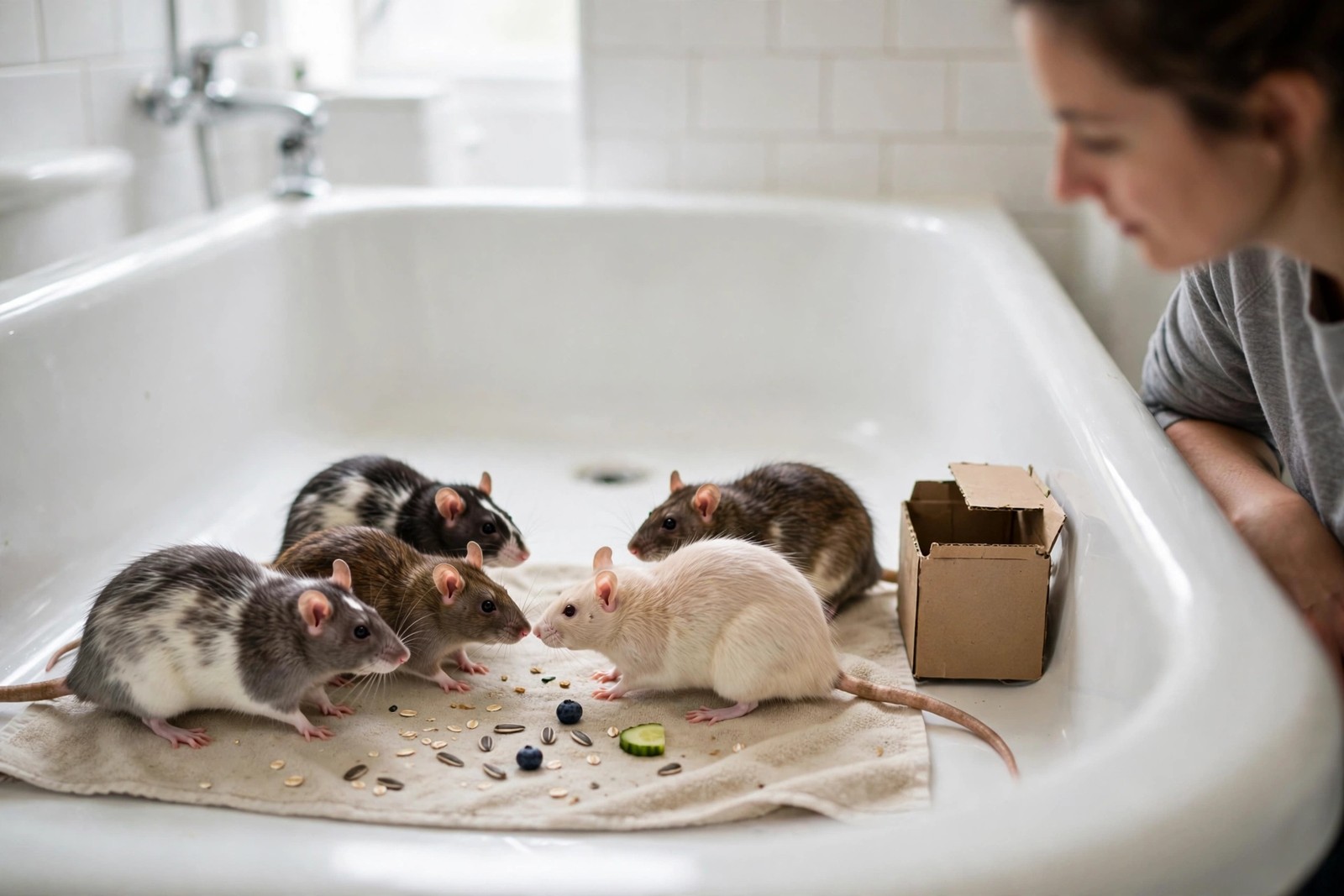
Rats are social animals who usually accept newcomers well, but a resident group defends its cage and its hierarchy, and a stranger dropped straight in can be attacked within minutes. Staged introductions work because each step lets the rats learn the newcomers' scent and behaviour while everyone still feels safe.
Stage One: Quarantine Before Anything Else
House the new rats in a separate cage in a different room for about two weeks first. Quarantine protects your residents from respiratory infections and parasites the newcomers may carry without yet showing signs, and it gives shy new rats time to settle, eat confidently, and get used to your hands before the stress of meeting strangers. Handle the resident group first and the newcomers last, and wash your hands between groups. Watch the newcomers for sneezing, wheezing or clicking breath sounds, excessive scratching, weight loss, or loose droppings, and book a vet visit if any of these appear rather than starting introductions with a possibly unwell rat. Note the newcomers' arrival date, source, diet, and any health or behaviour observations during quarantine; those notes become the start of their permanent record.
Stage Two: Swap Scents, Not Rats
Once quarantine is clear, exchange a handful of used bedding between the cages every day or two, and swap a hammock or fleece house so each group sleeps inside the other's smell. Puffed-up fur, hissing, or frantic bar chewing at the sight of the other group means slow down and give the scent stage more days.
Stage Three: Neutral Territory
The first face-to-face meeting belongs somewhere neither group has claimed: a bathtub lined with an old towel, a playpen, or a rat-proofed bathroom floor. Scatter treats widely so nobody has to compete face to face for food, and add cardboard boxes with at least two exits each, so a nervous rat can leave a confrontation instead of being cornered. Supervise constantly and keep a towel ready. Expect investigation, following, and some dominance behaviour: one rat pinning another briefly, sideways posturing, and squeaking from the pinned rat are normal negotiation. Let it play out unless it escalates, and end the first meeting after fifteen to thirty minutes while things are still going well, repeating daily and lengthening the sessions.
Stage Four: The Carrier Method and the Cage Move
If neutral meetings are calm, many keepers consolidate the bond in a small, clean carrier or tiny cage with only bedding, water, and scattered food. Close quarters with nowhere to defend encourage the rats to pile up and sleep together — a shared sleeping heap is a strong sign the group has formed. After several settled hours, move them to a small empty cage, then, a day or so later, into the main cage only after it has been deep cleaned, disinfected, and rearranged, with fresh bedding and furniture moved to new positions so it no longer smells or looks like the residents' old territory. Add hides and hammocks gradually over the following days rather than all at once.
When to Separate and Step Back
Separate immediately with the towel — never bare hands, because a wound-up rat may redirect a bite — if you see a tight rolling ball fight, biting that draws blood, wounds, or one rat relentlessly chasing another that is trying to flee and hide. Minor scuffles with squeaks but no injuries are part of the process; blood is the line. After a bad session, return to the previous stage for several days before trying again. Intact adult males tend to be harder introductions, and young rats tend to go more smoothly, and a group that repeatedly injures newcomers needs a vet check for the aggressor and a slower plan rather than repeated forced meetings.
Keeping the stages straight across a week or more is easier when each step is written down as it is done, and KinsLe Care Teams lets you set quarantine checks, bedding swaps, and meeting sessions as dated duties for whoever is home, each timestamped when completed.