
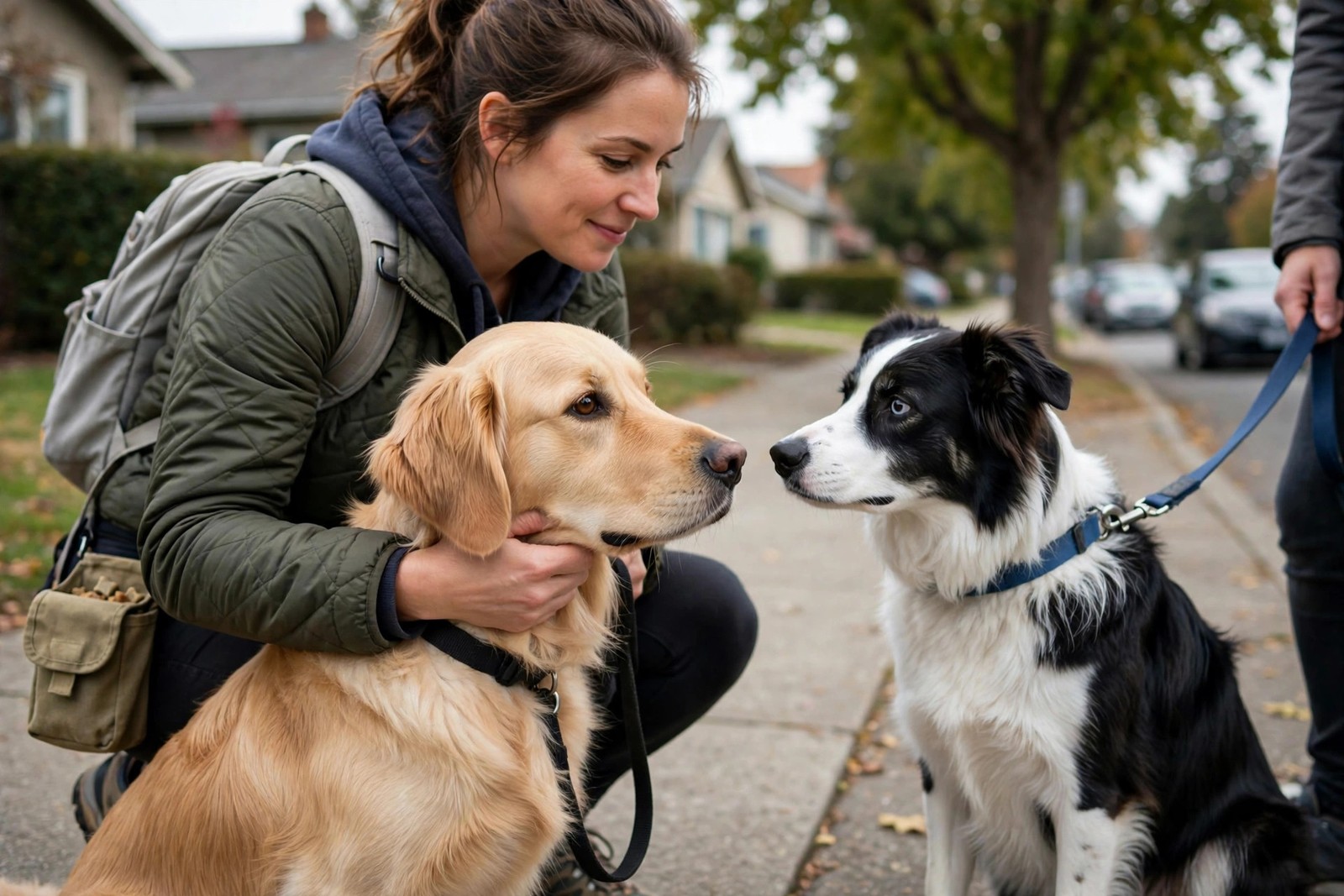
A first meeting sets the tone for everything after it, and the version dogs handle best looks almost boring: two dogs walking in the same direction, at a distance, gradually deciding the other is unremarkable. The version that goes wrong is the one humans find natural — two dogs on tight leads, face to face, surrounded by excited people, with nowhere to retreat.
Set the Stage: Neutral Ground, Two Handlers, Loose Leads
Choose somewhere neither dog lives, guards, or walks daily — a quiet street or open park area with room to create distance. Each dog needs its own handler, its own lead, and high-value treats; keep leads loose rather than tight, because constant tension travels straight down the line and tells the dog there is something to worry about. Arrive separately, keep well apart at first, and do not let anyone feed, fuss, or crowd the dogs together for photographs before they have settled.
If either dog is known to be reactive, fearful, or has a bite history, add a properly conditioned muzzle, work at much greater distance, or involve a qualified trainer before attempting a home introduction at all.
Walk in Parallel and Let Distance Do the Work
Set off walking in the same direction, far enough apart that both dogs can glance at each other and then look away, take treats, and sniff the ground. That ability to disengage is your green light. Walk for several minutes, letting the gap narrow gradually in wide arcs if both dogs stay loose — soft bodies, wagging that involves the whole rear end, play bows, or simple indifference are all good signs. Stiffening, hard staring, raised hackles with a rigid tail, growling, or lunging mean the distance was closed too fast; widen it calmly and walk on rather than correcting the dogs for communicating.
Avoid head-on approaches, which are confrontational in dog body language. When the walking looks genuinely easy, allow a brief curved approach, a sniff of two or three seconds — ideally side and rear rather than nose to nose — then cheerfully call both dogs apart and reward. Several short, successful sniffs teach far more than one long greeting that has time to tip into tension. Only let leads drop in a secure, fenced area once this pattern is repeated and relaxed, and keep the first shared off-lead time short, with handlers moving and calling the dogs apart periodically for treats so arousal never builds unchecked.
Bringing Them Home Without Resource Flashpoints
If the dogs will live together, let the newcomer explore the home while the resident dog is out or separated at first, and keep the early shared time managed: doors or gates between them when unsupervised, and no shared access to the things dogs argue about. Feed in separate rooms or behind a gate, pick up high-value chews, bones, and favourite toys until you know how each dog behaves around them, and provide duplicate beds and water bowls in different spots so nobody has to compete to rest or drink.
Supervise garden time, keep routines predictable for the resident dog whose world has just changed, and give each dog individual walks and one-to-one time with you as well as time together. Most pairs need days to weeks of this management, not one good afternoon, before gates can come down. Growling over a chew in week one is information about management, not proof the match has failed — but repeated fights, injuries, or one dog living in fear means you should bring in a qualified behaviour professional promptly.
In KinsLe, Care Teams can hold the parallel-walk plan, name which handler takes which dog, and list the separated feeding and resting arrangements, so every adult in the household runs the same careful introduction.