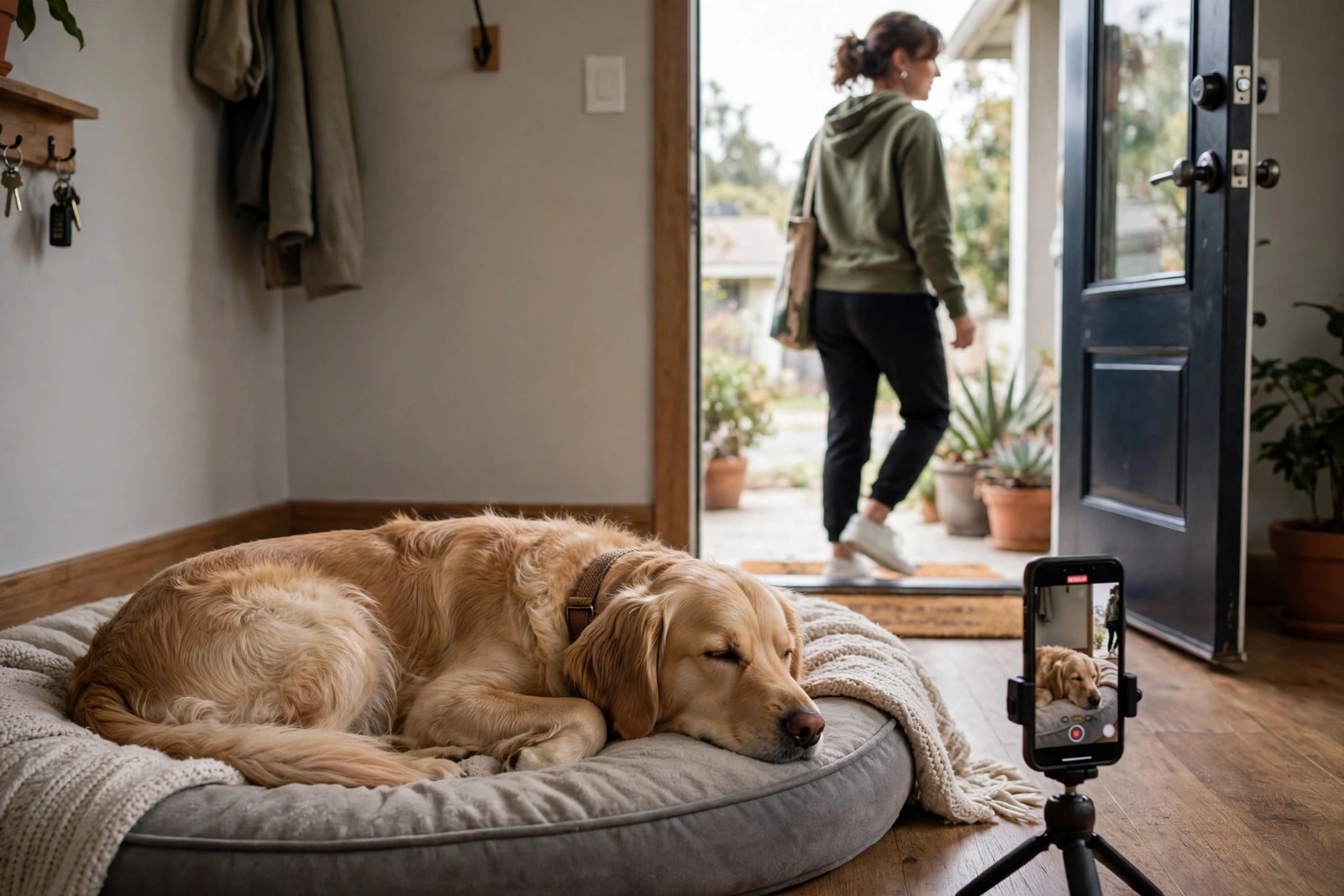
Change the leaving itself first, after a vet check to rule out pain or illness that can feed distress. Of the three options in the question, exercise and departure routine are supporting players. A dog who barks for hours is usually not reporting that his walk was too short; he is rehearsing, on every real absence, that being left feels unbearable and that barking fills the whole experience. Only graduated practice at being left changes that belief.
Film first, because the type of barking shapes the plan
Set up a camera or phone to record a short departure and watch what happens and when. A panicking dog often starts within minutes, paces, drools, pants, scratches at doors, urinates or barks continuously with few pauses. An alert barker quiets between outside noises and barks in bursts at passers-by, while a frustrated or bored dog may settle, wake, bark at sounds, chew and settle again. Those patterns need different emphases, and guessing wastes weeks.
If the footage shows panic, treat this as a welfare problem, not a nuisance habit, and involve your vet and a qualified behaviour professional early. Hours of distress barking is hard on the dog, hard on neighbours and unlikely to resolve through a longer morning run.
The main work: absences below the barking threshold
Practise departures so short that he stays calm: pick up keys, step out, return before barking begins, and repeat without ceremony. For some dogs the starting point is seconds behind a closed internal door, not minutes outside the house. Build duration in small, uneven steps, sometimes shorter, sometimes a little longer, so progress does not become a predictable test he can feel escalating.
Pair practice with ordinary life rather than staging it as an event. Do a few repetitions while making tea, taking rubbish out or checking the car, keeping arrivals and departures dull. If he barks during a repetition, you went too far; make the next one easier, end the session on a calm success, and note the duration where he coped so the next session starts below it.
Protect progress by covering real absences
Training cannot outrun daily rehearsal. If he panics for four hours every workday while you practise calm minutes in the evening, the panic lesson is stronger. Arrange cover during the building phase wherever you can: work from home on some days, use a trusted sitter, family member or day care he already copes with, or adjust hours temporarily. That is not avoiding the problem; it is stopping the problem being practised while you teach the alternative.
Tell neighbours what you are working on and how to reach you. A brief, honest conversation, plus a record of the steps you are taking, usually buys patience that silence and repeated noise do not.
Where exercise and routine genuinely help
Exercise still matters, as support. A morning walk with sniffing time, a chance to toilet and a settled chew after you return home can lower general restlessness, but schedule hard exercise to finish well before practice so he is not learning while overheated and wired. Departure routine helps in a similar way: vary the order of shoes, coat and keys during the day without leaving, keep goodbyes brief and warm rather than emotional, and leave background sound only if he is used to it rather than as a new signal that you are going.
Do not add a new dog, a bark collar or a punishment for noise you were not present to hear. Those steps do not teach a panicking dog that absence is safe, and aversive tools on a distressed dog can deepen the problem.
Through KinsLe's Care Teams, you can assign daily practice absences, midday cover visits and neighbour check-ins to the people helping, with completed tasks timestamped so you can see the plan ran every day.