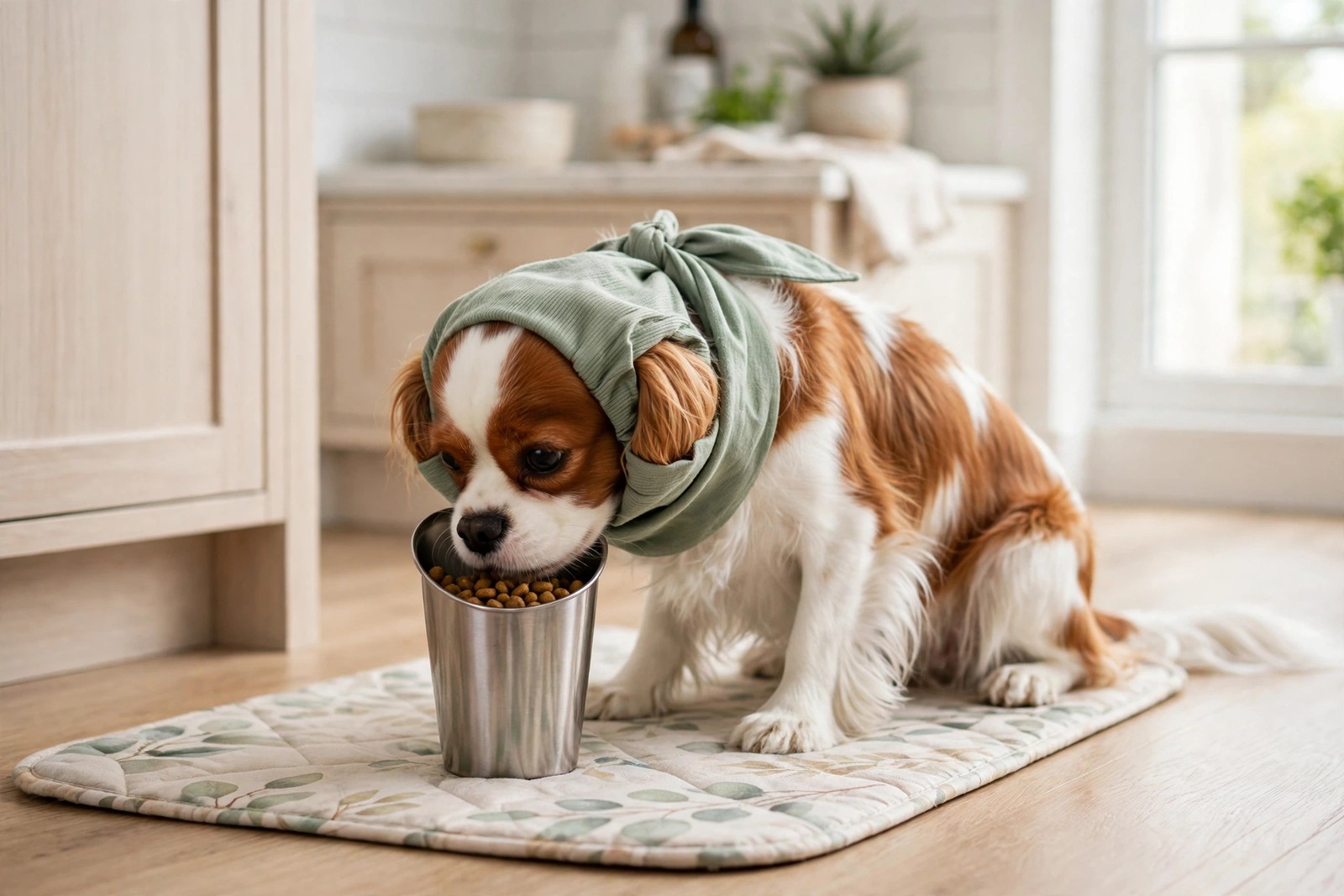
A Cavalier King Charles Spaniel carries long, silky feathering on ears that hang level with the mouth, so an ordinary wide dish invites trouble. The hair dips as the head lowers, soaks up wet food or gravy, then trails across bedding and furniture. Left unwashed, that coating dries stiff, tangles into mats behind the ear, and keeps moisture pressed against skin that rarely sees moving air. The fix works in three layers: keep the hair out during eating, shape the feeding setup so gravity helps, then clean and dry promptly before residue sets.
Cover the Ears Before the Bowl Goes Down
A snood solves the problem at its source. This tube of soft fabric slips over the head and holds both ears back along the neck while the dog eats, then comes off the moment the meal ends. Choose a snood that sits snugly without squeezing, and introduce it gradually: drape the fabric loosely for a few seconds, reward calm acceptance, and build toward wearing the snood through a full meal over several days. A dog who paws frantically at headwear mid-meal needs slower practice away from food first. Loose tying is a fallback rather than a habit, because tight bands can tug hair and irritate skin. Whatever cover you use, put the cover on before carrying dinner across the room, since a hungry Cavalier dives in the second a dish lands.
Pick a Bowl Shape That Works With Long Ears
Bowl geometry matters almost as much as the cover. A narrower opening with deeper sides encourages the muzzle alone to enter, while the ears slide down outside the rim rather than spreading across the surface. Spaniel-style bowls exist for exactly this head shape, although any deep, narrow vessel with a stable base achieves the same effect. A raised stand can help some dogs by changing the head angle, yet a stand set too high pushes the ears forward again, so test the height against your own dog's posture. Apply the same thinking to water, because feathering that dips at every drink stays damp for hours. Feed on a washable mat, too, since splashes and dropped pieces otherwise get pressed into the coat when the dog turns around.
Wipe, Comb and Dry Straight After Eating
Post-meal care takes about two minutes and prevents nearly all of the mess owners dread. Wipe each ear's feathering with a damp cloth to lift off food, then comb gently from the ends upward toward the base so you tease out residue instead of dragging tangles tighter. Sticky patches may need a brief rinse and a mild dog-safe wash, followed by thorough drying with a towel and cool air until the coat feels dry right through to the skin. Pay close attention behind the ears, where feathering rubs against the neck and mats form early. Trapped food hides deep in that dense area, so part the hair and work in small sections rather than skimming the surface. Damp feathering left overnight develops a stale smell and sore skin, so drying deserves the same priority as washing.
Look at the Ear Itself Every Week
Heavy feathering conceals the ear canal opening, so schedule a weekly check under good light. Lift the ear flap, look for redness, dark wax build-up or scratches, and notice any head shaking, rubbing or musty odour between checks. Gentle surface cleaning of the visible outer ear is reasonable home care, whereas persistent redness, discharge or pain calls for a veterinary appointment rather than deeper probing at home. Tell your groomer that the feathering needs combing through to the skin, not trimming around the edges, and flag any tender spots you found. Splitting these small jobs between family members works when everyone follows an identical sequence, and Care Teams inside the KinsLe app lets each helper mark the weekly ear check complete once finished.