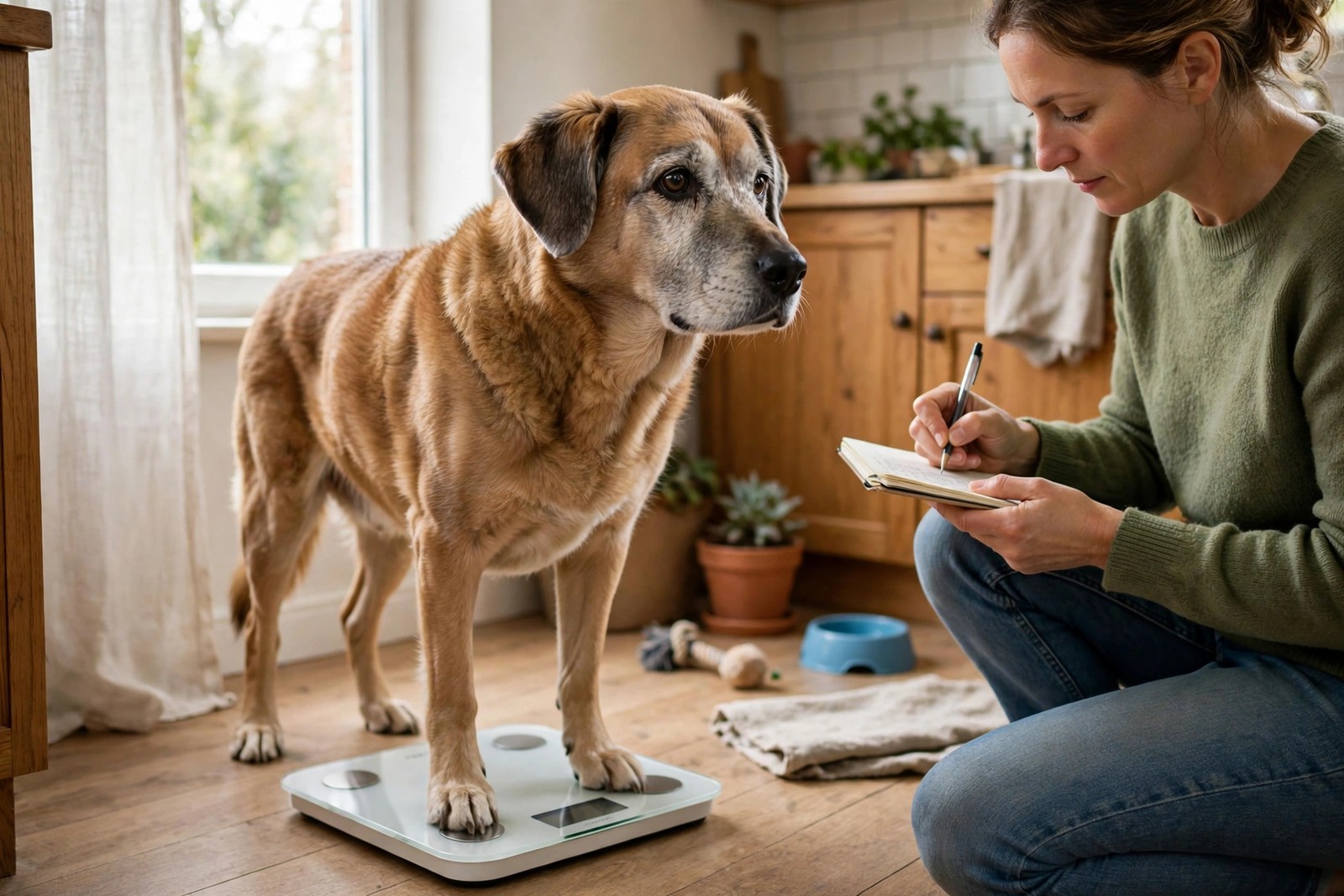
For an arthritic dog, weight is not a cosmetic issue. Every unnecessary kilo is carried by joints that already hurt, and it works both ways: a heavier dog moves less because moving hurts, and moving less makes him heavier. Breaking that circle needs both halves at once — slightly less energy in, and the right kind of gentle movement kept up — adjusted slowly enough that he never feels punished by either change.
Score the Dog in Front of You, Not the Chart
Learn body-condition scoring with your hands, because coat and breed shape hide a lot. Run your palms along his ribs: you should feel them easily under a thin layer of fat, with light pressure similar to feeling the backs of your fingers. Look from above for a waist behind the ribs and from the side for a tummy that tucks up rather than sagging level or down. Fat pads over the hips, a thickened neck, and ribs that need real pressure to find all mean the ration, not the dog, needs adjusting. Score him monthly and write it down alongside his weight; the pair together shows whether a change is muscle, fat, or both.
Weigh him on the same scales, at roughly the same time of day, once a month. Many veterinary practices are happy for you to use their scales for a quick weight check between appointments, which also keeps the clinic a familiar, treat-associated place.
Measure Food Properly and Shrink It Gradually
Weigh meals on kitchen scales rather than using a scoop or cup, because scoops drift — a heaped cup can hold far more food than a level one, and that drift alone can defeat a diet. Include everything in the day's allowance: meals, treats, chews, dental sticks, training rewards, and the leftovers he is quietly given. Treats should be small, counted, and taken out of the ration rather than added on top; swapping some treat volume for pieces of carrot or green beans suits many dogs, but check any regular addition with your vet if your dog has other health conditions.
Reduce the total gradually under veterinary guidance rather than cutting the bowl dramatically, and ask at his next review whether a diet formulated for joint support or weight management would suit him. Feed twice a day where possible so he is not spending long hours hungry, use a slow-feeder bowl or scatter part of the ration in the garden if he wolfs meals down in seconds, and brief the whole household — an arthritic dog's diet usually fails at the hands of a second feeder, not the first.
Exercise Little, Often, and on Kind Ground
The right exercise for arthritic joints is regular and moderate, never a weekday of rest followed by a huge weekend hike. Several short walks on flat, even ground usually beat one long one, with time to sniff and amble rather than a forced march. Avoid steep slopes, deep sand, slippery floors, repetitive stair climbing, and ball games that demand sudden sprinting, twisting, and skidding stops; a dog who adores retrieving can be given a few short, gentle rolls of the ball on grass instead of launches. Swimming or controlled hydrotherapy helps some dogs exercise without joint impact, but only take that up if your vet agrees it suits his particular joints and general health.
Watch the day after, not just the walk itself. Stiffness, lagging, reluctance to rise, or licking at a joint after a particular outing means that outing was too much, even if he enjoyed it at the time. If pain, stiffness, appetite, or weight changes noticeably, or he stops wanting to walk at all, book a veterinary review rather than simply feeding less and walking more, because his plan may need adjusting.
In KinsLe, a Pet Passport holds his monthly weight, body-condition scores, ration changes, and vet review notes in one portable record, so the slow, steady trend toward leaner and more comfortable is visible to you and to every professional who treats him.