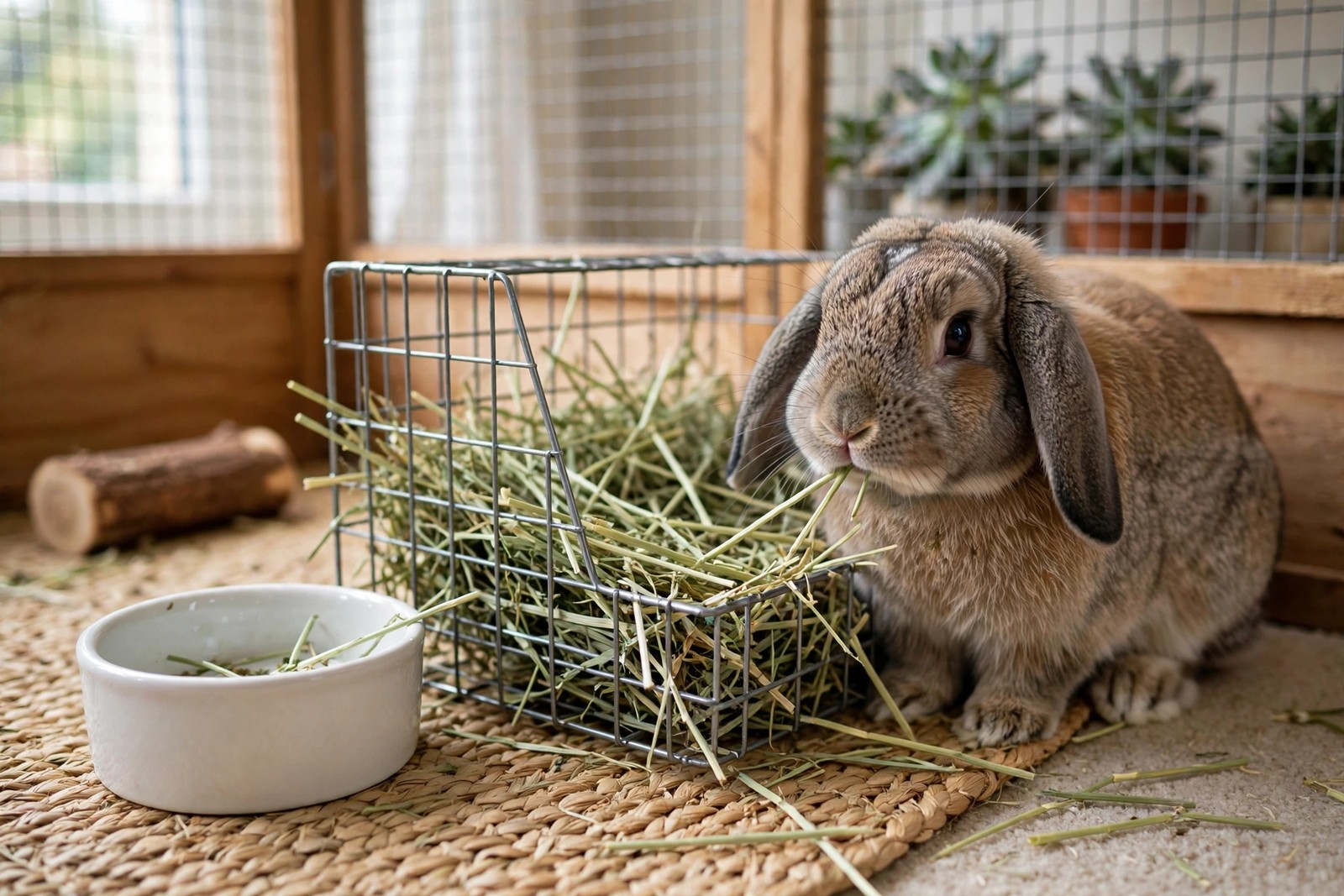
A rabbit that sniffs a bowl, turns away, and eats hay from a fresh pile instead is usually reporting on hygiene, not on the menu. Rabbits navigate by scent, and yesterday's meal leaves a film that owners can barely detect while the rabbit reads it clearly. Cleaning on a steady rhythm removes the message before it ever gets sent.
The washing rhythm that works
Food bowls get washed daily or every other day in hot water with a small amount of dish soap, scrubbed around the rim where pellet dust and saliva build into a ring. Water bowls and the drinking bottles beside them get rinsed daily, because a bottle spout and a bowl's surface both grow a slippery film fast, and rabbits drink less from water that smells stale. Hay racks work on a slower cycle: brush out and wash hay racks weekly, working a brush into the corners where fine hay dust packs down.
Rinsing deserves as much care as washing. Every trace of detergent has to come away, under running water, until the surface feels clean rather than slick and no soap scent remains when the bowl is held close. Residue smell is itself a refusal cause, and a rabbit that accepts food from a hand but not from a freshly washed bowl is often objecting to what the washing left behind rather than to the food.
The rack, the hay, and the dry-down
At the weekly wash, stale hay and dust are swept from the rack before it goes near water, so the wash deals with grime instead of a floating mat of old strands. Broken, yellowed, or musty hay at the bottom of the rack never gets topped up and served again; it comes out, and fresh hay goes into a dry rack. Keeping the rack away from the corner the rabbit uses as a toilet also protects the hay, since soiled strands scattered through a rack spoil the whole fill for a scent-driven eater.
Daily habits support the weekly work. Uneaten fresh food that has wilted or been dragged through bedding comes out the same day rather than drying into the bowl. A quick sniff of each bowl before serving becomes a useful habit: if an owner can smell anything at all on a washed bowl, the rabbit certainly can.
When refusal is not about cleanliness
Clean equipment rules out one cause, but a rabbit that stops eating entirely is a same-day veterinarian matter, whatever the bowls look like. Rabbits need food moving through them steadily, and a full day of refusal is never a wait-and-see situation. Lesser warning signs also deserve attention: eating hay but ignoring a clean bowl may point to a chipped or cracked bowl that feels wrong, droppings that shrink in size or number signal a slowing gut, and a rabbit that paws at its mouth or drools needs a veterinarian rather than a new menu. Note what changed and when, because that timeline is what a veterinarian will ask for first.
Sharing the routine without gaps
In a household where two or three people feed the rabbit, the washing rhythm fails at the handovers: each person assumes someone else rinsed the bottle, and the rack's weekly wash quietly slips to ten days. The fix is a single written schedule that everyone works from. List the daily bowl wash, the daily water rinse and the weekly rack wash on that schedule, and tick each job off as it is done. A partner rinsing the bottle in the morning marks it once, and the evening feeder trusts the entry instead of guessing.
That shared view also protects the fussy eater from well-meant inconsistency, such as a different bowl appearing or scented soap being used by one person. With KinsLe Family Sharing, the relatives you pick can open its profile themselves.