
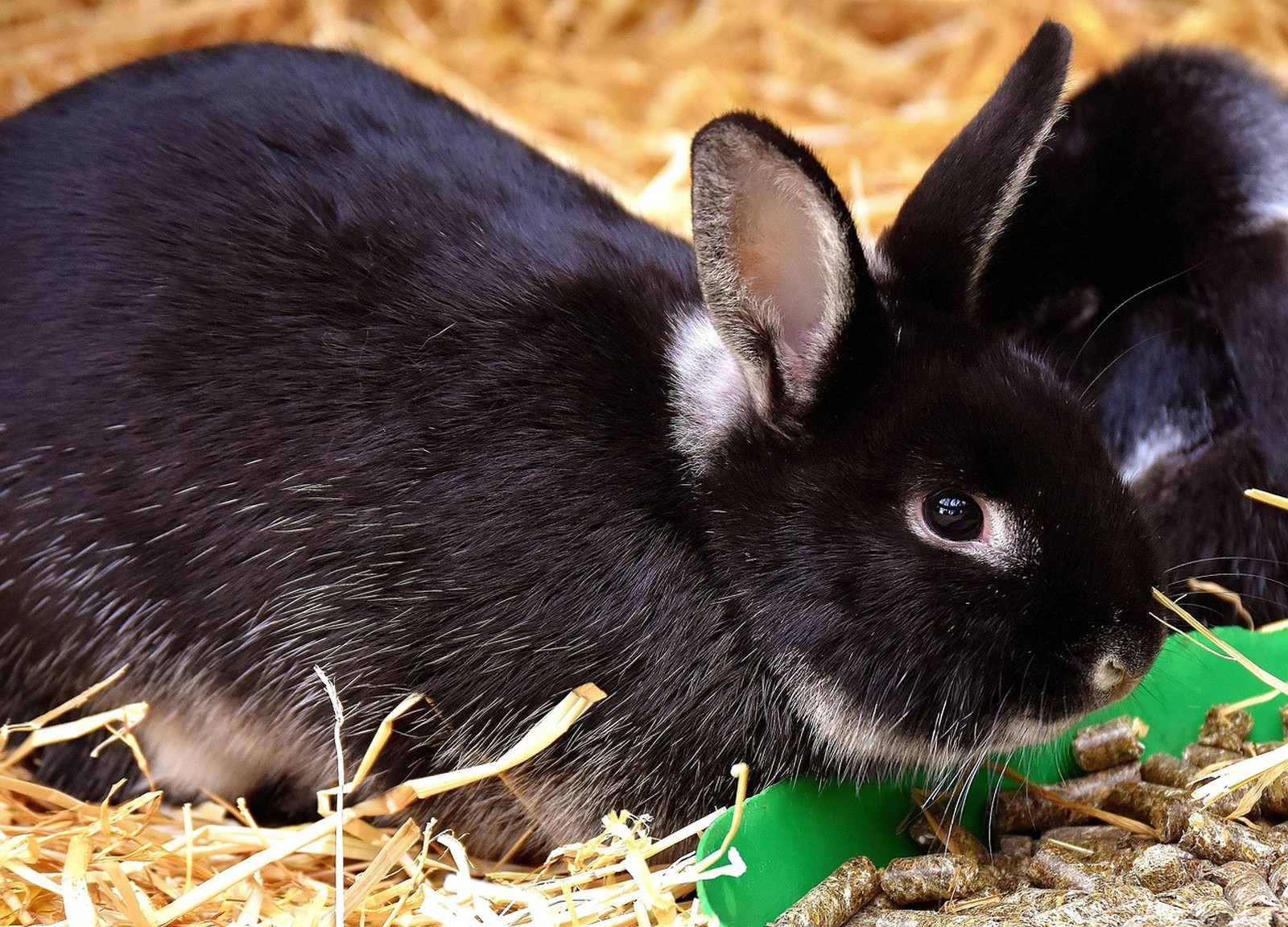
For most grown rabbits, the daily pellet ration stays small and measured — about one egg-cup for each kilogram they weigh — while hay remains unlimited. Pellets are a supplement that fills nutritional gaps, not the main meal, and serving them by the bowlful is one of the most common feeding mistakes rabbit owners make.
Why less is more with pellets
Pellets were designed to deliver concentrated vitamins and minerals in a small package. The trouble is that they are quick to eat and relatively rich, so a rabbit given free access will fill up on pellets and skip the hours of hay-chewing its teeth and gut depend on. Over time that pattern contributes to weight gain, soft droppings, and dental problems from under-use. When pellets shrink back to a modest daily portion, most rabbits simply redirect their appetite to the hay rack, which is exactly the outcome you want.
Choosing pellets worth feeding
Look for plain, uniform pellets based on timothy hay for adult rabbits, with high fiber content listed on the label. Uniform pellets matter because every bite is nutritionally the same. Avoid colorful muesli-style mixes with seeds, corn, and brightly dyed pieces: rabbits pick out the starchy, sugary favorites and leave the fibrous bits behind, so the diet ends up unbalanced no matter what the bag promises. Store pellets in a sealed container in a cool, dry place, and buy bag sizes your rabbit will finish while they are still fresh.
Measuring and timing the daily portion
Weigh your rabbit regularly so your portion is based on a real number rather than a guess — a rabbit around two kilograms, for example, would get roughly two egg-cups spread across the day. Many owners split the ration into a small morning and evening serving, which turns pellets into a useful routine and a daily chance to confirm the rabbit is eating eagerly. Scatter-feeding the portion in hay or a forage box slows things down and adds enrichment. If your rabbit is overweight, your veterinarian may suggest trimming the pellet portion further while hay stays unlimited.
Adjusting for age and health
Young, growing rabbits and nursing mothers have higher energy needs and are usually fed more generously, often with alfalfa-based pellets, under veterinary guidance. Senior rabbits and those with dental or kidney concerns may need an individualized plan as well. The adult guideline above assumes a healthy, neutered adult on grass hay. Any sudden appetite change, weight loss, or drop in droppings warrants a vet visit rather than a diet experiment, because rabbits decline quickly when they stop eating properly.
Stopping the accidental second scoop
Pellet overfeeding usually happens innocently: two people each assume the other has not fed the rabbit yet, and the rabbit happily accepts a second helping. Agree the portion once, as a household, and hold to it between you, so there are no more double scoops and no more guesswork between family members. Write the weighed portion — one egg-cup measure per kilogram, split morning and evening — where everyone in the home can find it, rather than relying on memory. A parent, grandparent or adult child you select can be given access to the profile for that rabbit through KinsLe Family Sharing.