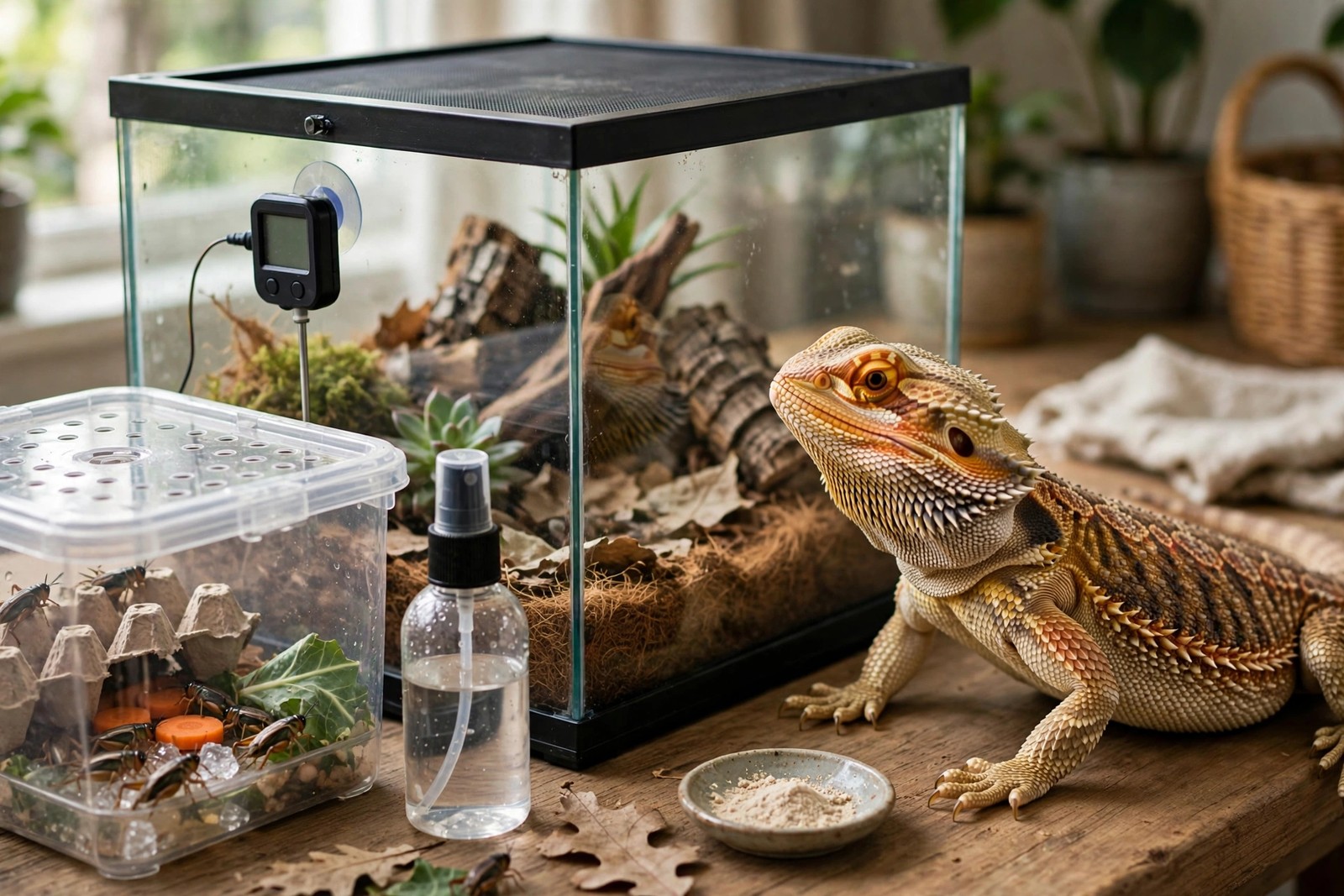
The insects in the tub are a meal still in progress: whatever a cricket, roach or locust ate during its final 48 hours is what passes on to your reptile, so those feeders need feeding properly themselves first. Keep them in a ventilated, escape-proof tub at room temperature (warm enough to be active, out of direct sun), with egg-box or card shelters, and feed them a varied diet of fresh vegetables and greens — carrot, sweet potato, squash, leafy greens — plus a quality commercial gut-load or insect diet for the final 24 to 48 hours before use. Water should come as a shallow gel or pieces of vegetable, never an open water dish, in which crickets drown and foul the tub.
Hygiene Is Half the Nutrition
Remove dead insects, old food, and frass (insect droppings) regularly — a neglected tub becomes mouldy and mite-ridden, and mouldy feeders are a genuine health hazard, not just an aesthetic one. Buy little and often rather than hoarding large quantities, keep species in their own tubs, and dust insects with calcium powder immediately before feeding them to your reptile, as part of your vet or care-sheet supplement plan. Handle feeder insects with clean hands and dedicated tweezers, and never release uneaten live feeders into the room or release surplus insects outdoors. One safety rule runs the other way too: never leave live crickets loose in a sick, sleeping, or very young reptile's enclosure overnight — hungry crickets nibble on reptiles, so feeders not eaten within a reasonable time come back out.
What feeder care tells your vet
A reptile that fades on a sound-looking diet often has a feeder story behind it, so bring the feeder facts to the appointment rather than only the animal. Note which species you feed, what those insects ate in their final day or two, how you dust them, and when a batch arrived mouldy, mite-covered or dying off fast. A vet weighing a thin or slow-growing reptile can separate a gut-loading gap from a gut problem far faster with that feeding history in hand than from a general account of the menu.
Batches matter as much as menus. If one delivery of crickets dies within days while the next thrives in the same tub, write down the supplier and the dates; a pattern across batches points at the supply, while deaths in every batch point back at your tub's hygiene, heat or ventilation. Discard a mouldy or mite-covered batch instead of feeding it on and hoping, and never solve a reptile that has gone off its food by simply buying more insects — refusal across fresh, well-kept feeders is a husbandry and health question for a vet, not a shopping problem.
That feeding history earns its keep when it travels with the reptile, and KinsLe's Pet Passport holds it in a single records packet you can carry to the vet.