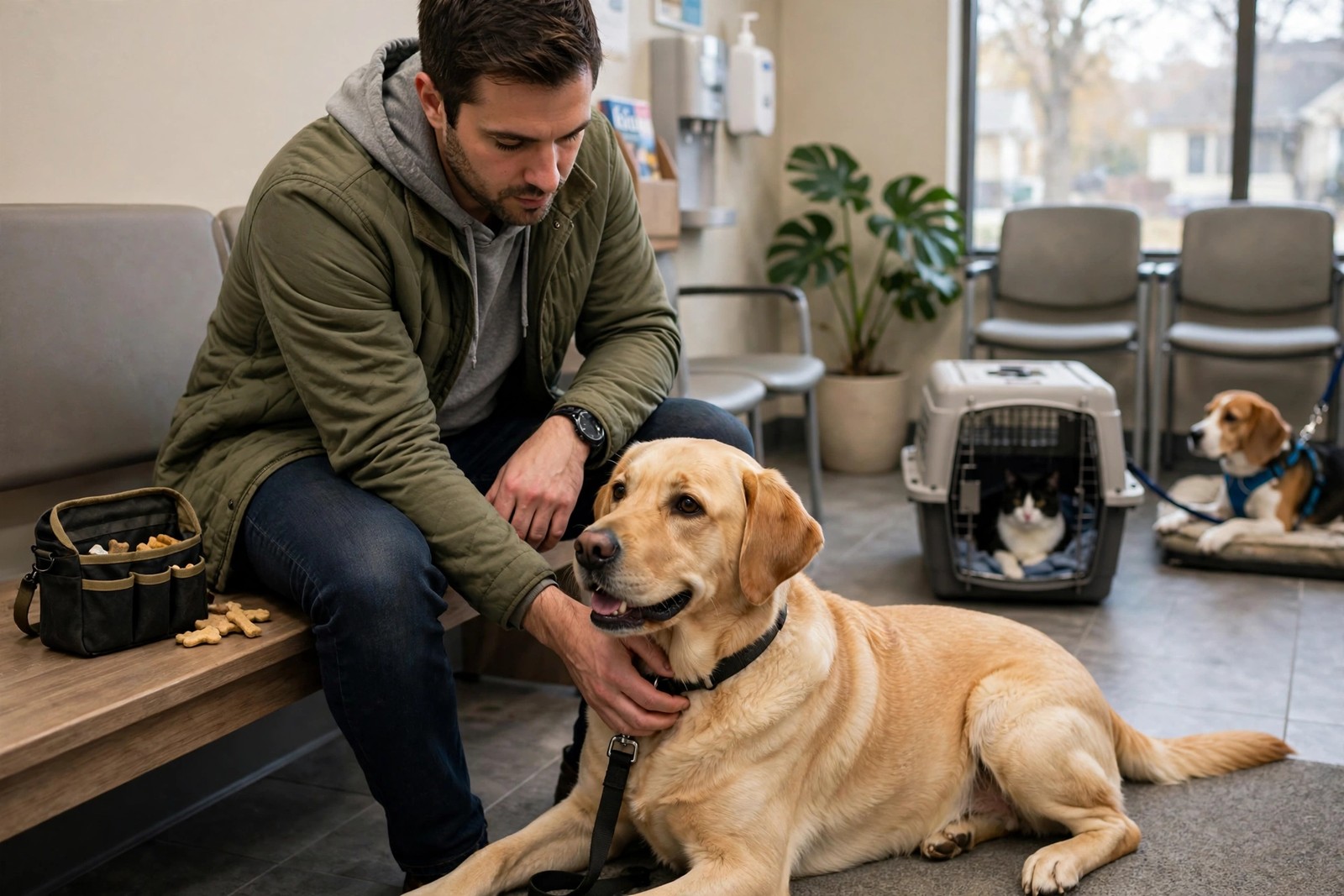
Many dogs who tremble or lunge in a waiting room are reacting to closeness, strange animal smells, slippery floors, and nowhere to go. You cannot change the room, so you change the distance, the footing, and the length of the wait. Practise a settle on a familiar mat at home until your dog can lie on the mat through ordinary household distractions, then bring that mat, a short fixed lead, and a supply of small treats to the appointment. Arrive close to your time, ask at booking whether you can wait outside or in the car until the vet is ready, and choose a corner seat where your body sits between your dog and the room. The mat does real work here, as a dog who has settled on that square of fabric in kitchens, gardens, and friends' houses reads the mat as a job with rules, even in a strange building.
Rehearse the Settle Long Before the Appointment
Build the settle in quiet places first. Ask for a lie-down on the mat, reward your dog for staying while you take one step away, then build toward reading a page, answering a door, and holding a conversation, rewarding calm stillness and relaxed glances away from distractions. Add mild challenges one at a time, a friend walking past, a doorbell recording, a calm dog at a distance in a park, and keep sessions short enough that your dog succeeds often. Practise the car journey ending somewhere pleasant on non-vet days, and practise stepping onto different floor surfaces, tiles, mats, and lino, so the clinic floor holds no surprise. A dog who has rehearsed each piece separately meets the waiting room as a familiar sequence rather than a pile of novelties arriving at once, and that difference shows in breathing, posture, and how quickly the dog can take a treat from your hand.
Set Up Your Corner When You Arrive
Check in, then take the seat with a wall behind you and little passing foot traffic in front, ideally at the end of a row. Place the mat beside your chair, ask for the settle, and keep the lead short and loose, with your foot resting on the lead if the clinic floor is busy, so your dog cannot lunge to the end of a long line. Sit between your dog and the room wherever the layout allows, because your legs and bag form a visual barrier that other dogs read as occupied space. Feed small treats at intervals for quiet watching, and let your dog look at other animals, then reward the glance back to you, rather than hauling the head away and teaching that other animals predict a struggle. Decline greetings politely and early, since a cheerful 'he is friendly' from across the room is easier to refuse at six metres than at one, and owners usually accept a smile and a short explanation without offence.
Shorten the Wait and Plan the Exit
Ask the clinic team what help the clinic can offer a nervous dog, a first or last appointment of a session, a side entrance, or a text when the consulting room is free, and write the answer into your booking notes for next time. Keep paperwork, vaccination history, and your list of questions ready before you enter, so check-in and the consultation itself run without fumbling that stretches the visit. After the appointment, leave by a quiet route where one is available, let your dog sniff and toilet outside, and note what worked, the seat, the timing, the wait length, while the visit is fresh, so the next booking repeats the winning parts. Ready paperwork plays its part in that shorter, calmer visit, and Pet Passport from KinsLe keeps the records together so the desk work ends quickly.