
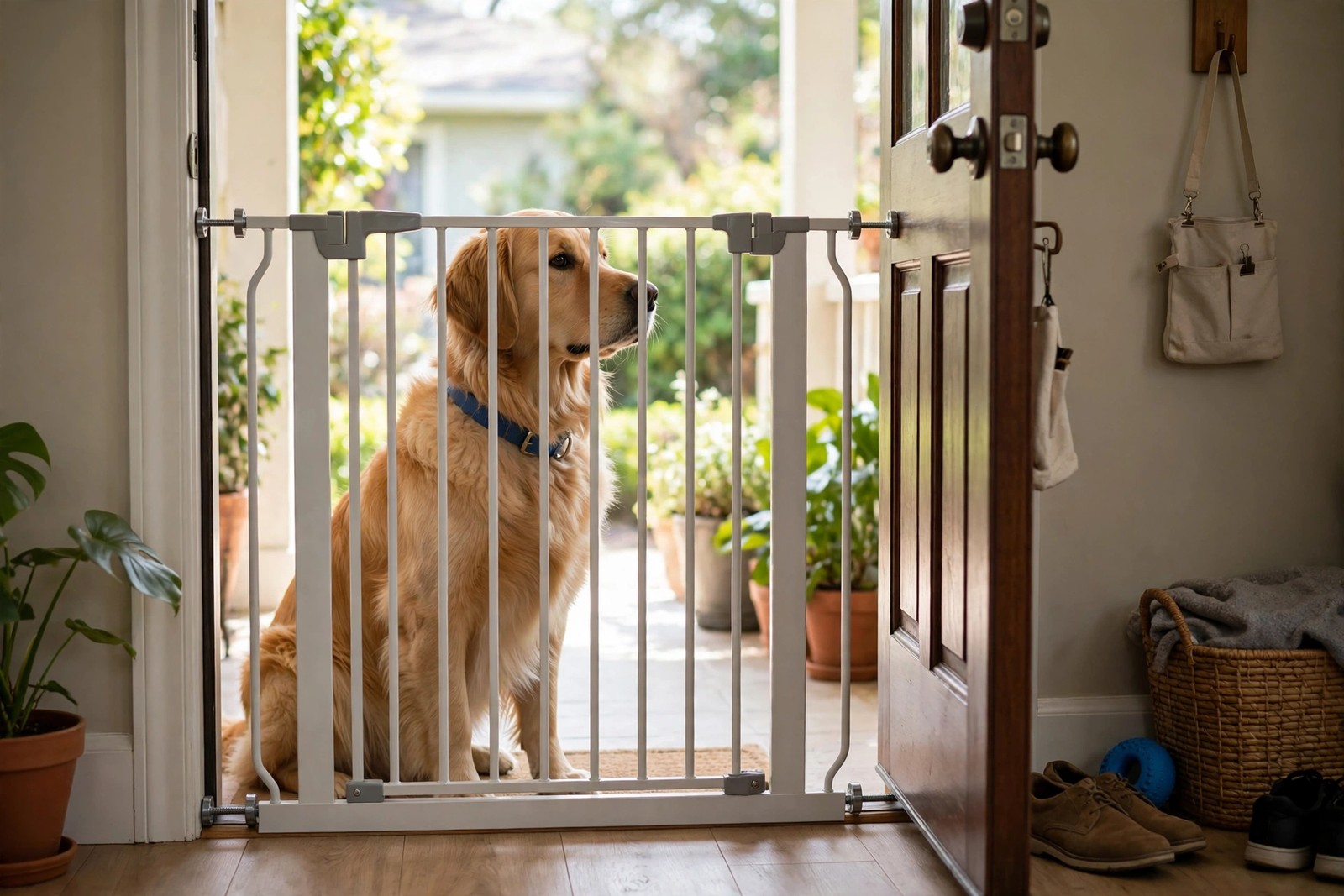
To stop your dog bolting out the front door, teach him to sit and hold position a few feet back from it until waiting becomes boring routine, and manage the doorway in the meantime with gates, leashes, and calm visitor habits. Training builds the long-term skill; management makes sure your dog cannot rehearse the escape while learning.
Why the Doorway Is So Hard for Dogs
The front door is a slot machine of excitement: visitors, deliveries, smells from the whole street, squirrels, and you — often distracted, arms full, halfway through a greeting. Bolting also pays off instantly. Every dash delivers a thrilling sprint and a fun chase game, so the behavior strengthens itself each time it works. Young dogs, high-energy breeds, and dogs who are under-exercised find the temptation hardest, but any dog can learn that the door means go.
That payoff history is why willpower and scolding fail. You have to make waiting pay better than running, and remove the chance to practice running in the meantime.
Train the Doorway Wait in Small Steps
Start with the leash on, in a calm moment with no real visitor. Ask for a sit a few feet back from the door, reward it, then touch the handle. Reward calm. Work up in tiny stages over many short sessions: handle jiggle, door cracked an inch, door open with your body blocking, door open while you step out and back. If your dog breaks position, calmly reset and make the step easier — you are building a habit, not testing one.
Add a release word so "wait" clearly ends, and practice with a boring helper before graduating to real guests. Keep sessions to a few minutes, end on success, and reward generously at first: staying put while the world opens up is genuinely hard work for a dog.
Manage Every Real Arrival
Until the training holds under excitement, manage the real thing. Put a baby gate or exercise pen between your dog and the entryway, clip a leash on before opening the door for deliveries, or settle your dog in another room with a chew for the first minutes of a visit. Ask visitors to ignore your dog until everyone is inside and the door is closed — no squealing greetings in the doorway, which pour fuel on the excitement.
Everyone in the household needs the same routine: kids, guests, cleaners, and dog walkers included, because one careless arrival undoes a week of practice. A note on the door for delivery days and a hook with a spare leash right beside it make the routine easy to follow.
Backup for the One Time It Happens Anyway
Even well-trained dogs have a startled moment. That is when the wider network helps: KinsLe's Circle of Love is the free community network that powers Lost Pet Alerts, which are free in every profile and show on the map, so if a door-dash ever does happen, a finder can message you directly. It is a safety net, not a substitute for training — but it turns one mistake into a neighborhood search instead of a lonely one.
Train the wait, gate the gap, and brief your visitors. Every household that joins KinsLe's Circle of Love adds another set of eyes to the member network behind lost-pet alerts, so a dog who slips past every precaution is looked for by far more people than the ones chasing him down the street.