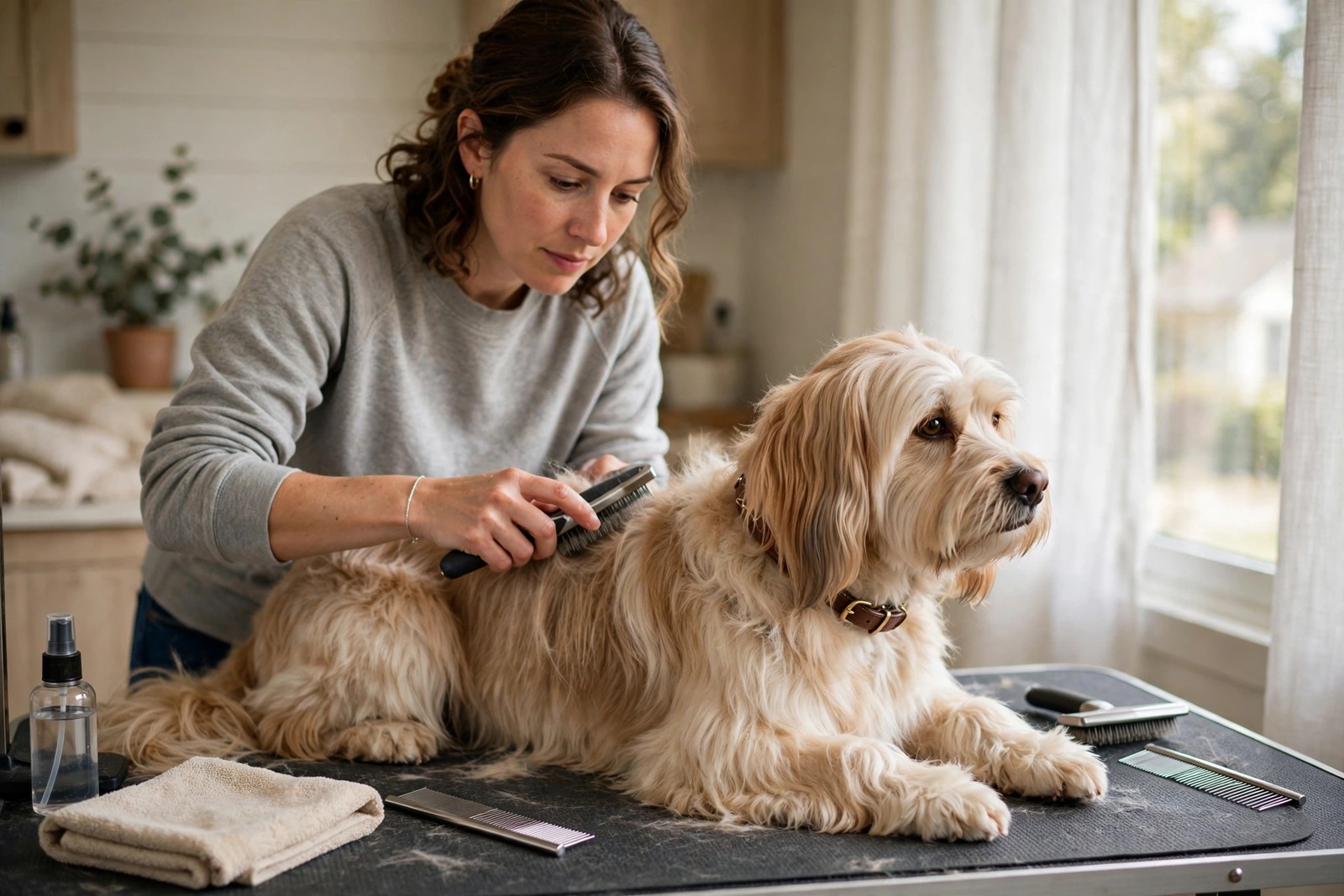
A professional groom resets a coat; the weeks between appointments decide whether the dog stays comfortable or arrives at the next visit matted, itchy and facing a close clip nobody wanted. Between-groom care is not a smaller version of the salon session. The home job is maintenance: keeping air moving through the coat, stopping small tangles becoming felted mats, and spotting the moment home care stops being enough. The right routine depends on coat type, so work by the needs of the coat in front of you rather than by a generic calendar.
Match the Routine to the Coat Type
Long and curly coats need layer-by-layer brushing, then a metal comb passed from the skin outward, because a brush skimming the surface leaves a hidden matted layer beneath a tidy top. Work a section at a time with a slicker brush before the comb: the comb tells the truth, and any spot the comb cannot pass needs attention before moving on. Smooth, short coats need far less detangling and benefit more from a weekly rub-through with a suitable brush to lift loose hair and distribute skin oils. Double coats need undercoat attention during shedding periods, worked out gently rather than shaved. Whatever the type, the test stays the same: a comb should travel from skin to tip without forcing.
Work the Friction Zones Every Day
Mats rarely begin in the middle of the back. Friction starts them where hair rubs hair or rubs equipment: behind the ears, under the collar or harness, in the armpits, around the groin and hindquarters, and between the toes on feathered legs. Give those zones a brief daily check with fingertips and a comb, even on days when a full brush-out is not scheduled, because a tangle caught at the size of a pea teases apart in seconds while a felted mat behind an ear may need clipping out. Keep collar areas dry after wet walks, since damp hair held under a collar rubs into tangles quickly. Dogs who swim or love mud need the friction zones rinsed, combed and dried after each outing rather than at the next routine session.
Mist Before Brushing and Tease Mats Promptly
Brushing a completely dry, dirty coat snaps hair and makes the dog sore, which teaches the dog to dread grooming sessions. Mist the section lightly with water or a suitable coat spray until the hair feels barely damp, then brush in the direction that lifts tangles out rather than packing them down. For a forming mat, hold the base against the skin so pulling does not hurt, work the edges apart with your fingertips, then tease through with a comb from the ends inward. Never tug a tight mat out by force, and never push scissors into a mat lying against skin; a groomer can remove a severe mat safely with clippers. Short sessions ending on a calm note keep the dog cooperative, and a dog who trusts the routine stands better at home and at the salon.
Know When to Book the Groomer Earlier
Home care has honest limits. Book earlier than the standing appointment when the comb stops passing in several areas, when mats return within days despite daily work, when the coat holds a sour smell after washing, or when you spot redness, dandruff or scratching that persists. Mention those findings when booking so the groomer schedules enough time. At home, bathing helps only when the coat is fully combed out beforehand and dried right through afterwards; water sets existing tangles tighter, and a damp undercoat left to dry slowly irritates skin. Splitting the daily friction checks between household members keeps the routine alive on busy weeks, and Care Teams within the KinsLe app lets each person record the zones they checked that day.