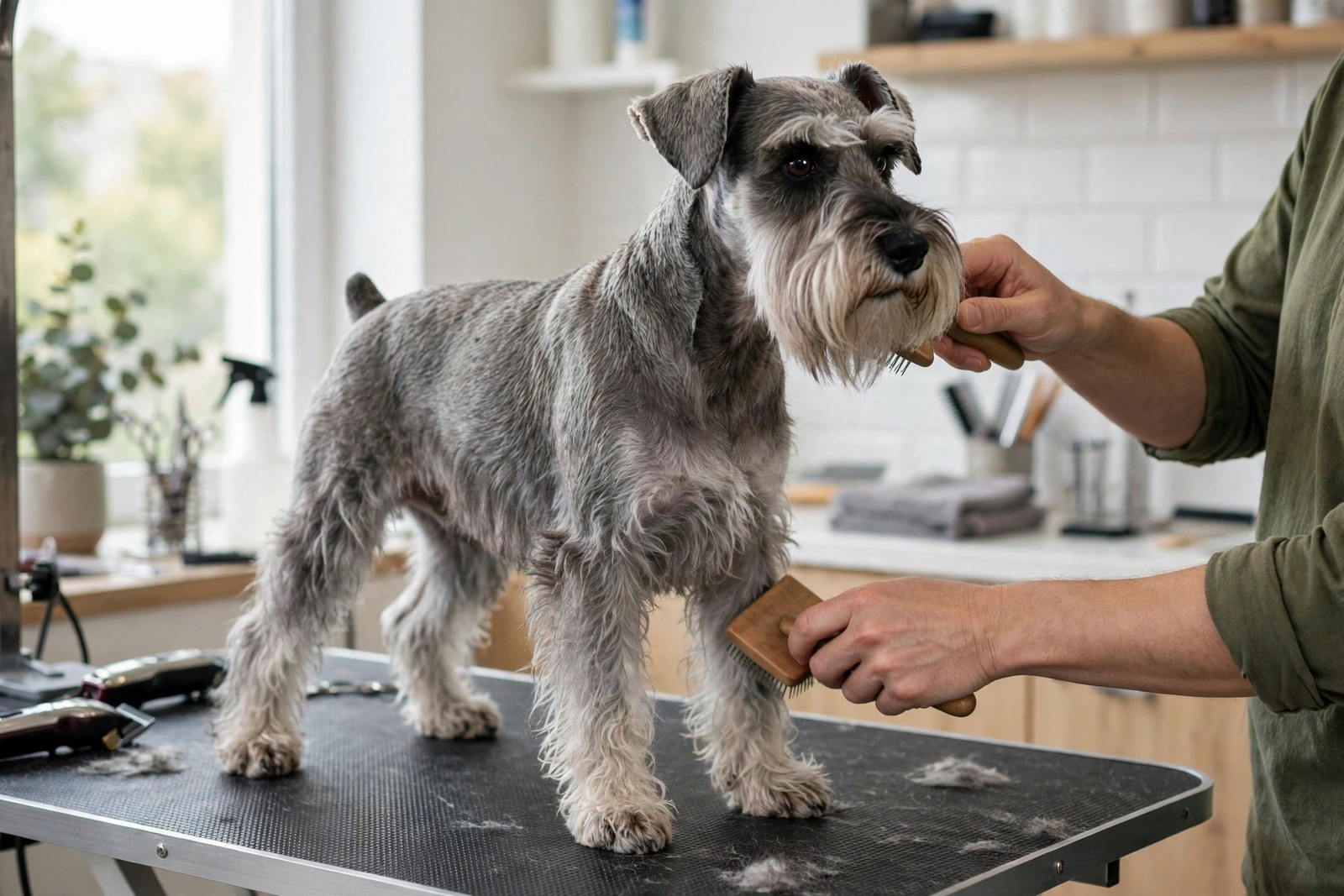
A Miniature Schnauzer in a pet trim runs on a six-to-eight-week salon cycle, and the breed punishes drift. The dense, wiry coat grows continuously, the leg furnishings and skirt pick up tangles, and a dog that looks tidy at week six can look overgrown and felted at week ten. Home care between appointments is what keeps that cycle honest: brushing two or three times a week, aimed at the parts of the dog that actually mat.
The Six-to-Eight-Week Salon Cycle
Book the next appointment before you leave the salon, because six to eight weeks arrives faster than owners expect and groomers fill up. A professional session covers the bath, the trim that keeps the breed's outline, nails, ears and the detailed work on the face that is hard to do well on a wriggling dog at home. Puppies should start with short, gentle salon visits early so the full groom is familiar long before the adult coat arrives. If the coat has already matted, expect the groomer to clip shorter than you wanted; a fresh start that keeps the dog comfortable beats combing out felted furnishings. Senior dogs may do better with the same interval but shorter, calmer sessions, and it is worth telling the groomer about stiff joints or tender spots before the appointment rather than after.
Home Brushing Between Appointments
Two or three times a week, work through the beard, legs and furnishings with a brush and then a comb, in that order, so the comb proves you reached the skin rather than skimmed the surface. The beard deserves its own habit: comb it after meals, because a Schnauzer beard traps food and water, and a beard left damp and loaded will smell sour and knot into a solid mat against the chin. Behind the ears, under the front legs and where the skirt meets the belly are the other quiet tangle spots worth checking every session. Keep home sessions short and end them while the dog is still cooperative; five calm minutes twice a week maintain this coat far better than one long wrestling match. A dog that is brushed on this rhythm arrives at the salon needing a trim, not a rescue.
Clipping or Hand-Stripping
This is the one real fork in Schnauzer grooming, and it changes the coat itself. Clipping is quick, widely available and what many pet dogs have, but a clipped coat gradually grows back softer and often paler, losing the harsh, weather-resistant wire texture the breed is known for. Hand-stripping pulls the dead outer hairs out by hand or with a stripping tool, which keeps that harsh texture and richer colour, but it is slow, skilled work that costs more and has to be kept up in sections if the coat is to stay in condition. Stripping a coat that has been clipped for a long time rarely restores it fully, so decide early which dog you want to live with. Neither choice is wrong for a pet; what matters is matching the choice to the time and budget you will genuinely sustain for years.
Small Details That Slip
Between the big jobs, a few Schnauzer-specific details reward attention. Check inside the ears at bath time, keep the hair between the paw pads level so grit does not pack in, and wipe the beard after drinking if your dog dunks it. Watch the skin under the furnishings for redness or small bumps hidden by the longer hair, and mention anything new or persistent to your vet rather than grooming over it. Teeth and nails follow the same six-to-eight-week rhythm for many owners simply because the salon visit acts as the reminder. With Care Teams in KinsLe, the person who brushed the beard and legs can mark the job done, leaving the next helper a clear record of what remains.