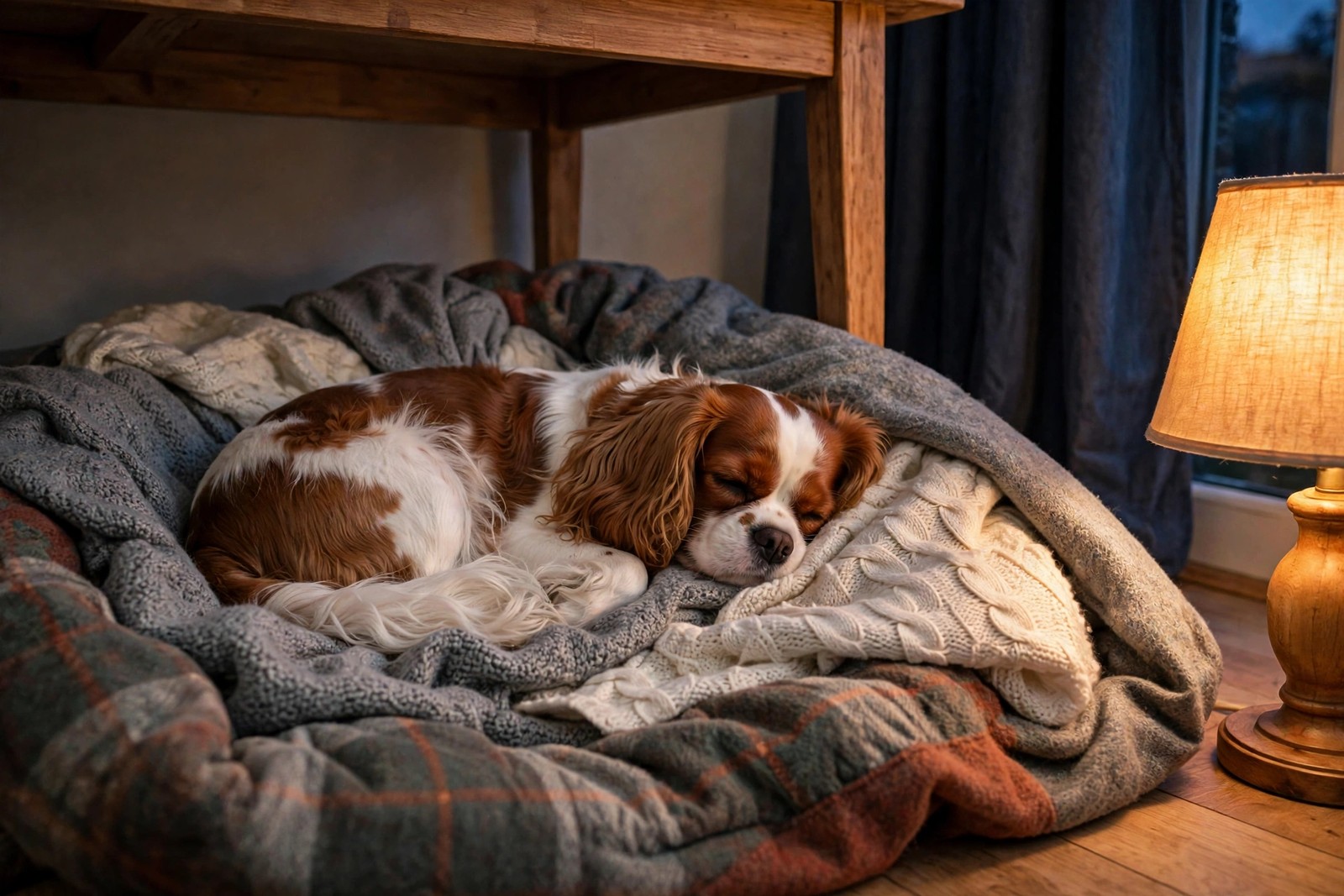
Fireworks night is won or lost before the first bang. A dog who has been walked, fed, and settled indoors in daylight is far easier to keep calm than one who meets the noise mid-walk in the dark, so plan the whole day backwards from dusk rather than improvising once the sky starts cracking.
Before Dark: The Work That Matters Most
Give the main walk early, in full daylight, and make it a proper one — a tired dog settles better, and a last toilet trip just before dark on a lead in the garden covers the rest. Feed a little earlier than usual too, since many dogs will not eat once the noise starts. Then audit the house the way a panicked dog would: back door latched, windows closed even upstairs, pet flap locked, and any gap under a gate blocked. Check the collar honestly — you should fit two fingers under it, no more — and confirm the tag is legible and your microchip contact details are current, because a bolted dog is usually reunited through those details, not through searching alone. Keep a recent, clear photo on your phone in case you need it fast.
Building the Den
Set the hiding place up before it is needed, not after the first rocket. A covered crate, the gap behind the sofa lined with bedding that smells of home, or a quiet interior room away from the loudest wall all work; what matters is that the dog finds a ready refuge instead of inventing one mid-panic. Draw curtains and blinds to hide the flashes, leave lights on so bursts are less stark against darkness, and run familiar background sound — television or radio at normal volume — to blur the edges of each bang. Put water inside the den area, since panting dogs drink more and a dog who must cross a noisy room to reach a bowl often will not.
During the Evening Itself
Follow your dog's lead completely. Some dogs hide and want to be left alone; others press against you and want steady contact. Both are fine, and forcing either style on the other kind of dog makes things worse. Stay home with a known noise-phobic dog — leaving her alone to face it is how doors get shredded and teeth broken on crate bars. For milder cases, occupation helps: a long-lasting chew, a lick mat, or calm indoor games between volleys. Do not drag her out to watch, do not scold trembling or clinginess, and never open the front door to chat with neighbours without putting her behind a second closed door first — most escapes happen through a briefly opened door, not over a fence. If her history is true panic — drooling, frantic digging at exits, injuring herself trying to escape — talk to your vet well in advance about support for the night; help arranged beforehand works far better than anything attempted mid-panic.
Puppies, Seniors, and Sound-Sensitive Breeds
A puppy meeting fireworks for the first time is learning what the world sounds like, so your unconcerned routine matters more than fussing over her. Senior dogs may hide somewhere they then struggle to get up from, so make the den somewhere with easy footing and check on them quietly. Herding and gundog types are often wired to notice every sound; expect alertness even in a dog who copes well, and keep the den option open rather than assuming confidence.
The Morning After
Before the first let-out, walk the garden and clear spent fireworks, sticks, and sparkler wires, which are sharp, toxic if chewed, and exactly at nose height for an investigating dog. And if the worst happened overnight despite everything, speed is what reunites dogs: search the immediate area first, ask neighbours, and spread her photo and description while she is still close. That speed is where KinsLe's Lost Pet Alert System earns its place — one alert reaches Circle of Love members near you and a finder can message you directly through it, so the first hour works as hard as it can.