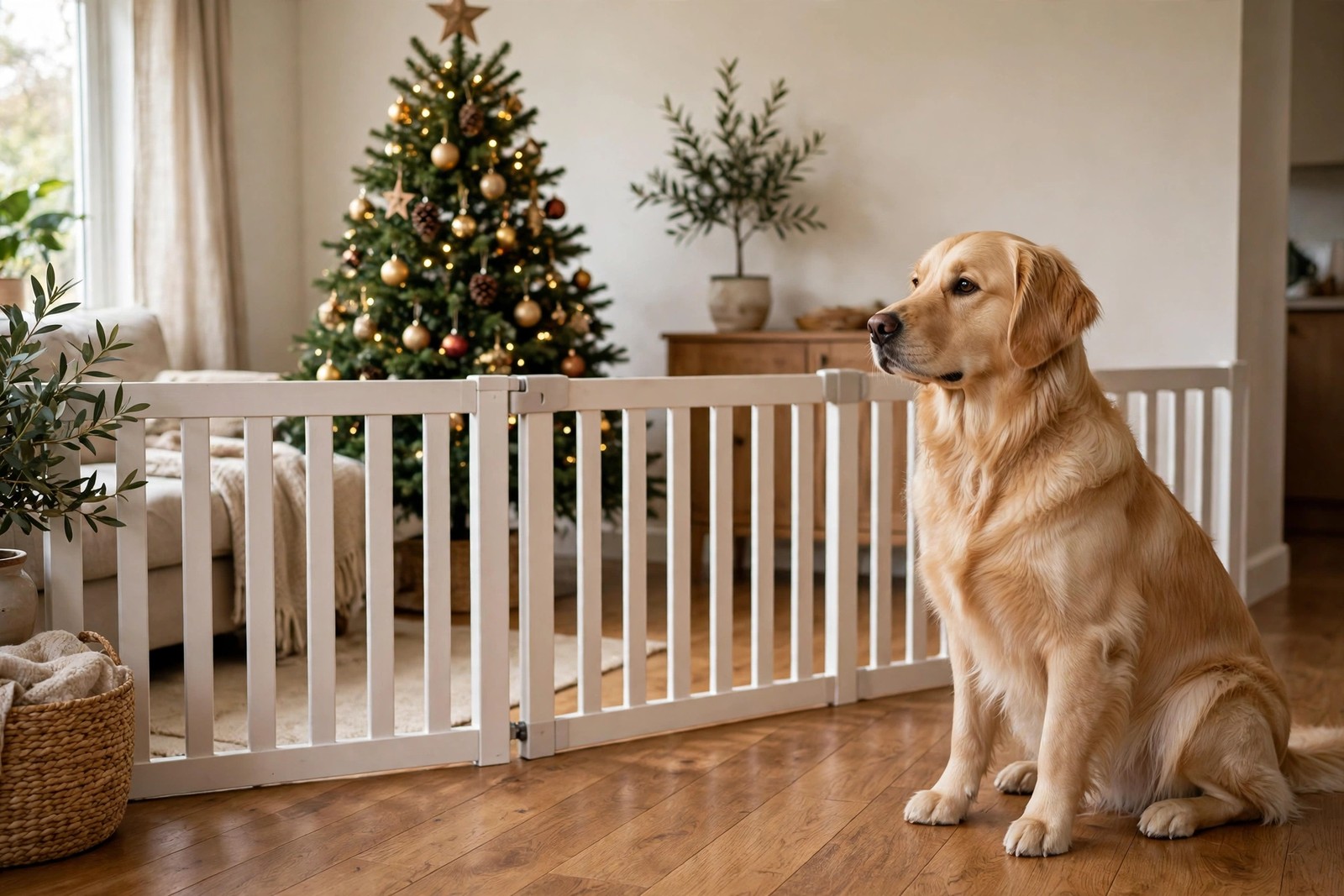
A Christmas tree concentrates a year's worth of dog hazards into one glittering corner: things that dangle, things that shatter, things that smell like food, and a bowl of stagnant water at floor level. Work through the tree itself, the decorations, the electrics, and the food separately, and most of the risk disappears before the first guest arrives.
Make the Tree Physically Safe First
Choose a wide, heavy stand and, for any medium or large dog, secure the trunk to a wall or window frame with clear fishing line or a discreet strap — a tree pulled down by a dog chasing a bauble is a crush and cut risk, not a funny photo. If your dog is a puppy, adolescent, or committed chewer, put a playpen or decorative fence around the tree for the whole season rather than relying on "leave it." Vacuum or sweep dropped pine needles daily: real needles are sharp, can irritate the mouth and gut, and get more brittle and splintery as the tree dries out. Cover the stand's water reservoir with a tree skirt or foil so your dog cannot drink it, and never add fertiliser, aspirin, or preservative mixes to the water — a covered, plain-water stand removes the question entirely.
Decorations: What to Ban and What to Move
Skip tinsel and loose ribbon altogether in a dog home. Swallowed strands do not pass like food; they can bunch and saw at the intestines, which is a surgical emergency. The same rule applies to the curling ribbon on presents and to small detachable decorations, bells, and novelty items at dog height. Hang glass and heirloom baubles on the top third of the tree only, use shatterproof ornaments below, and fasten them with looped string or ribbon ties instead of open metal hooks, which can pierce a lip or paw. Edible decorations — chocolate coins, candy canes, gingerbread, popcorn strings — should not be on a dog-accessible tree at all; to your dog they simply announce that this tree is food.
Lights, Cables, and Candles
Run light cables tight against the trunk, tape or cover any cord crossing the floor, and switch lights off when the dog is unsupervised in the room — a chewed live cable can burn the mouth and cause serious electrical injury. Battery-operated lights on the lowest branches remove the mains risk where mouths actually reach. Keep candles, including tealights in glass holders, well above tail height and never on the tree, and treat snow globes as hazardous if broken: the liquid inside many of them is toxic if lapped up, so display them on a shelf a wagging tail cannot clear.
Festive Food Is the Other Tree
Most Christmas vet visits are about stomachs, not branches. Chocolate, grapes and raisins (including mince pies, Christmas pudding, and fruit cake), onions and stuffing, cooked bones that splinter, rich fatty leftovers, and alcohol must all stay behind closed kitchen doors or in sealed bins your dog cannot raid. Brief guests plainly: no feeding the dog from plates, however appealing he looks, and put handbags containing sugar-free gum or medication in a closed room, not on the hall floor.
Know the Emergency Signs
Call a veterinarian the same day — do not wait to see — if your dog vomits repeatedly, strains, drools over a chewed cable, has eaten tinsel, ribbon, chocolate, or anything containing grapes or raisins, or becomes lethargic after raiding food. Note what and roughly how much was eaten and when; that detail shapes the vet's advice. With guests arriving and doors opening all day, also keep your dog's collar and ID on indoors during gatherings, and if he does slip out into the dark and noise, KinsLe's Lost Pet Alert System lets you send a free alert to nearby Circle of Love members who can message you directly with a sighting while you search.