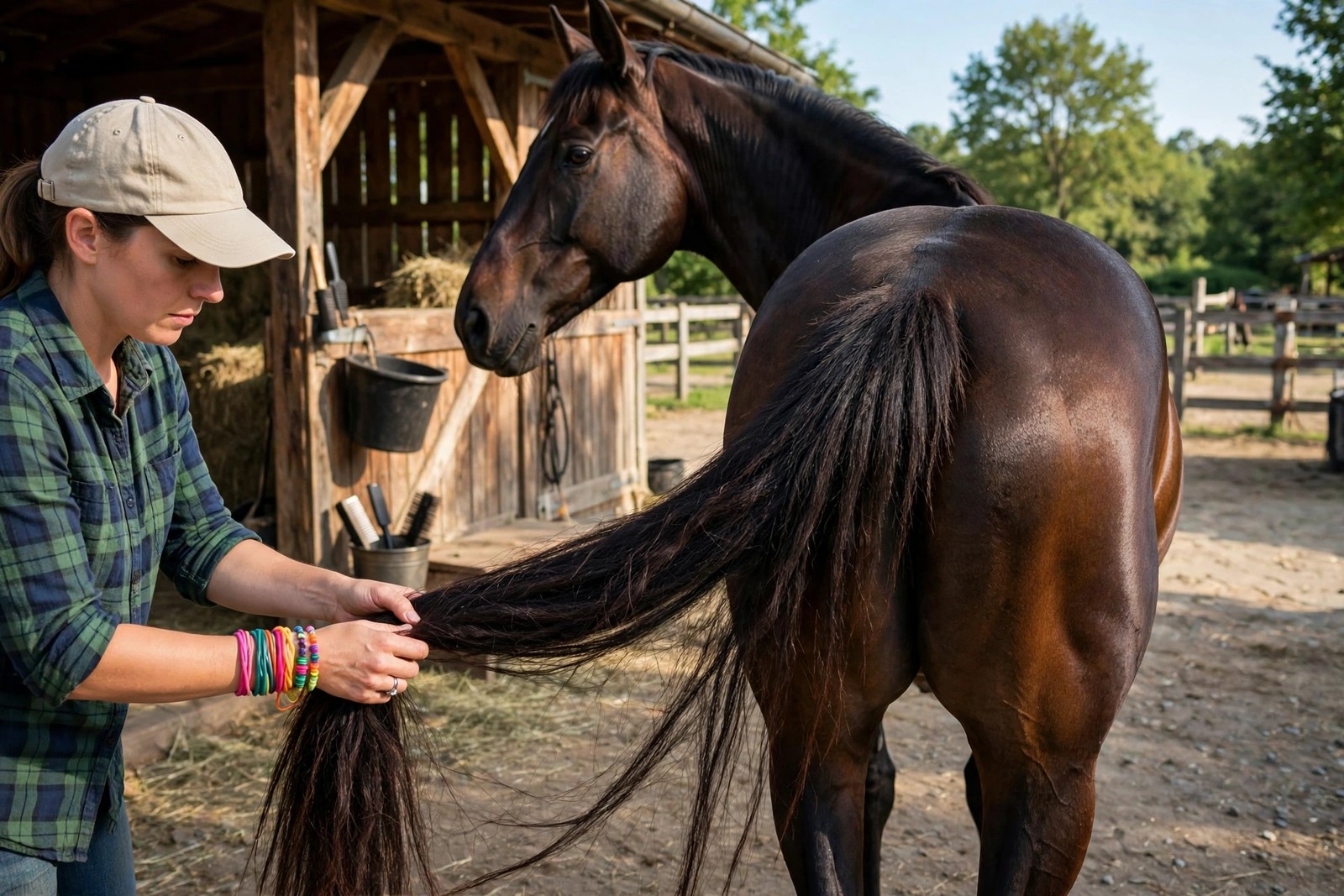
Mane and tail hair breaks far more easily than it tangles, and most of the damage is done by the rescue attempt — a brush dragged through a knot from the top. A tangle-free tail is built on a different order of work: fingers before brushes, bottom before top, and small daily attention instead of a weekly battle. The routine below suits a long, full tail and mane, the kind that picks up bedding, mud and wind-blown knots between rides.
Fingers First, From the Bottom Up
Start every session by picking the tail and mane through with your fingers. Shake out straw, shavings and dried mud, then find the tangles and tease them apart strand by strand, beginning at the very bottom of the tangle and working upward a little at a time. Spray a detangling product onto dry, stubborn sections and let it sit for a minute so the hairs slide against each other instead of locking tighter. Only when your fingers pass through freely should a brush follow, and then in small sections: hold the tail hair firmly above the part you are brushing, so the pull is taken by your hand rather than by the roots, and brush the ends first, moving higher as each section clears. Brushing an unprepared tangle tears out the fullest part of the tail, and tail hair regrows slowly, so ten patient minutes protect months of growth.
Plaits, Tail Bags and Daily Shake-Outs
Between sessions, containment does most of the work. A long tail kept in one loose plait, secured without a tight band at the dock, stays far cleaner in the stable and field, and a tail bag over the plait protects the hair when the ground is muddy or the horse rubs. Check and redo the plait regularly rather than leaving it for weeks, because a forgotten plait can mat at the top and hide rubbed or broken skin at the dock. The mane can be kept in several loose plaits for the same reason if it tangles badly, or left loose if you shake it out daily. That daily two-minute shake-out — fingers through the tail, bedding picked out, plait checked — is what prevents the small snarl that becomes Saturday's half-hour knot. Watch for rubbing as well: a horse who is breaking tail hair against a fence or stable wall may be itchy from insects, sweat or a skin problem, and no amount of careful brushing fixes hair that is being rubbed away nightly.
Wash Only When the Hair Needs It
Frequent washing strips the natural oils that let mane and tail hairs slide past each other, so a freshly washed tail often tangles faster than a slightly oily one. Wash when sweat, mud or scurf has built up, or before an outing, using a horse shampoo worked gently through the hair without scrubbing it into a ball, then rinse thoroughly and apply conditioner or detangler before combing the wet hair out with your fingers. Let the tail dry before plaiting or bagging it, because hair put away damp can mildew and weaken. In winter, when washing is impractical, spot-clean the worst sections, keep up the finger-combing, and accept a less polished tail in exchange for intact hair. If the mane or tail starts thinning, the dock becomes scurfy and sore, or the horse rubs persistently, ask your vet to check the skin rather than adding more products.
Put the Daily Check on the Rota
Mane and tail care fails as an occasional project and succeeds as a small daily habit, which makes it ideal work to share explicitly rather than assume. Name who does the daily shake-out and plait check, on which days, and who does the weekly full finger-comb and wash decision. KinsLe's Care Teams lets you assign that daily mane and tail check to a named helper for this horse, with each session marked complete with a timestamp, so the two minutes that prevent the tangles never depend on memory.