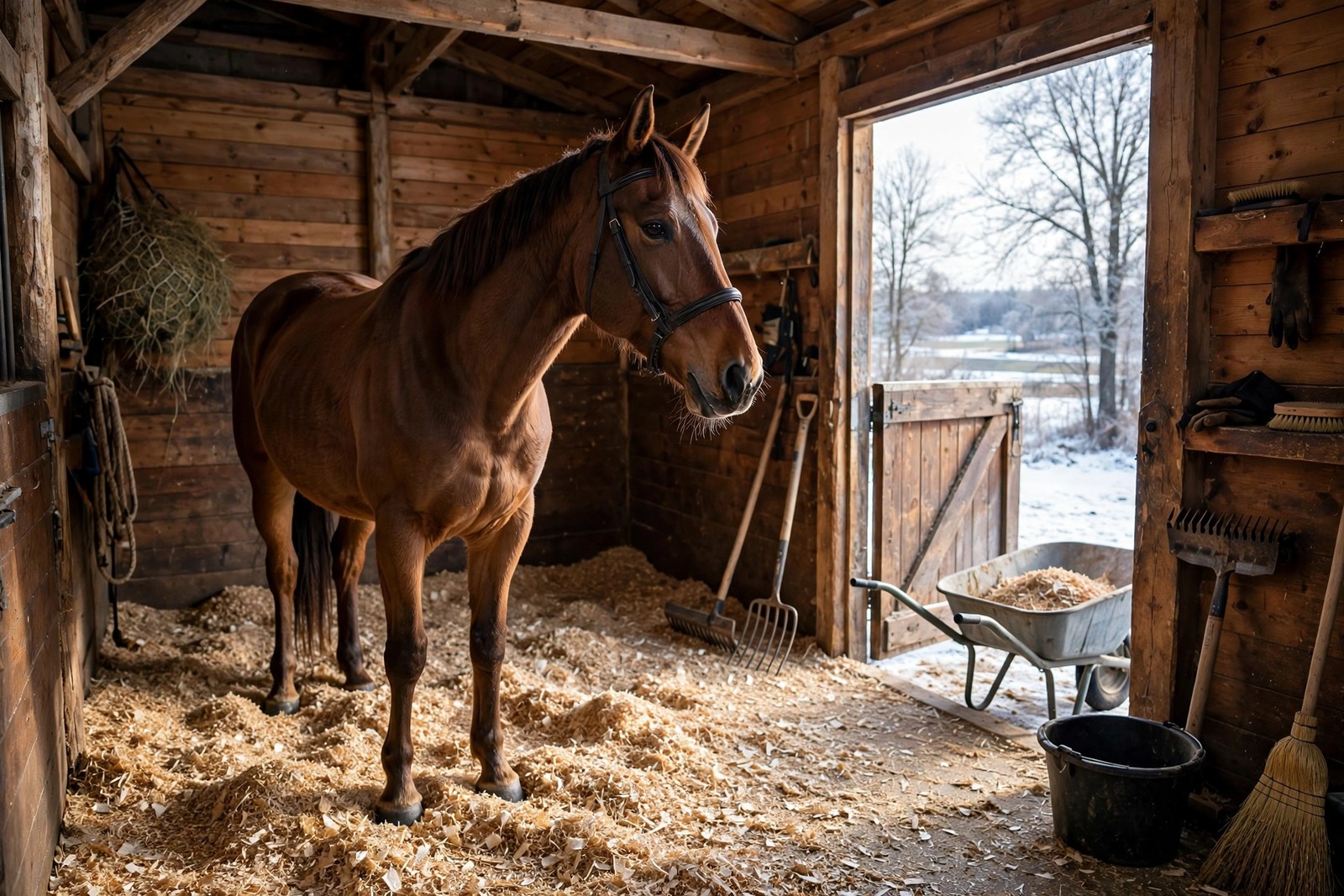
A winter stable gets damp from four directions at once: rain driven through leaks and under doors, ground water rising or pooling at the threshold, urine soaking the bed, and moisture from the horse's own breath condensing on cold surfaces. A dry stable is one where each route is dealt with. Fix the building first, manage drainage outside, choose bedding for absorption, muck out the wet layer daily, and keep air moving above the horse's back. Sealing a stable shut against the cold does the opposite of what owners intend, trapping damp and ammonia where the horse breathes.
Stop Water Getting In and Give It a Way Out
Walk the stable during rain and note exactly where water appears. Clear gutters and downpipes before winter, repair slipped roof sheets and perished seals, and fit a threshold or channel drain where the yard slopes toward the door. Outside, scrape mud away from the entrance, lay hard standing that falls away from the stable, and keep drains and ditches open so puddles do not sit against the wall. Inside, a floor that is sound, level, and slightly above the yard, with mats fitted tightly so urine cannot pool underneath, removes the hidden reservoir that makes a bed smell wet even after mucking out.
Bedding Choices and Daily Removal
Straw drains freely but absorbs little, so a straw bed needs generous depth and daily removal of the soaked centre. Shavings, chopped straw, and similar absorbent beddings hold urine in a patch you can lift out cleanly, which suits a full daily muck-out. Deep litter, where a compacted base builds under fresh bedding, can stay dry on top in a large, well-ventilated stable, yet it demands discipline: remove droppings daily, keep the top layer fresh and dry, and dig the whole bed out if it turns wet or strong-smelling. Whichever system you choose, bank bedding up the walls for insulation and to draw a resting horse away from cold edges, and store spare bales under cover so you never spread bedding that is already damp.
Ventilation Without Draughts
Ammonia from urine sits low and harms airways, while warm damp air rises and condenses. Keep an inlet and a high outlet open, such as a top door, louvred vent, or ridge opening, so air changes without blowing directly onto the horse at standing or lying height. Cobwebs heavy with dust, streaming condensation on the roof, and a sharp smell when you crouch at bed level all say the air is not moving enough. A horse with a suitable rug and a dry bed tolerates cold, fresh air far better than a stuffy, humid box, and respiratory health through winter usually tracks airflow more than temperature.
Hooves, Rugs, and the Daily Round
Standing in wet bedding softens hooves and invites thrush, so pick out feet daily and check frogs for a foul smell and black, crumbly areas; raise any concern with your farrier or vet. Dry a soaked rug on a rack rather than back onto the horse, keep a spare for wet spells, and check under rugs for rubs and for a horse sweating beneath too many layers. Note which corners stay wettest over a week, because that pattern points to the leak, slope, or urination spot to fix, rather than treating every wet patch as bad luck.
Winter dryness is a rhythm of small jobs done before damp builds up. On KinsLe, Care Teams lets you set that rhythm as daily mucking, bedding, and gutter tasks for whoever is on yard duty, with timestamps showing each check was done even on the darkest, wettest evenings.