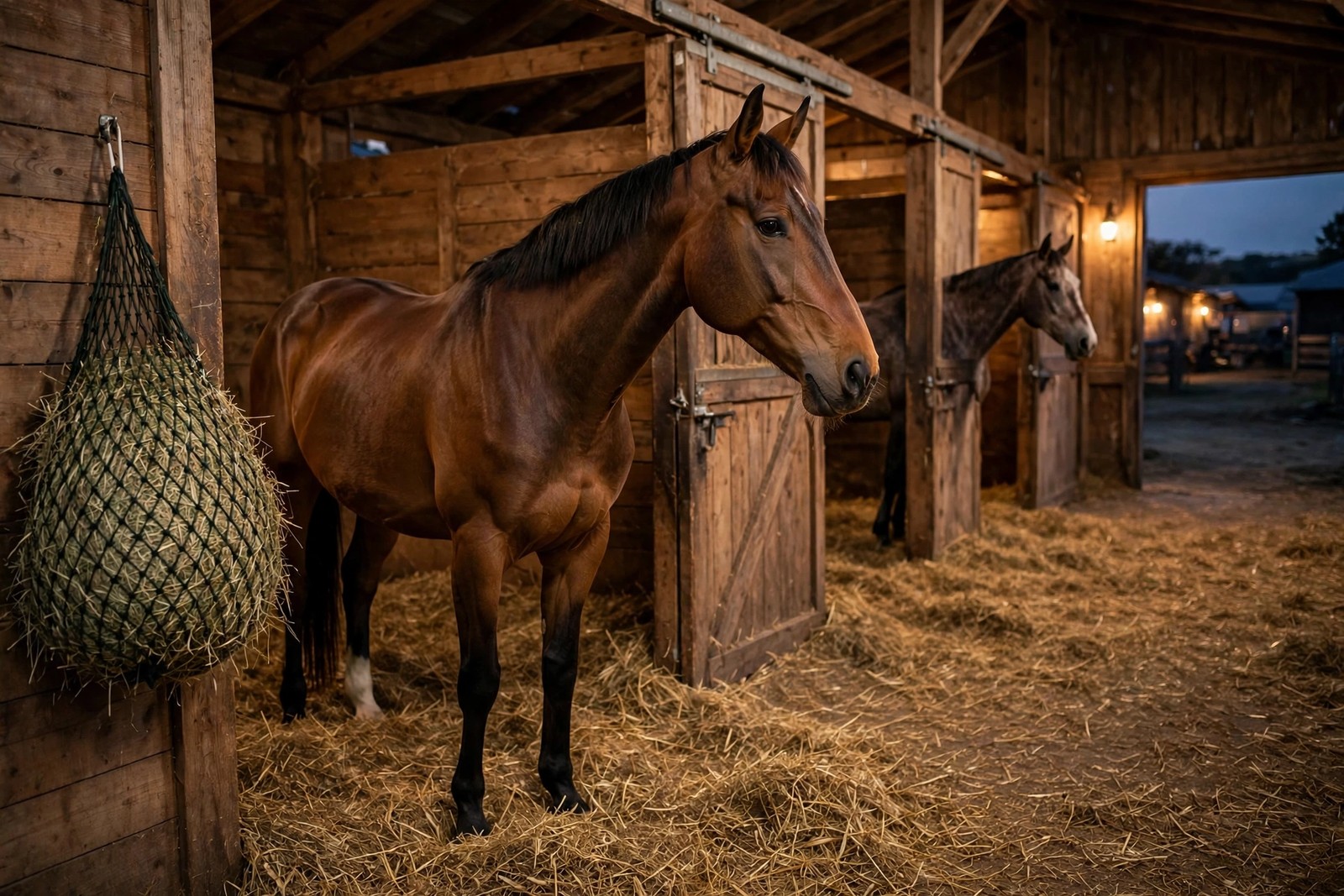
Fireworks injure horses less through the noise itself than through what a startled horse does next: galloping blind in a dark field, crashing fencing, or injuring itself in a stable it is trying to leave. Your planning therefore has two aims. Keep the horse in the environment where it personally feels safest, and remove every hazard from that environment before dark, because once displays start you cannot safely reorganise a frightened half-ton animal by torchlight.
Stable or Field: Choose for This Horse
A horse that is routinely stabled, relaxes indoors, and has equine company within sight is usually best brought in before the noise begins, with plenty of hay to occupy it and its normal evening routine kept. A horse that weaves, box-walks, or panics when shut in may be safer left out in its familiar field with its usual companions, where flight instinct has somewhere to go and herd calm can do its work. Horses generally settle better in company than alone in either setting, so avoid isolating a horse on fireworks night even if its usual routine involves separate turnout.
Whichever you choose, commit to it before the first bangs. Moving a horse after displays have started, through a dark yard, while it is already wound up, is the most dangerous option of all. If you are genuinely unsure which setting suits a new horse, talk to its previous owner or your vet in advance, and default to the arrangement the horse already knows best.
The Afternoon Safety Check
Walk the chosen environment in daylight. In the field, check every fence line, gate fastening, and water trough, remove hazards such as loose equipment, uncovered holes, or temporary fencing a galloping horse could hit, and confirm there is nothing in neighbouring fields, like a bonfire, that changes the picture. In the stable, check the door bolts, remove protruding hooks and anything breakable at kicking height, bed deeply, and make sure a full hay supply and water are in place so you are not carrying buckets through the yard mid-display.
A radio playing ordinary human voices and music at normal volume in the yard can soften the contrast between quiet and bangs for stabled horses, and keeping yard lights as they normally are avoids adding visual change to noise. Bring other yard animals in and shut yard cats and dogs away before dark, so nothing darts underfoot at the worst moment.
During the Night Itself
Stay on site if you can, or arrange for an experienced person the horses know to be present through the peak hours, typically the early to late evening around organised displays, and check at intervals rather than constantly disturbing settled horses. Watch from a safe position; do not enter the box or field of a panicking horse, because a frightened horse does not recognise familiar people reliably. If a horse is sweating, trembling, or repeatedly crashing about despite your preparations, phone your vet for advice; vets can discuss whether sedation is appropriate for a particular horse, but that decision and any medication must come from them, ideally arranged before the night rather than during it.
Check every horse again once the noise has fully stopped and again at first light, looking for cuts, lameness, a horse that has stopped eating, or signs of colic in a horse that has been highly stressed, and call your vet promptly about anything you find.
If the worst happens and a horse gets loose, act in the first minutes: warn nearby roads' users if you safely can, contact the police about a loose horse near traffic, and spread the description locally at once, which is where KinsLe's Lost Pet Alert System helps, letting you send a free alert to nearby Circle of Love members and receive a finder's direct message while the search is still fresh.