
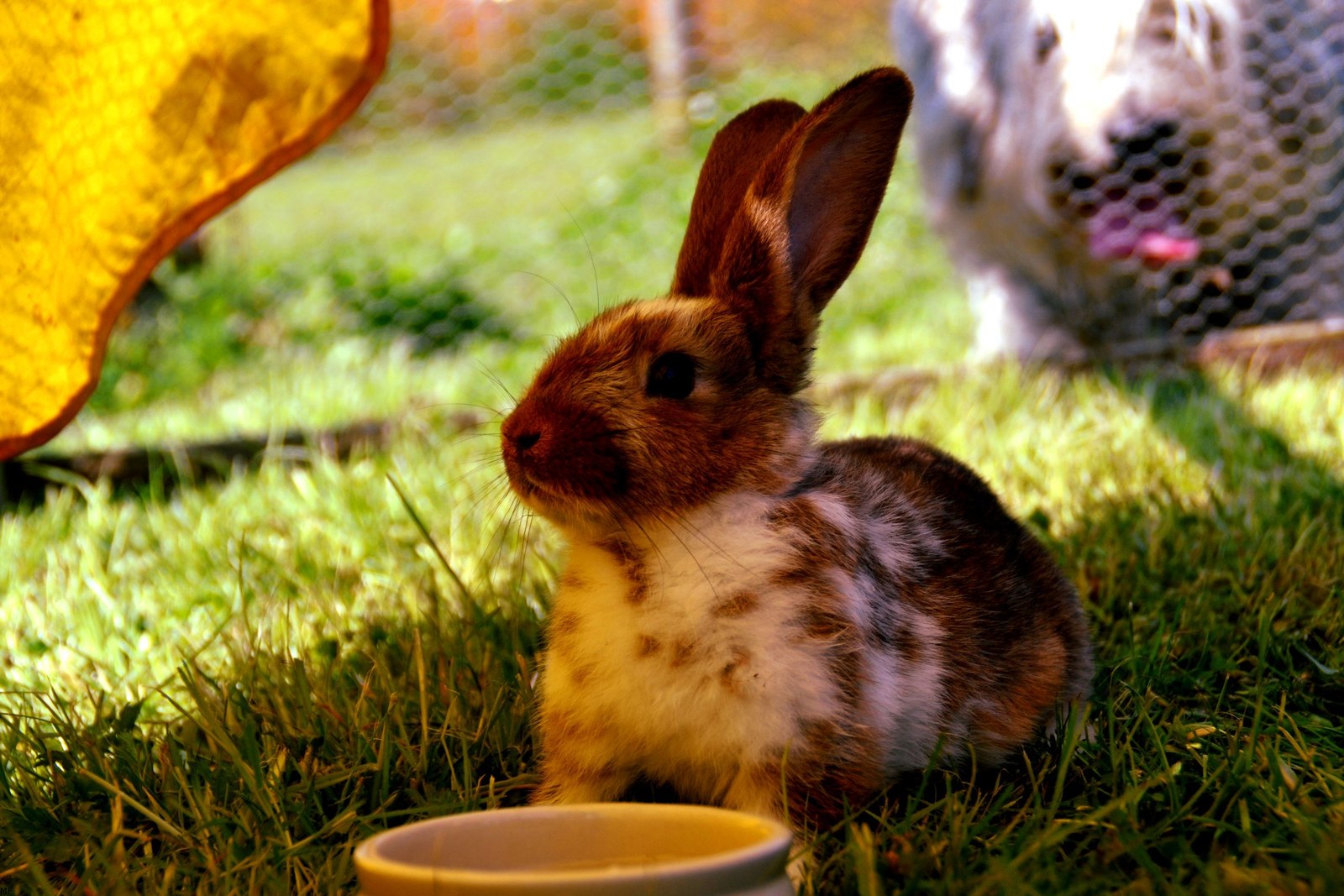
Keep your rabbit safe around a dog or cat by never leaving them together unsupervised — not once, not even with the gentlest dog you know. A prey animal and a predator can coexist peacefully in the same home, and many do, but the safety comes from barriers and management, never from trust. A sudden movement can trigger a chase response in a dog that has ignored a rabbit for years, and a rabbit can be fatally injured in seconds, sometimes from shock alone. Even a playful cat paw can wound thin rabbit skin and turn serious fast.
Give Small Pets a Room of Their Own
The foundation is separation you do not have to think about. House rabbits and guinea pigs in a room the dog cannot enter, or behind a closed door plus a sturdy baby gate as a double barrier for households with door-dashers. Their enclosure itself should be dog-proof: heavy, chew-resistant, and impossible to tip, with mesh small enough that a cat cannot hook a claw through. Floor time and exercise should happen in the closed room with the dog or cat shut out entirely — that is your rabbit's time to binky, explore, and relax without one ear permanently tuned to a predator's footsteps.
Introductions Through a Barrier Only
Curiosity is fine; contact is not required. Let your dog or cat see the rabbit through the secure enclosure or a gate, and reward calm behavior — lying down, looking away, a loose wag — with treats and praise. Sessions should be short and ended while things are still boring. If your dog fixates, whines, paws at the barrier, or cannot be called away, that is information, not failure: increase distance and keep practicing calm at a level your dog can handle. A cat that stalks the hutch needs the same message — a solid screen or closed door, not a scolding. Some dogs, particularly terriers and sighthounds bred to chase, will always need strict separation, and there is no shame in that.
Read the Rabbit, Too
Safety is also about stress. A rabbit that freezes, thumps repeatedly, stops eating, or hides all day in a house with a prowling cat is not coping, even if nothing physical ever happens. Watch that your rabbit eats hay eagerly, moves around confidently, and rests stretched out — signs of a prey animal who feels secure. Provide hideaways with two exits so your rabbit never feels cornered, and keep the cat's litter and feeding stations away from the rabbit's space to reduce scent pressure.
Household Rules That Prevent Accidents
Most injuries happen during lapses, not introductions: a door left open, a guest who lets the dog in, a child carrying the rabbit past the cat. Agree on simple rules everyone follows — the rabbit room door stays shut, the dog wears a lead when passing through shared spaces if needed, and small pets are never carried through rooms where a dog is loose. Secure enclosure latches matter here too, since a bored dog can learn to nudge a weak catch.
A Community Safety Net Around Your Rabbit
Good barriers handle the everyday; KinsLe's Circle of Love handles the unexpected. KinsLe's Circle of Love is a free network of pet lovers, and it powers Lost Pet Alerts, which are free in every profile and appear on the map should your rabbit ever get out, letting a finder message you directly. Every extra member makes that local safety net stronger for every pet. Through KinsLe, Circle of Love links pet lovers across every account type into that free network, widening the community standing behind each alert.