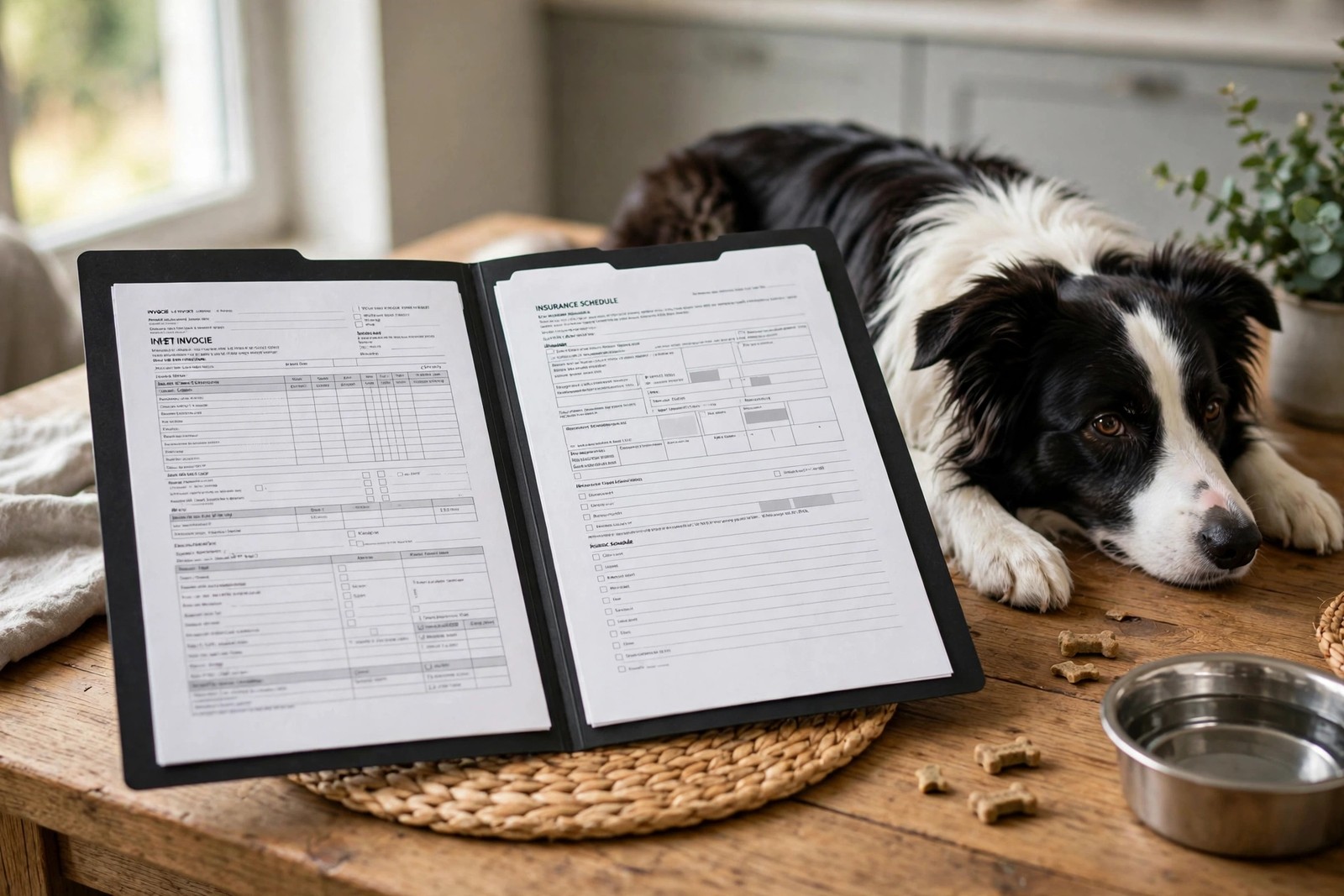
Receipts only earn their drawer space on one day: the day you claim. A system built for that day looks different from a shoebox of paper — it separates the policy from the proof of spending, keeps invoices in the order an insurer reads them, and makes any single visit findable in under a minute.
Two Sections, Not One Pile
Start with a policy section that never mixes with receipts. In it goes the policy schedule showing your dog's name, the policy number, the cover period, and the excess you pay per claim; the wording booklet with its exclusions and waiting periods; and renewal letters, because terms change at renewal and the version that applies is the one in force on the treatment date. Behind it, keep a second section purely for spending: invoices, estimates you approved, referral letters, and claim forms, newest at the back so the story of any condition reads forwards.
What a Claim-Ready Receipt Looks Like
An insurer cannot work from a card slip. What their assessor needs is the itemised invoice from the clinic: your dog's name and your name as policyholder, the clinic's name and address, the date of each treatment, a line-by-line breakdown of what was done and charged, and confirmation of what you paid. If a clinic hands you only a summary till receipt at the desk, ask them to print or email the full invoice before you leave — it is a two-minute request on the day and a frustrating chase three months later. File referral and out-of-hours invoices alongside the main clinic's paperwork for the same condition, clearly marked as one episode, because claims are assessed per condition, not per building.
Filing Rhythm That Survives Real Life
Systems fail at the gap between the vet visit and the filing. Close it with a ten-minute monthly habit: empty the envelope, glovebox, or email folder where receipts land, scan or photograph anything paper — thermal print fades to blank within a year or two — and file by date, noting the clinic on anything unclear while you still remember it. Name digital files so they sort themselves: date, clinic, and a word or two for the problem reads clearly years later. Keep a simple running list at the front of the spending section — date, clinic, condition, amount, claimed or not — so you can see at a glance which costs were never submitted and which condition is approaching any limit in your policy.
How Long to Keep It All
Keep paperwork at least while the policy runs and until every claim from that period is settled and closed. Go further with history: invoices for long-running conditions — skin trouble, joint problems, a sensitive stomach — are worth keeping for your dog's lifetime, because a new insurer, a new vet, or a dispute about when something started will all turn on the earliest dated evidence you can produce. When you change clinics, ask the old one for a complete printed history and file it as a single block rather than scattering it through the folder.
One Dog, One Folder — Even in a Multi-Dog Home
Shared paperwork is where claims stall. Keep a separate folder per dog even if they share a clinic and a policy, and the moment an invoice arrives, check the patient name on it is the right dog; clinics do misfile, and correcting it on the day is trivial compared with correcting it mid-claim. Everything above is simpler when the packet already exists as one thing you can hand over, which is exactly what KinsLe's Pet Passport is for — your dog's policy details, dated invoices, and vet history kept together in one portable record instead of three places at once.