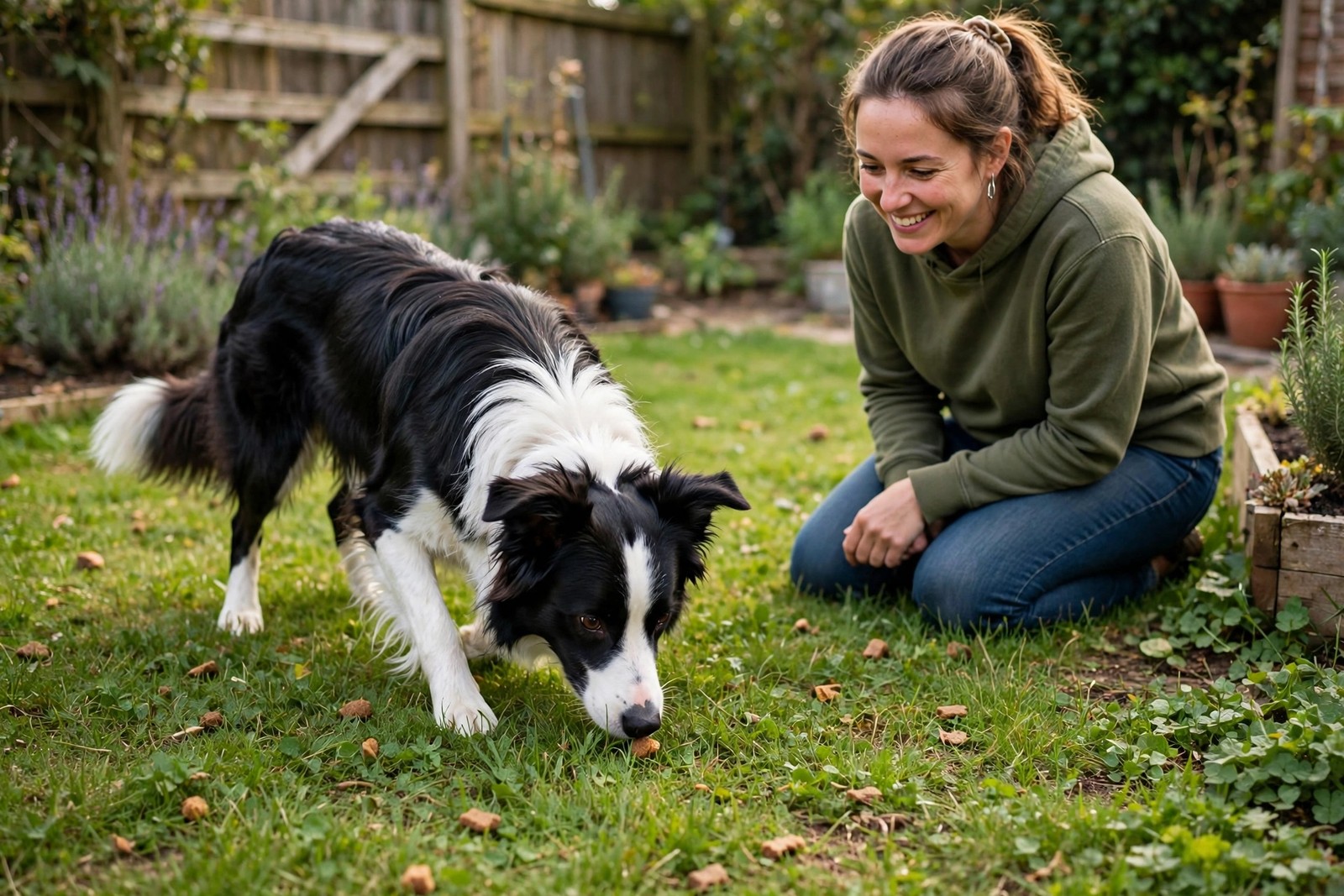
Giving up looks different in different dogs: one wanders off to sniff, one sits and stares at you, one starts offering every behaviour it knows in frantic rotation, and a soft dog may simply lie down and switch off. All four are saying the same thing — the game, as currently set, costs more than it pays. Dogs repeat what works and abandon what does not, so a dog who quits is giving you honest feedback about step size, reward rate and session length, not a verdict on its intelligence or willingness.
Read the quit before you fix it
Note exactly when your dog checks out. Quitting in the first minute usually means the opening step is already too hard, the room is too distracting, or a past session ended badly in that spot. Quitting after several good repetitions often means the reward has lost value, the same cue has been drilled past the point of learning, or the dog is tired, hot or needs water and a toilet break. A dog who quits only on one exercise — staying still for handling, for example — may find that single task worrying, which calls for a slower, kinder rebuild of that task alone.
If the change is sudden, rule out the physical first: a dog who now disengages, yawns repeatedly, licks its lips or moves stiffly deserves a vet check before you redesign sessions, because pain often presents as a dog who cannot be bothered.
Shrink the step until winning is easy
Take the exercise your dog quits on and cut it in half, then in half again. Teaching a recall across a park becomes a recall across a quiet room. A thirty-second stay becomes a two-second stay. A loose-lead walk down the street becomes three rewarded steps beside you in the garden. Pay every single success at this level with food your dog genuinely loves — small pieces of chicken, cheese or sausage usually outrank dry biscuits — delivered within a second of the correct choice.
Work at a rate of roughly one reward every few seconds during early reps. Frequent pay is what tells the dog the game is worth playing. As confidence grows you can stretch the gaps, ask for two behaviours before a treat, and let praise and play carry some repetitions.
Build the session like a game, not a lesson
Start with two or three cues your dog already knows and loves, so the session opens with easy wins. Slip one short attempt at the new behaviour between them, pay it well, then return to an easy cue. Finish after three to five minutes at most — many quitting dogs do best with sessions under two minutes — and always end on a success, ideally while your dog is still keen. A dog that is walked away wanting more starts the next session brighter.
Use the rewards your dog would choose. Food is only one currency: a thrown ball, a tug game, being released to sniff a verge, or a scatter of treats in grass to hunt through can each pay for a rep. Sniffing games suit quitting dogs especially well because searching is naturally rewarding and carries no wrong answers — hide five treats in a towel knot or around a room and let the dog solve it at its own pace.
Vary the picture so practice stays interesting
Train in short bursts in different rooms, the garden and on walks rather than in one formal spot, and keep a rough rotation so the same exercise is not drilled daily. If he quits in group classes but works happily at home, shrink the class picture — more distance, shorter turns, watching from the edge — rather than adding repetitions.
Note which games, rewards and session lengths your dog chose enthusiastically and which produced another quit, because that record turns guesswork into a pattern within a fortnight, and KinsLe Care Teams lets each person who trains your dog record their short sessions and what worked as timestamped shared duties, so the whole household builds on the version of practice your dog actually enjoys.