
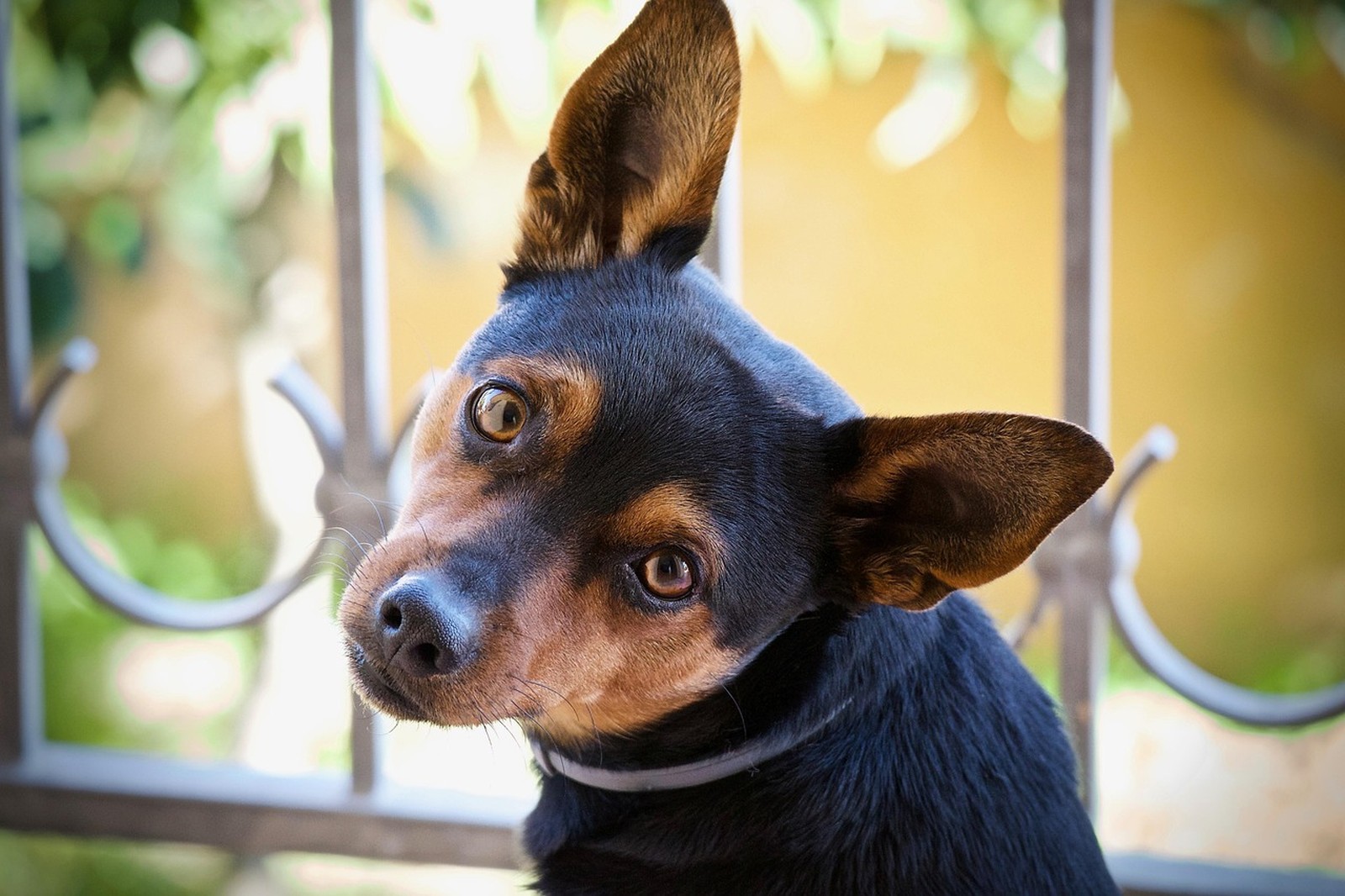
The head tilt may be the most rewarded behaviour in the dog world, and it starts as practical equipment use rather than charm. When you talk, your dog is trying to extract meaning from a foreign language delivered at speed, and tilting her head adjusts the tools she has for the job: her ears and her eyes. That owners find it irresistible, and respond with smiles, praise, and repetition of whatever word caused it, simply guarantees you will see it often.
Adjusting the Ears to Locate Sound
Dogs localise sound by comparing what arrives at each ear, and the tilt changes the geometry. Many breeds carry ear flaps that partly cover the ear opening, especially when the head is level and facing forward, so cocking the head lifts and repositions those flaps and opens a clearer path for sound. The tilt also fine-tunes the angle for judging distance and direction, useful when the interesting noise might be a voice, a treat bag, or something outside. You will notice the tilt sharpen around high, novel, or meaningful sounds: her name, a questioning tone, the intonation pattern that usually precedes a walk, or a word she half recognises and is working to place. Puppies tilt generously while their sound library is still being built.
Moving the Muzzle to See Your Face
Seeing is the second half of the explanation. A dog with a longer muzzle looking straight at you has her own nose occupying the lower middle of her view, right where your mouth and expression are. Tilting the head shifts that obstruction and gives her a clearer read of your face, and dogs study faces closely for emotional information. Shorter-muzzled dogs have less to move out of the way, which may be one reason the classic dramatic tilt is commonest in longer-nosed breeds, though individual habit and plain learning vary dog to dog. Because the tilt reliably produces delighted human reactions and often a repeated cue or a treat, it is also reinforced behaviour, and bright dogs file it under things that work.
The Tilt That Needs a Vet
A conversational tilt comes and goes with the talking. A medical tilt stays. Book a vet appointment promptly if your dog holds her head tilted to the same side constantly, or if a tilt arrives with any of the following:
- Scratching at one ear, head shaking, a bad smell from the ear, or yelping when the ear is touched.
- Wobbliness, circling to one side, stumbling, flicking eyes, or nausea, which suggest her balance system is involved.
- A sudden tilt in a senior dog, or a tilt paired with reduced response to sounds she used to notice.
Ear problems and balance disorders sit high on the list of causes a vet will check, and early treatment matters for both comfort and hearing. Do not put anything into the ear or attempt home remedies before she is seen. For the ordinary, back-and-forth, word-hunting tilt, enjoy it and keep talking to her, because conversation is exactly the input the behaviour evolved to process, and if a constant tilt ever does earn that vet trip, KinsLe Pet Passport keeps the examination notes, findings, and any follow-up dates stored with the rest of her health record.