
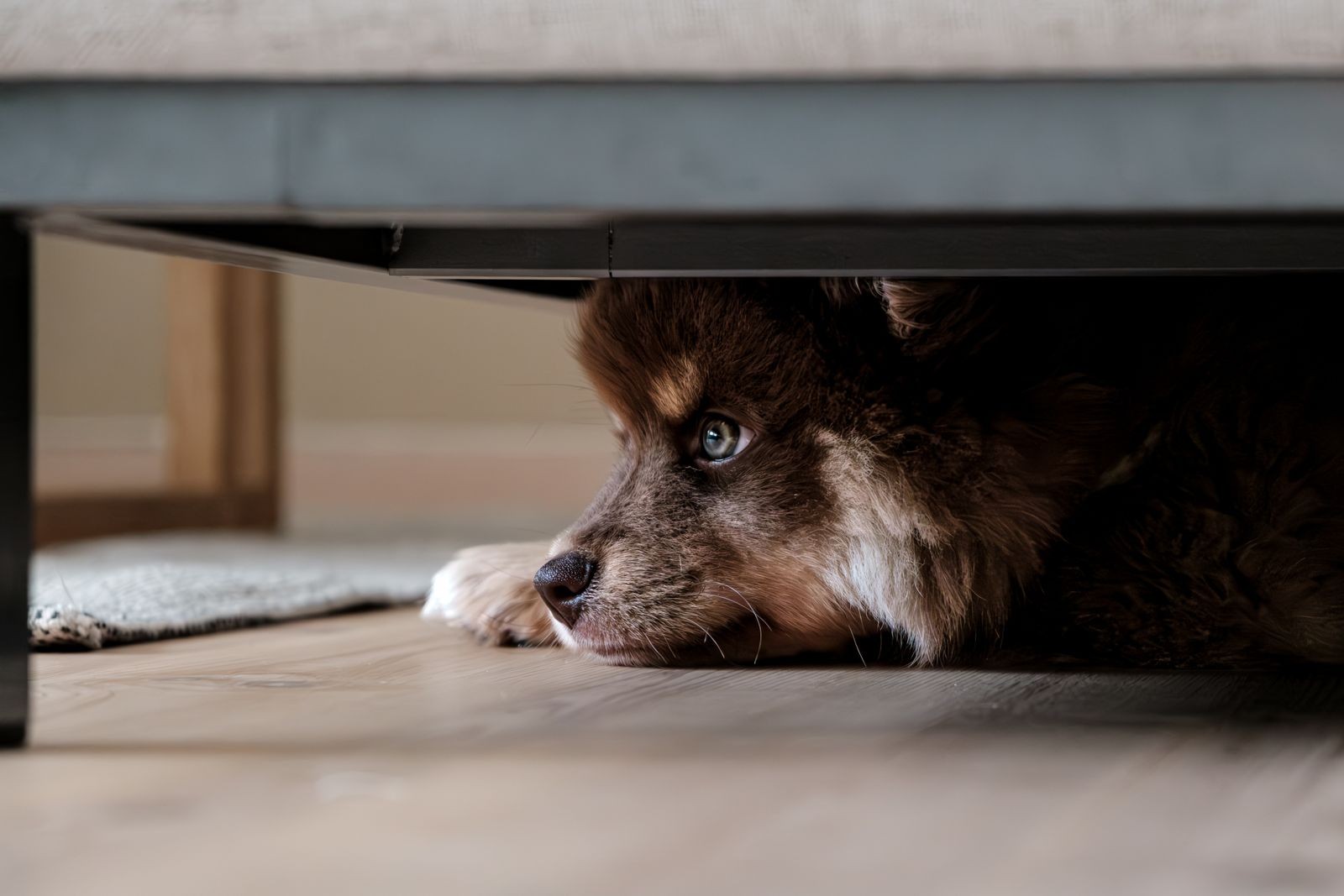
Help a shy dog with guests by letting her choose: she should always be free to retreat to a quiet room, guests should ignore her and toss treats gently in her direction without reaching, and any approach should happen in her own time, if at all. A shy dog who learns that visitors predict calm, distance, and snacks — and never grabbing hands or forced cuddles — gradually relaxes, even if she never becomes the life of the party.
Shyness is temperament, not a training failure
Some dogs are born cautious, some missed early social experiences, and some rescues learned that strangers are unpredictable. Small breeds get scooped up against their will, and any dog can be overwhelmed by a loud houseful of guests. Hiding, trembling, or freezing is communication, not stubbornness. Your goal is not an extrovert — it is a dog who feels safe at home during visits and discovers guests drop wonderful treats and ask for nothing in return.
Set up the visit before the doorbell
Preparation prevents the worst moments. Give her a retreat space that guests are told is off-limits: a bedroom or cozy corner with her bed, water, a chew, and a worn item of your clothing. Let her choose it freely rather than banishing her after she is already stressed — many shy dogs visibly relax when they learn the quiet room is always available.
Brief your guests before they arrive, because well-meaning people sabotage shy dogs constantly:
- Ignore her completely at first — no eye contact, no reaching, no calling her over.
- Toss treats sideways or behind her, so eating does not require approaching anyone.
- Let her sniff and leave. Sniffing then retreating is progress, not rejection.
- Never pull her out from under furniture or hand her to someone to hold.
Keep arrivals calm yourself: a dog takes emotional cues from her owner, so a relaxed greeting at the door, normal voices, and no fuss around her all help.
Building confidence in tiny steps
Between visits, reward her for hearing the doorbell and looking to you, so the sound predicts snacks instead of alarm. Invite one calm, dog-savvy friend for short sessions rather than starting with a dinner party. If she enters, guests toss treats and keep ignoring her; if she chooses her retreat, that still counts as success. Watch body language honestly: soft eyes and voluntary approach signal comfort, while lip-licking, panting at rest, and a tucked tail say she needs more space.
Safety notes for shy dogs
Fear drives many bites in the home, usually when escape is blocked and signals are ignored. Use a gate between her and small children, never let guests corner her for a photo, and if she growls, increase distance and consult your veterinarian or a qualified trainer, especially if fear is escalating.
How KinsLe Care Pass helps shy dogs warm up slowly
Familiar people stop being strangers through repetition, and KinsLe's Care Pass makes that gradual process easier. A Care Pass is a temporary, scoped link to your dog's care details that the recipient can open with no account or app needed — so a regular sitter can review her routines, preferences, and retreat setup before each visit, and get to know her slowly over repeat visits instead of starting from zero every time. Consistency is kindness for a shy dog. Want more ideas for helping your dog feel secure with the people in her life? Care Pass on KinsLe gives that regular sitter time-boxed, scoped access to her retreat setup and treat routine, so each repeat visit starts calmly instead of from zero.