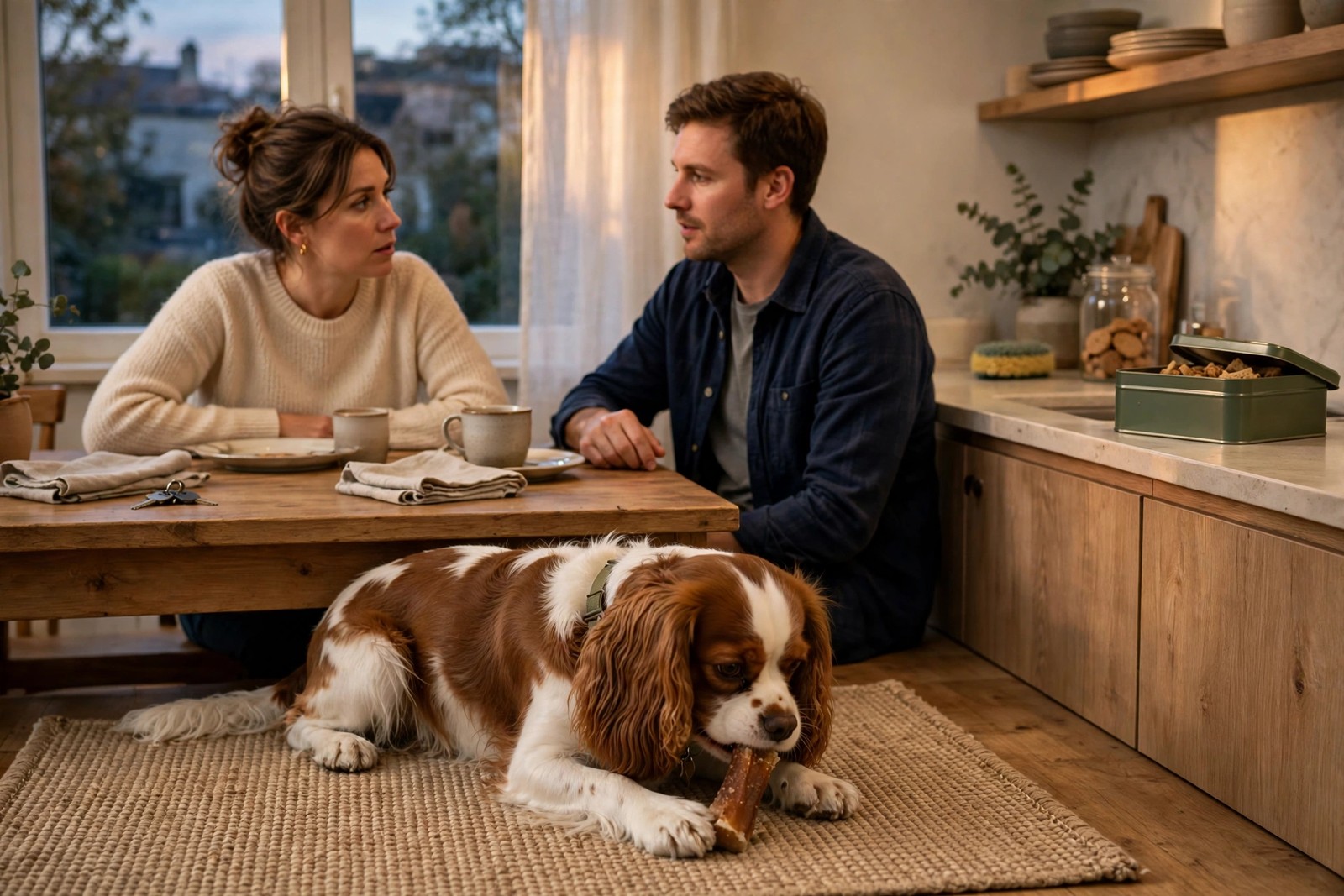
Your dog is caught between two reward systems. At the table, begging pays because your partner slips food from a plate. On the sofa, climbing up pays because one person invites it and the other pushes the dog down. The dog is not being stubborn or choosing a favourite person — the dog is learning that persistence sometimes works, and intermittent rewards like that are the hardest habit of all to shift. The fix is not winning an argument. It is shrinking the rules to a list both of you will actually keep.
Pick the few rules that genuinely matter
Sit down away from the dog and agree three non-negotiables in writing. Most households do best protecting safety and training cues first: no food directly from plates, the same cue words from both people, and no feeding of foods that are unsafe for dogs such as cooked bones, onions, grapes or chocolate. Table treats and sofa access usually turn out to be negotiable once each person says plainly what they enjoy. Your partner may love sharing food and cuddling on the sofa, and those pleasures do not have to disappear — they need a predictable shape.
Write it concretely: “Treats come from the tin, after a sit, in the kitchen, never from a plate” can be pictured and followed by anyone, where “no scraps” leaves room for quiet exceptions.
Give the spoiling a legal route
A partner who feeds from the table is usually rewarding the dog for closeness, not trying to wreck training. Replace the route, not the impulse. Keep a small measured portion of the dog's daily treats in a tin, and let your partner be the person who runs a short game after dinner: a sit, a down, a paw, each paid from the tin in the kitchen. The dog still gets food from that person, the person still gets the delighted response, and begging at the table stops paying because nothing ever arrives there.
Feed the dog its own dinner just before you sit down, then settle it on a mat with a long-lasting chew of its own; a full, occupied dog begs less, and your partner's line gets easier to hold.
Settle the sofa with an invitation, not a ban you cannot keep
Sofa access splits households because one person wants a clean, dog-free sofa and the other wants a dog curled against their legs. A workable middle rule is invitation-only: the dog may come up when patted and called onto a washable throw in one defined seat, and comes off on a cheerful “off” cue that both of you reward.
Practise the pattern when nobody is tired or hungry: invite up, reward settling on the throw, cue off, reward on the floor, repeat three or four times, then finish. If your partner lets the dog up uninvited once, treat it as information about a rule that is too strict, not as sabotage — renegotiate the rule rather than policing each other.
When a rule slips, reset the dog, not the relationship
Slips will happen, especially with visitors, tired evenings and celebrations. Agree in advance that either person can quietly reset: call the dog away, run one easy paid cue, and carry on without a post-mortem at the table. Save review for a brief weekly chat about what the dog is actually doing — begging less, settling faster, waiting for an invitation — because progress you can both see makes the shared rules easier to keep.
Brief visitors the same way you brief each other: treats live in the tin, the dog earns them with a sit, and nothing comes from plates. Children need the simplest version of all, repeated kindly every visit until it sticks.
Keeping the written rules, the treat-tin routine and the sofa agreement in one shared place stops them drifting into two versions, and KinsLe Care Teams gives each pet a shared duty list where both partners can record feeding, settling practice and completed tasks with timestamps, so the plan you agreed is the plan the dog actually experiences.