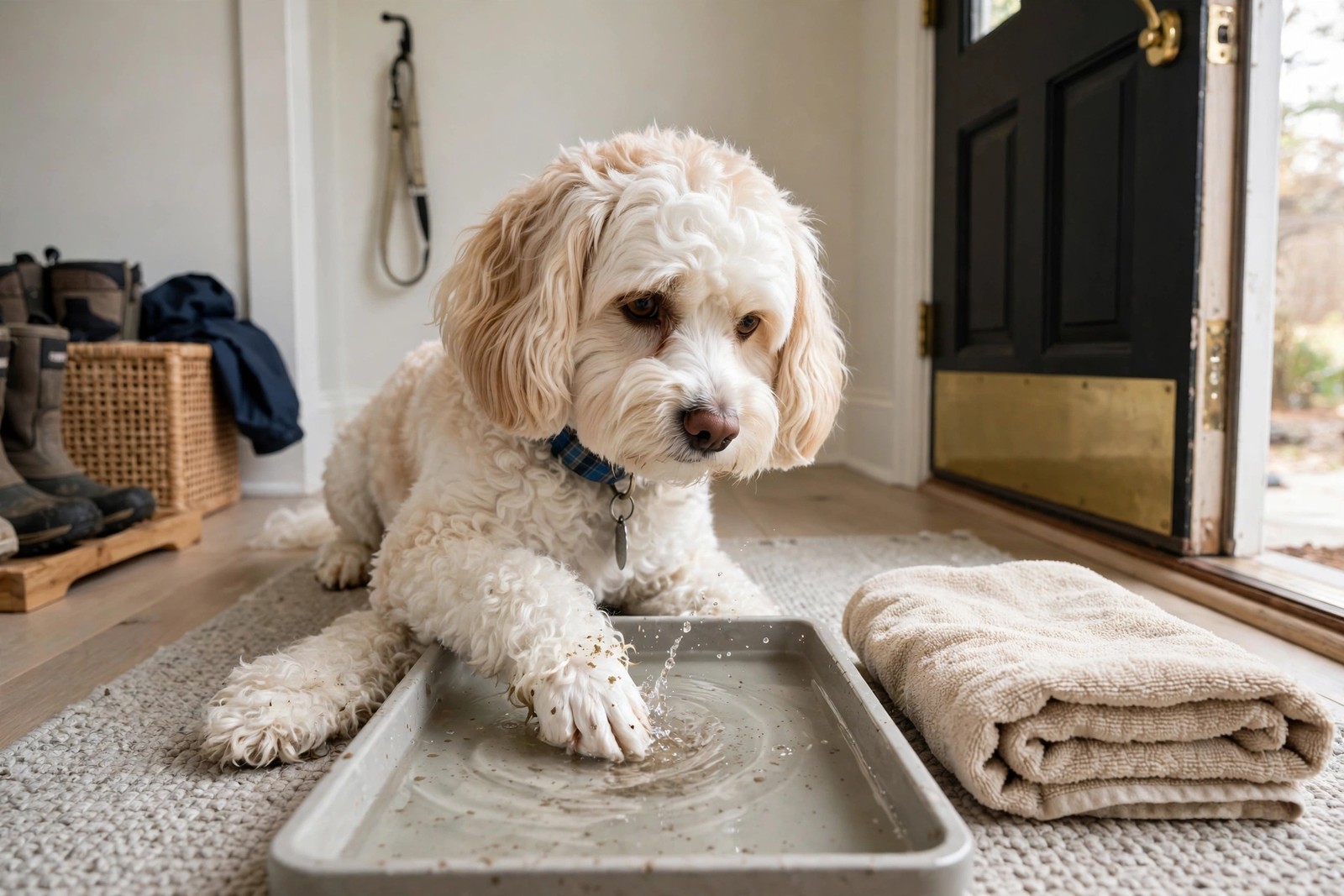
White paws tell the truth about every walk, and mud season makes that truth arrive home twice a day. Bathing the whole dog daily in response dries the skin, loosens the coat's condition and turns a two-minute job into an ordeal both of you dread. The working answer is a fixed station at the door and a routine so short the dog accepts it as part of coming home: soak the mud loose, wipe it away, then dry properly, every single return.
Set Up the Door Station Before the Season Starts
The owner places a shallow tray wide enough for one paw at a time, or a jug for pouring over each foot, beside the door the dog actually uses, filled with lukewarm water at walk time. A rough mat outside takes the first layer off, a washable mat inside catches the drips, and two towels live at the station, one for the wipe and one kept dry for finishing, swapped for clean ones before they become mud cloths themselves. Water is changed when it turns to soup, typically after each muddy return, since dipping a clean paw into dirty water just redistributes the problem. The station stays assembled all season rather than being built per walk, since a routine that needs setting up is a routine that gets skipped on wet, busy evenings, which are exactly the evenings it exists for.
Dip, Wipe and Dry Every Paw Fully
The owner works one paw at a time: the paw goes into the tray or under the jug, the water is worked gently between the toes with fingers to loosen packed mud, then the paw is lifted out and wiped down. Drying is a step in its own right, not the end of the wipe; each paw is towelled until no damp remains, the webs between the toes included, since damp left in those webs breeds soreness, redness and licking that stains white hair far worse than mud does. While drying, the owner checks between the toes and around the pads for grit, small stones, seeds or a cut, and rinses again if grit remains rather than rubbing it in with the towel. Stubborn mud worked into the hair above the paws is soaked again rather than scrubbed, since scrubbing white hair against the grain roughens it and gives the next walk's mud more to cling to. On winter walks where roads have been gritted or salted, the same rinse happens even without visible mud, since salt and grit left on the pads get licked off later and irritate both paws and stomach; the rinse is plain water, exactly as for mud.
Keep the Hair Short and Refuse the Shortcuts
The owner trims the hair around and between the paw pads regularly through the season, keeping it level with the pads so it cannot form mud-carrying tufts or felt into mats between the toes. White paws stay presentable through that trimming, the door routine and prompt attention to stains from licking, not through whitening products; no bleach, whitening spray or colour-correcting product of any kind belongs on the coat, given that products meant to force a colour can irritate skin and will be licked. A dog that returns muddy to the elbows gets legs rinsed under a tap or shower head rather than a full bath, and a full bath stays a weekly-or-less event unless the dog has rolled in something foul. Write the door routine into the walking rota in Care Teams, and KinsLe will show each walker exactly what to do at the threshold, in order, paws first.