
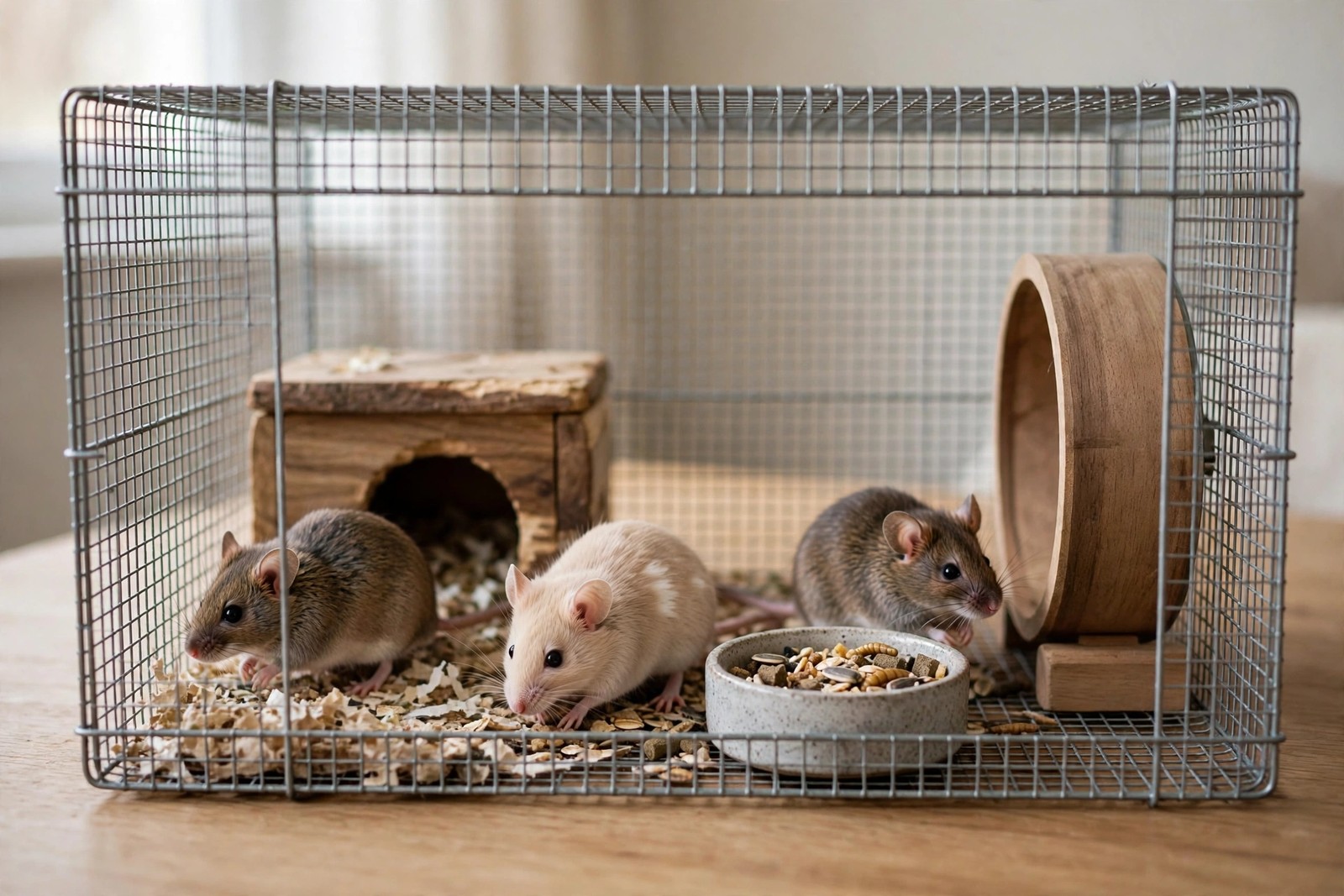
A cage is safe for mice only if every gap is narrower than a young mouse's skull — as a rule, bar spacing of about 6–7mm or less, or a ventilated tank with a tight mesh lid. Mice are astonishing escape artists: if the head fits through, the body follows, and an adult mouse can flatten through a gap barely wider than a pencil. The cheapest time to discover your cage's weak points is before the mice move in, not at midnight when someone is loose in the kitchen wall.
The Spacing Test
Measure the widest bar gap with a ruler, including corners, where spacing often widens because bars bend or panels meet unevenly. Standard hamster cages frequently have 10mm spacing — fine for a Syrian hamster, an open door for a mouse. Purpose-built mouse cages and "mouse and dwarf hamster" enclosures with 6–7mm spacing are the safe choice. If you prefer a tank, choose one with a fine-mesh metal lid that clips down on all sides; a lid merely resting in place will be lifted by a determined climber stacking toys beneath it.
Audit Doors, Corners, and Chewed Plastic
Walk the whole enclosure like an inspector. Doors should latch positively and not flex open when you push a finger against them from inside. Check the join between any plastic base and wire top — chewed notches there are the classic escape hatch, and a mouse can widen a small gnaw mark into an exit in one night. Look at the hole where the water bottle spout enters: it should be snug, with no halo of space around it. Replace any cracked plastic trays, and never patch a chew hole with tape — move the mice to a secure carrier and replace the part.
Furnish Without Building Escape Ladders
Mice are agile climbers and jumpers, so keep tall toys, ropes, and hammocks away from the lid line, and make sure a stacked "staircase" of houses does not reach the mesh. Inside, they need what makes a cage feel safe rather than a prison: deep bedding for burrowing, several hides (mice are prey animals and panic in open empty space), a solid wheel sized for mice, and constant chew material. Scatter feeding encourages foraging through the bedding. A group of females — mice are social and should not live alone — will use every corner of a well-furnished cage.
During Cleaning and Playtime
Most escapes happen outside the cage: during cleaning, handling, or free-roam time. Clean in a mouse-proofed room with the door shut and gaps under it blocked, transfer mice with a tube or cup rather than grabbing, and do playpen time on a table or in a dry bathtub where a bolt ends safely. If a mouse does get loose indoors, set a humane live trap or their own cage — door open, favorite food inside — near where they vanished, and dim the room; loose mice usually emerge at night.
Get a Second Set of Eyes Locally
If you are unsure whether a cage passes, a good local shop or exotics vet will happily assess it before you buy. KinsLe's Pet Services Directory helps you find local groomers, vets, sitters, and trainers — including small-pet shops and exotic vets near you — so a second opinion is never far away. And once your mice are settled, their KinsLe profile with its unique QR ID and free Lost Pet Alerts adds another layer of backup. A pre-purchase check starts with the Pet Services Directory listings on KinsLe: pick a small-pet shop or exotics clinic nearby, bring the cage measurements, and ask staff to test the widest gaps.