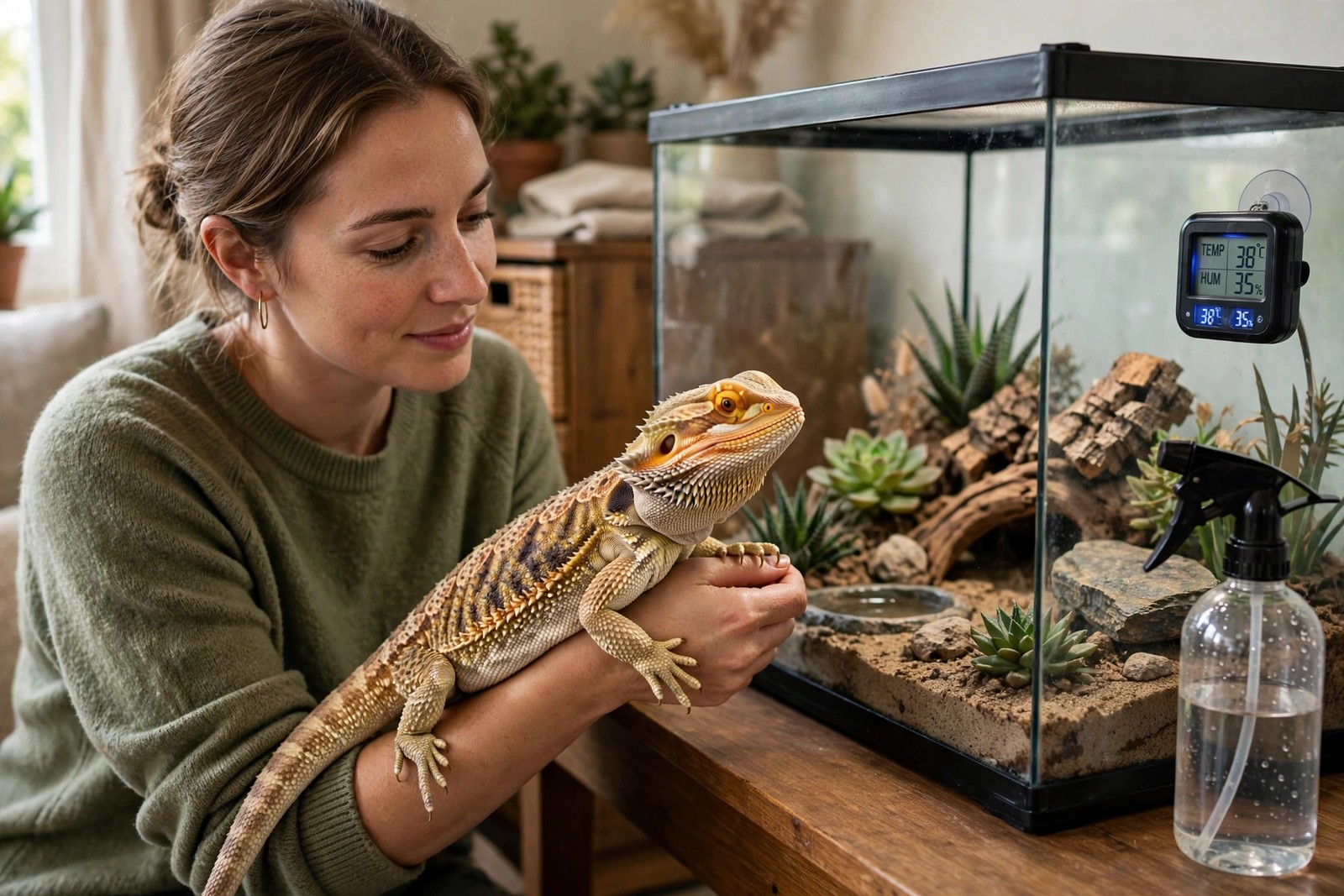
Start the health check with what the dragon does as you approach: a bright, responsive animal lifts its head, watches you, and holds itself strongly on all four limbs, with fat stored visibly at the tail base. Appetite should be steady for age (juveniles eat insects eagerly and often; adults eat more greens), and basking behaviour should be normal — basking, then moving to the cool end to regulate. Posture tells a lot: a dragon lying flat, limp, and unresponsive at the cool end is very different from one relaxing under the lamp.
Check the Setup Before the Dragon
Most bearded dragon health problems trace back to husbandry numbers, so verify them whenever you assess health: basking spot around 40–43°C, cool end around 26–29°C, a proper UVB tube of the right strength replaced on schedule (UVB output fades before the bulb visibly fails — typically every 6–12 months depending on type), calcium dusting of food, and a diet matched to age. The chronic problems vets see — metabolic bone disease (soft or rubbery jaw, tremors, deformed limbs, from UVB/calcium shortfalls), impaction, mouth rot, respiratory infection (gaping, mucus, wheezing, often from cool or damp conditions), and retained shed constricting toes and tail tip — mostly have habitat numbers behind them.
Taking a dragon's signs to the vet
For this species, the home check becomes useful at the appointment when it arrives as dated observations rather than impressions. Write down when the appetite changed, whether the beard darkening lifts after basking, how the stools have looked, and whether a shed completed cleanly or left skin behind on toes and tail tip. Add the setup numbers from the section above — basking temperature, cool-end temperature, and how old the UVB tube is — because a vet assessing a soft jaw or tremors reads those figures as part of the examination, not as background.
Some findings should not wait for a routine slot: a soft or misshapen jaw, tremors, an adult not eating for more than a week outside brumation, diarrhoea, breathing with the mouth open alongside mucus or wheezing, or a black beard paired with lethargy that does not lift. Between visits, weigh your dragon on the same scales and look at the tail base each time; fat stores there shrink gradually, and a monthly figure catches a drift that daily handling hides.
Those dated signs, weights and setup readings belong together, ready to hand over through KinsLe's Pet Passport, the records packet that holds a dragon's health material in one place.