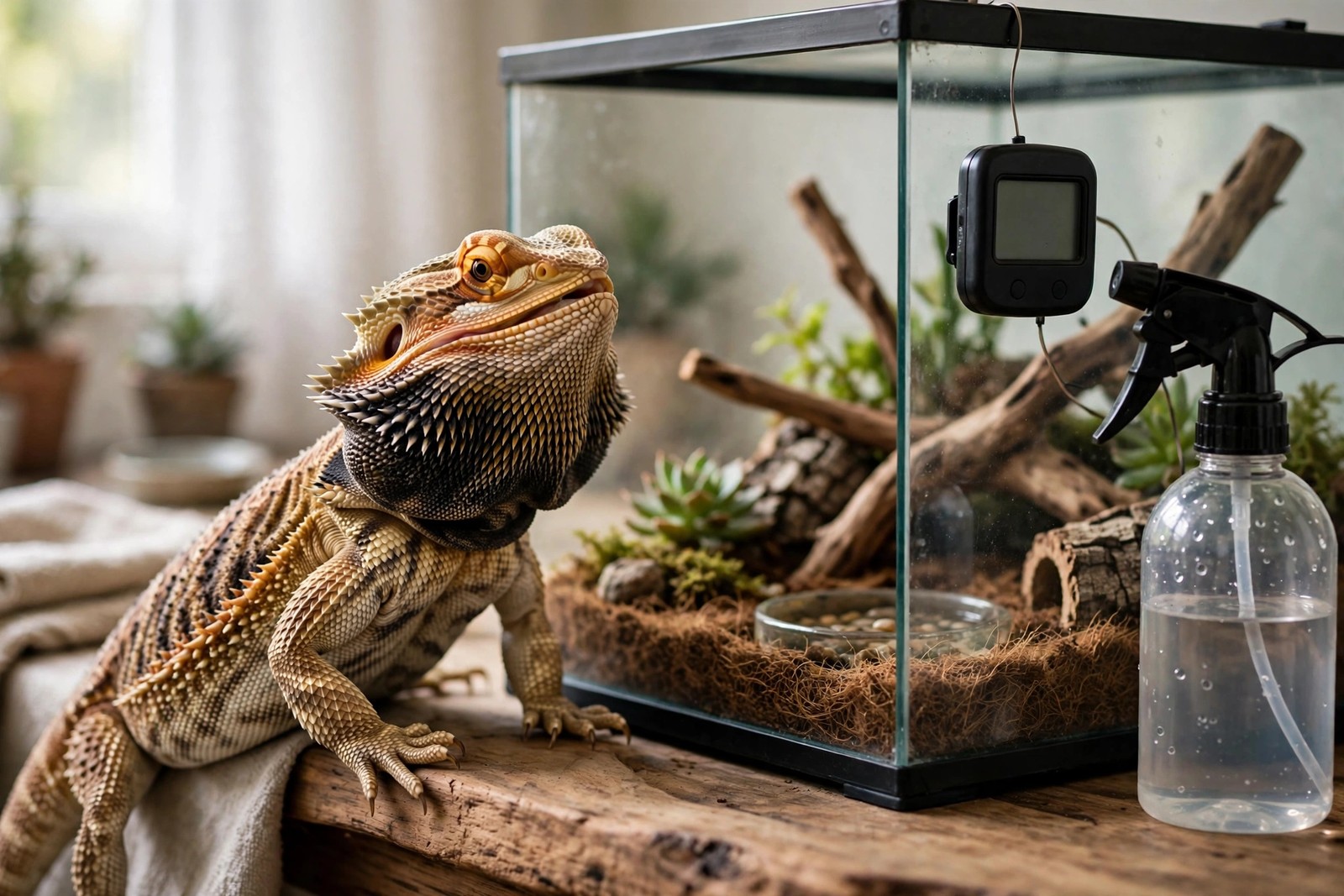
A stressed bearded dragon announces it on its body: the beard darkens or blackens, patterned stress marks appear across the belly, and behaviour shifts toward glass surfing, day-long hiding, refused food, gaping or a puffed beard, and fleeing from handling. One sign appearing just after a move, a new vivarium, or a rearranged enclosure is usually adjustment, and it typically settles within days. Stress that persists means something in the environment or health picture needs finding.
Working Through the Causes in Order
Setup first: temperatures too hot or too cold (basking spot around 40–43°C, cool end below 30°C), missing or overdue UVB, an enclosure that is too small or too bare, or a reflection the dragon is reacting to as a rival. Company second: bearded dragons are solitary — a tank-mate, or even another reptile visible across the room, can be a constant stressor. Handling third: too much, too soon, or being grabbed from above (a predator's approach) rather than scooped from the side. Then health: parasites, respiratory infection, impaction, and mouth rot all present partly as stress behaviour, so stress signs combined with appetite loss, weight loss, diarrhoea, or breathing changes deserve an exotics vet, not just environmental tweaks.
Working With Your Vet
Take the dragon's story in order when you see the vet: which sign appeared first, how long the black beard or surfing has lasted, and what changed in the vivarium just before it started, and leave the diagnosis itself to the examination. Guidance like this helps you judge urgency and assemble useful notes, but it cannot replace that examination — and dated notes on appetite, behaviour, and beard colour, ideally with a short video of the surfing, give the vet far more than a general description.
If stress behaviour lasts beyond a week after you have corrected the obvious causes, or arrives with physical signs, book an exotics vet and take your husbandry notes — temperatures, UVB age, diet, and recent changes. Persistent glass surfing that injures the nose or chin should be seen sooner.
For a dragon, log the enclosure alongside the animal: basking and cool-end temperatures, UVB bulb age, what was eaten and refused, and how long each stress sign lasted that day. Spread over two weeks, those entries show whether a setup fix is working or a health problem is progressing, where memory alone would blur the pattern. Recheck that baseline whenever the vivarium changes, a new animal arrives in the room, treatment starts, or the dragon moves into a new life stage, since each change redefines its ordinary.
Weights, shed dates, and visit notes gathered in one place mean the next appointment continues the story instead of restarting it. That place is KinsLe's Pet Passport, where this dragon's records travel as a single packet, ready for the vet, a boarder, or a new keeper.