
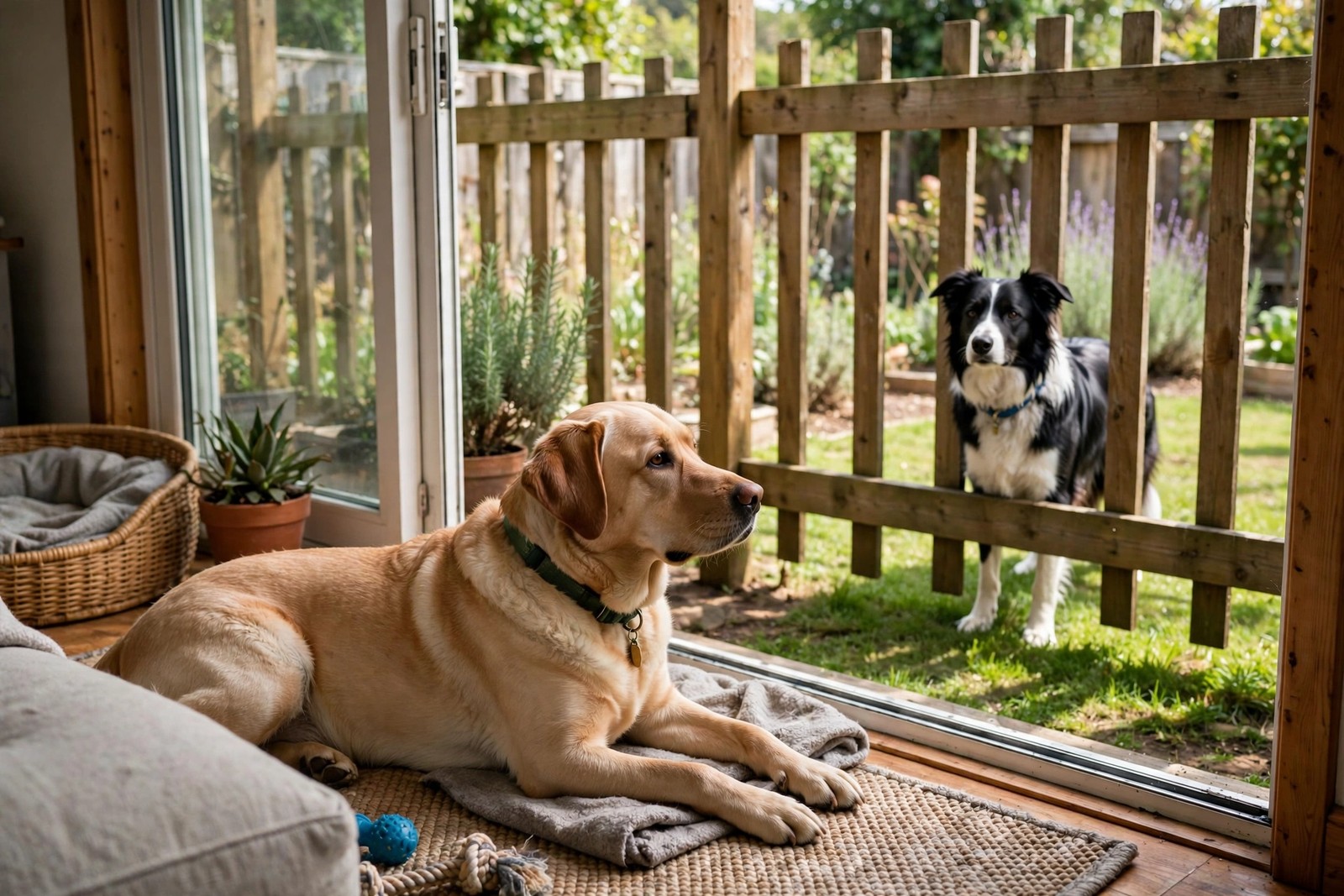
Your current dog may be ready for a second dog if they are generally settled at home, take training in their stride, and stay relaxed when other dogs are near — and if your household honestly has room in its days and its budget for twice the dog.
Read Your Dog, Not Just Your Own Wish
A good candidate greets other dogs with loose, wiggly body language or calm indifference, can disengage when asked, and recovers quickly from surprises. Dogs who are still lunging, guarding, or panicking around other dogs are telling you they need more training and confidence first — a live-in companion is a much bigger ask than a dog glimpsed on a walk.
Age and health count too. A frail senior may find a boisterous young dog exhausting rather than enriching, while a playful two-year-old may thrive with a well-matched companion. Consider energy honestly: a calm older adoptee can suit a senior; a puppy usually cannot. Also be realistic about your current dog's unresolved problems — housetraining that is still shaky, barking the neighbors mention, guarding of food or of you. A second dog rarely fixes these and frequently copies them, because new dogs learn household rules largely from the resident dog.
Audit the Household Before the Heart Decides
Two dogs means two vet bills, two lots of food, two training journeys, double boarding or sitting costs, and walks that are harder to manage solo. It also means one-on-one time must be scheduled, not assumed, or the first dog quietly loses the relationship that made them settled in the first place.
Space matters in practice: can the dogs eat separately, rest undisturbed, and get distance from each other on a bad day? Can every adult in the home handle both dogs if one person is ill or traveling? If any answer is a firm no, waiting is not failure — it is the responsible version of the same dream.
A trial run helps. Fostering short-term, or regularly caring for a friend's compatible dog for a weekend, shows your dog — and you — what shared life actually feels like before it is permanent.
Signs It Is Probably Not Yet
Pause if you are hoping a companion will cure separation anxiety (two anxious dogs is a common outcome), if your current dog has shown real aggression, or if your schedule barely fits one dog's needs. Those situations call for a trainer or behavior professional first. Your veterinarian can also flag health issues that a new arrival — and its stress and germs — could complicate.
Preparing Together With Family Sharing
If the signs are green, preparation is a household project, not one person's surprise announcement. Grant relatives you pick access via KinsLe Family Sharing to a profile of the dog already living with you, and the whole household can prepare from that animal's own starting point, rather than from a second-hand telling. Agreeing that preparation in advance is what lets the resident dog experience the arrival as an expansion of a stable life, not a disruption of one. The relatives you choose can open that profile in KinsLe Family Sharing once a second dog arrives, with each dog's routine protected on paper by the household plan you agreed in advance.