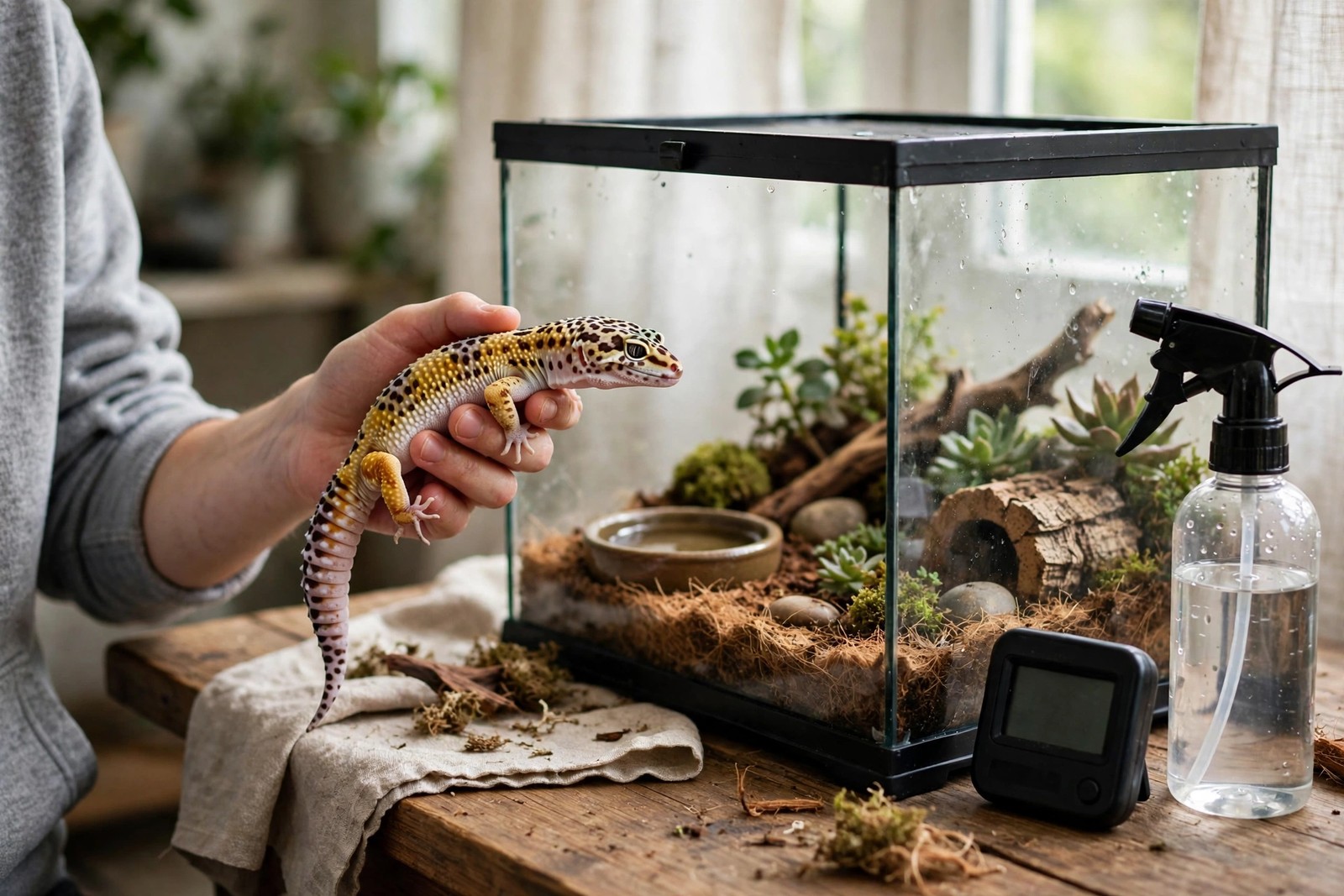
Impaction means material lodged in the gut that a gecko cannot pass, and an owner spots the possibility through signs, never through certainty. Watch for droppings stopping for longer than is usual for your gecko, straining, food refused across several feeds, falling energy, a belly that looks swollen or feels firm when the gecko walks across a hand, and reduced movement around the enclosure. Some keepers also notice a dark shadow visible through the pale underside of a lightly coloured gecko. Know your own animal's ordinary rhythm first, how often droppings normally appear, how eagerly feeds are taken, and where the gecko spends the evening, because each sign on the list is a departure from a personal baseline rather than a fixed timetable that fits every gecko in every setup.
Judge the Signs Against Your Gecko's Own Rhythm
A gecko that normally passes droppings in one favoured corner every day or two tells you something clear when that corner stays clean for twice the usual gap, while a gecko approaching a shed or sitting in cooler conditions may eat less and pass less for reasons a vet will want to weigh. Straining, repeated posture attempts with nothing produced, carries more weight than a quiet day, and a firm, swollen belly combined with refused food carries more weight than either sign alone. Falling energy reads against the evening pattern, a gecko that normally patrols at dusk and now stays in the hide, or one that no longer reacts to movement outside the glass. Write the signs down with dates as you spot them, including the last date droppings appeared, because 'a while ago' blurs exactly the interval a vet needs in order to judge how long the gut has been still.
Gather the Husbandry Facts the Vet Will Ask For
A reptile vet investigates impaction against husbandry, so arrive with the facts recorded rather than remembered. Note the substrate the enclosure uses, the warm-end and cool-end temperatures as your thermometers read them, the humidity, the food you offer with the size of the items, the date of the last accepted feed, the date of the last droppings, and how water is provided and whether you have seen drinking. Add any recent change, a new substrate, a moved heat source, a new food type, or a fall in room temperature, with the date the change happened. Photograph the belly from the side and, where the gecko tolerates gentle handling for a photograph, from below against the glass, and bring the photographs with the dates attached. Those facts let the vet judge which possibilities fit your animal and which tests or steps come first, and the facts cost you nothing beyond the log you should already be keeping.
Route to a Reptile Vet Promptly
Contact a vet with reptile experience promptly when droppings stop alongside refused food, straining, a firm swollen belly, or fading energy, and contact the vet the same day when several signs arrive together or when a young or small gecko shows them, since small animals carry smaller reserves. Describe the signs and read the husbandry facts aloud when you phone, then follow the clinic's guidance on timing and on how to transport the gecko, warm and secure, for examination. Keep the log running while you wait for the appointment, noting any droppings, any feed taken, and any change in energy, so the record the vet receives ends at the door of the clinic rather than at the day you phoned. Dated droppings, feeding, and temperature notes give that consultation a foundation of fact, and Pet Passport from KinsLe holds the log ready to share.