
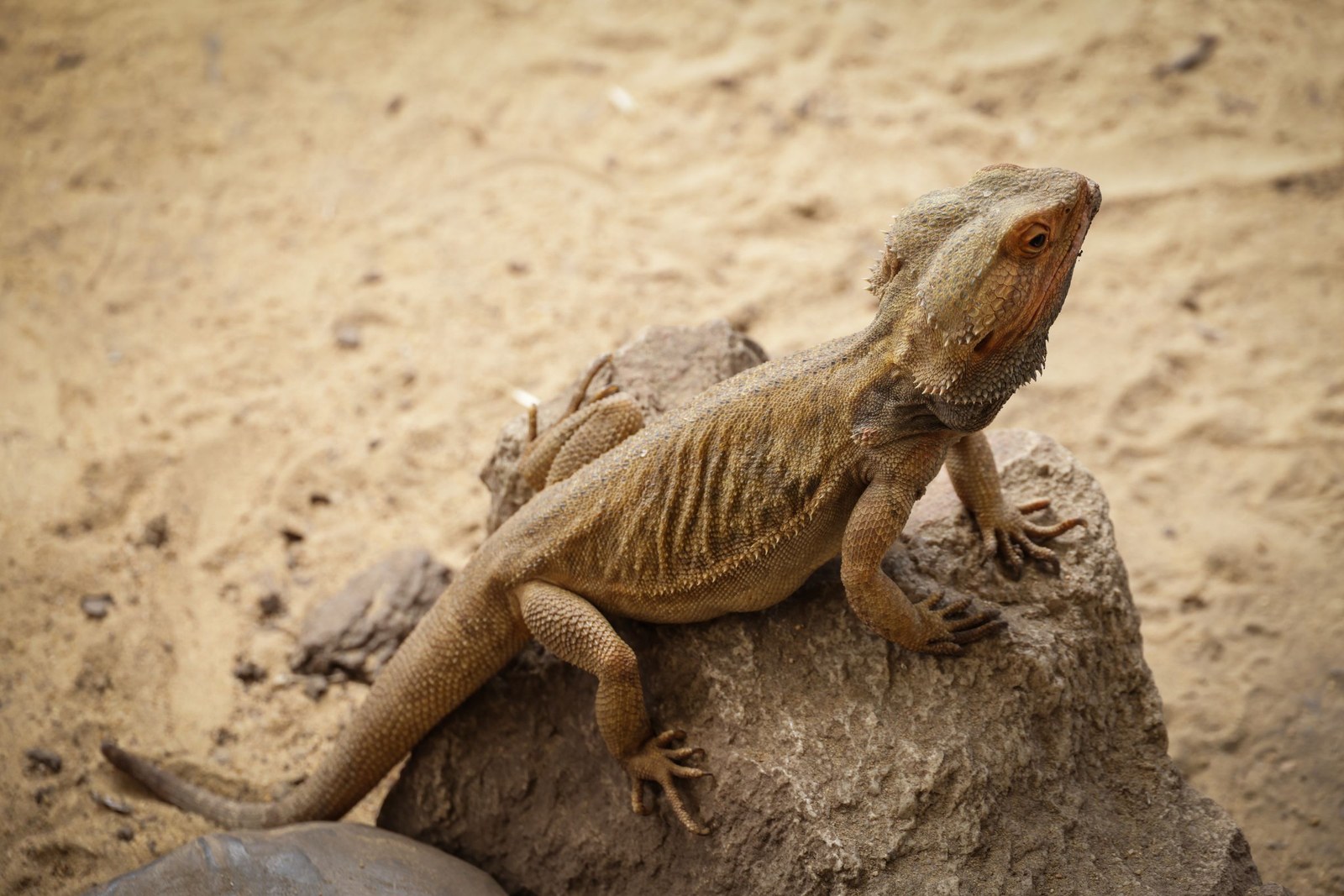
Brief gaping while basking is normal for a bearded dragon — it is how they regulate temperature without leaving a good warm spot. But persistent gaping combined with heavy breathing, mucus, popping or clicking sounds, black beard that does not settle, or lethargy is different, and it is a reason to contact a reptile veterinarian. The key question is context: does it happen only under the basking lamp, or everywhere, all the time?
Normal Gaping vs. a Warning Sign
When a bearded dragon reaches its preferred temperature at the basking site, it may open its mouth slightly, sit calmly, and look alert. Eyes are bright, breathing is otherwise easy, and once it moves to the cooler end, the mouth closes. This is efficient thermoregulation, especially common in juveniles who warm up quickly.
Worrying gaping looks less relaxed. The dragon may sit low or flattened, breathe with visible effort from the chest and sides, gape even in the cool zone, or show bubbles and stringy saliva. Some dragons hold their head up, refuse food, or become unusually still. Others become restless and glass-surf. A single hot afternoon is not the same pattern as a dragon that gaps every day regardless of position. Note the timing: only at peak basking heat, after eating, during a shed, or constantly? That pattern helps your vet enormously.
Check Your Temperatures First
Double-check that your setup is not simply running too hot. Use a digital probe or temperature gun on the actual basking surface, not just the air nearby, and check the cool end too. A basking spot that has crept too high because the lamp moved, the season changed, or a thermostat failed can cause prolonged gaping, panting, and avoidance of the warm end.
Also review:
- Is there a true temperature gradient, with a cooler retreat available?
- Is the UVB bulb in date and positioned correctly over the basking area?
- Has appetite, stool, or activity changed alongside the breathing?
- Is humidity unusually high or the enclosure poorly ventilated?
Correct an overheated basking spot back into the recommended range for your dragon's age, but do not swing to the opposite extreme and chill the enclosure. Stability matters while you assess.
When to Call the Vet Promptly
Contact a reptile vet promptly if gaping persists away from the basking spot, breathing sounds noisy, you see mucus, or your dragon is lethargic, not eating, or showing a persistently dark beard. Do not wait for all of those signs together. Respiratory and other internal problems cannot be diagnosed from appearance alone, and home remedies like extra baths or steam do not replace an exam.
While waiting, minimize handling, keep water available, and avoid misting the face. Write down temperatures, when gaping occurs, and any sounds. A short video taken without chasing or picking up your dragon can show the vet far more than a verbal description.
Staying on Top of Follow-Up With Kinny
It is easy to lose track of whether the gaping improved after a temperature fix or when that vet follow-up is due. Turn to Kinny, KinsLe's built-in AI assistant, when questions arise — what details a reptile vet will want first, how to measure a basking surface properly, and which breathing changes count as urgent. Small, consistent notes turn a vague worry into a clear timeline your vet can use. Kinny can also field questions in KinsLe about rechecking basking temperatures or telling settled basking from strained breathing, and its answers draw on the library behind KinsLe Answers.