
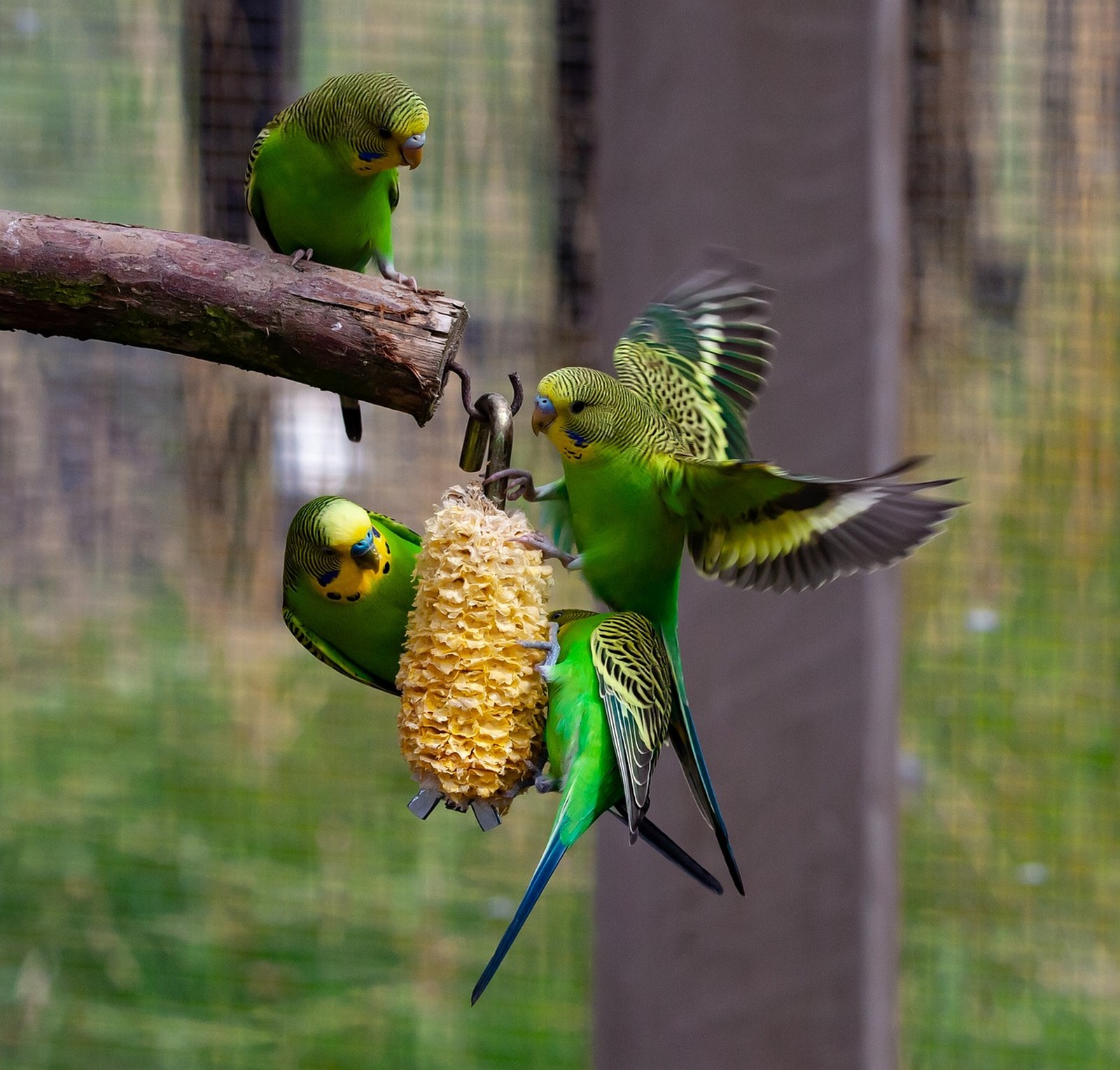
Bird-proof the room first, supervise the whole session, and keep it short enough that supervision stays real. For a budgie, that means fans off and stopped, windows and doors closed, mirrors and open water covered, other pets out, and houseplants and chewable hazards out of reach — every time, not just the first time.
Why Budgies Need Extra Care
Budgies combine three risky traits: they are small enough to slip behind furniture and into tiny gaps, fast enough to cross a room before you react, and endlessly curious with their beaks. A budgie investigates the world by nibbling — electrical cords, painted surfaces, houseplant leaves, the gap behind a bookcase. Many common houseplants are unsafe for birds if eaten, and older paint, solder, and some metals are hazardous too, so if you are unsure about a plant or object, move it out rather than guessing.
Their size also makes the floor dangerous. A budgie that lands on carpet can be stepped on by someone who simply did not see it, and doors are a constant threat — a bird perched on top of a door can be crushed when it swings. Keep household traffic out during flight time.
The Pre-Flight Checklist
Run the same check, in the same order, before every session:
- Ceiling fan off and fully stopped; portable fans removed.
- Windows closed, curtains drawn or blinds down over glass; mirrors covered if your budgie flies at them.
- Toilet lids down in any reachable bathroom; sinks, buckets, tanks, and large water bowls covered or removed.
- Cats, dogs, and other pets settled in another room, door closed.
- Cords tucked away, plants moved out, small chewable items — rubber bands, coins, medication, craft materials — cleared from surfaces.
- Cage door ready to open with food inside for an easy return, and a light hand towel nearby only for genuine emergencies.
Sessions of twenty to forty minutes suit many budgies, especially youngsters, with the cage available throughout so your bird can return for food, water, and rest by choice.
Supervision Means Watching, Not Just Being Present
Most accidents happen in the few minutes no one is really watching — a phone scrolls, a kettle boils, and the budgie is behind the sofa. Treat flight time like bath time for a toddler: you are in the room, eyes up, for the duration. Sit where you can see the whole space, keep the door-keeper role clear if someone needs to leave — they announce it, you call the budgie to a perch, then the door opens.
Encourage good habits while you supervise. Reward your budgie for landing on its play stand and for stepping up promptly, so recall and return become part of the fun rather than a chase at the end. End sessions before your bird is overtired, and always finish with something positive at the cage.
If Something Goes Wrong
A budgie that has crashed, been stepped toward, or caught a foot needs quiet, warmth, and a prompt call to an avian vet — small birds hide injury well and deteriorate fast. Keep a small travel carrier ready so transport is not improvised in a panic.
Sharing the Watch Across the Household
In family homes, budgie-watch fails when everyone assumes someone else is doing it. KinsLe's Care Teams let you assign who is on budgie-watch for each play session — along with feeding, water, and other duties — and completions are marked with a timestamp, so supervision never falls through the cracks and everyone can see which jobs are actually done.
When flight time rotates among household members, the watcher for that day is named in writing in the Care Teams plan on KinsLe, beside the feeding and water duties, and a timestamped check-off shows the session was actually covered.