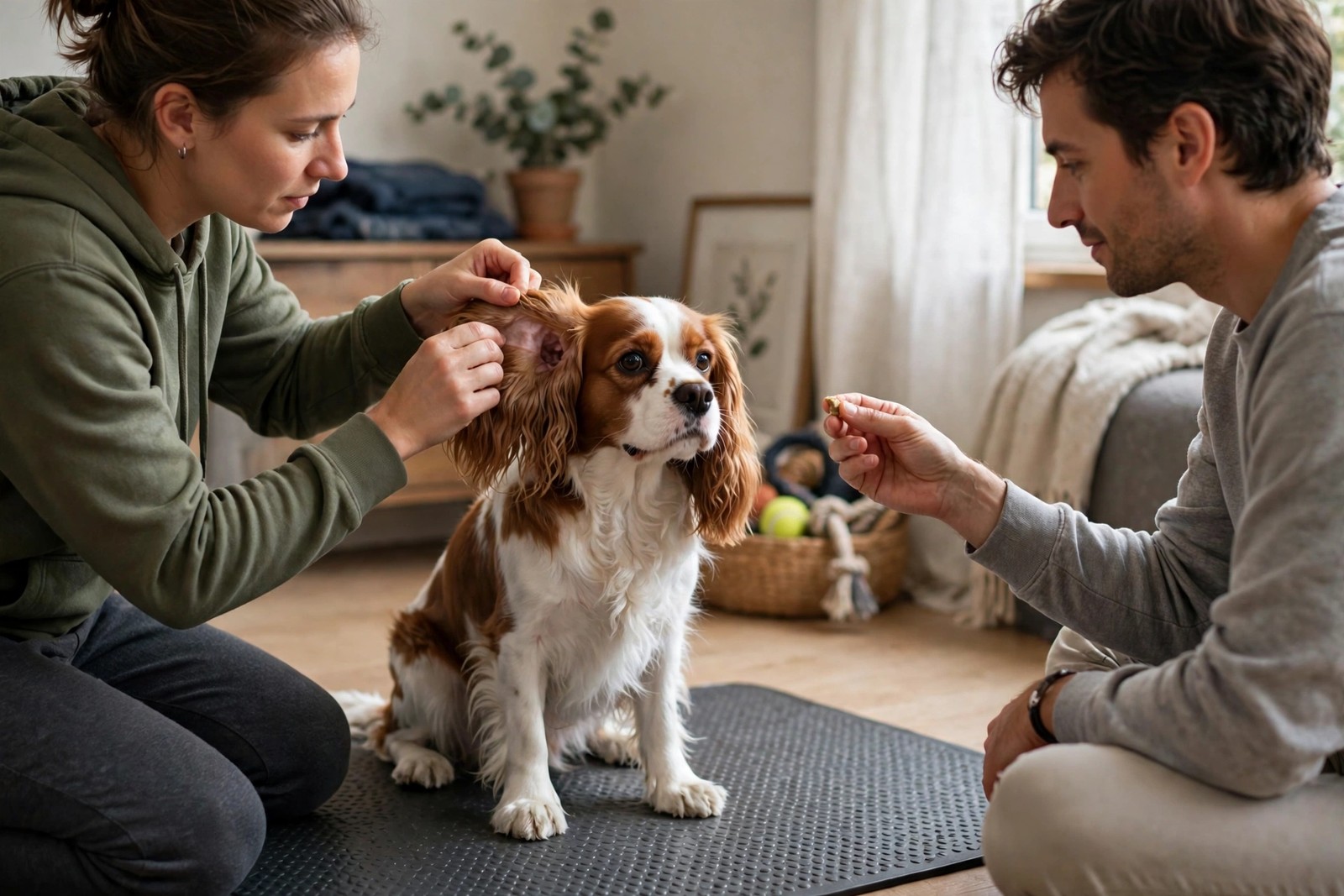
A checkup becomes a wrestling match when every part of it is unfamiliar: strange hands, a high slippery table, ears folded back, paws gripped, lips pulled up, all while the dog already feels unwell or worried. Dogs cannot be talked through any of that, but they can be rehearsed through it. Cooperative handling practice at home breaks the examination into small, named pieces, pairs each piece with food, and — crucially — lets the dog end any piece by moving away. A dog who knows it can leave, and knows each touch predicts a treat, usually chooses to stay, and arrives at the clinic with a trained routine instead of a blank panic.
Set the ground rules before you touch him
Practise on a non-slip mat on the floor first, not on a table, at a time when he is calm but not asleep. Keep sessions to two or three minutes, one body area per session, several times a week. Use small, soft, high-value treats delivered after each touch, and mark the moment of the touch with a cheerful word if he knows one. The consent rule runs throughout: if he moves away, licks his lips repeatedly, yawns, shakes off or freezes, the session pauses or ends without comment. Never chase him to finish a rep — that single habit is what converts practice back into wrestling.
Start every session with a station behaviour: he steps onto the mat and stands, and gets paid for standing. That mat becomes his examination spot at home, and the stand itself is half of what a vet needs.
Ears, paws and mouth, piece by piece
For ears: touch the outside of one ear, treat. Next session, lift the ear flap briefly and look, treat. Later, hold the flap for five seconds, then ten, and let a second person do the looking while you feed. Most examination resistance comes from duration, not touch, so build time in seconds.
For paws: touch a shoulder, treat; slide to the paw, treat; hold the paw gently for two seconds, treat; then spread toes lightly, press a nail as a clipper would, and finally practise holding each paw in turn — front paws are usually easier than back ones. This same ladder serves nail care at home and drip or bandage checks at the clinic.
For the mouth: rest your hand under his chin, treat; lift one lip at the side for a glimpse of the back teeth, treat; extend to a few seconds and both sides. Avoid prising the jaw open in practice — vets rarely need that from an awake, cooperative dog, and it is the move dogs resent most.
Lifting, tables and being held still
Practise the components of lifting without the lift: arms around the chest and under the rear in position, treat, release. Then lift small dogs just clear of the ground for a second and set them straight down; larger dogs can practise stepping onto a low, stable platform, then a higher one, so the table height stops being novel. Pair the platform with a non-slip surface underfoot, since scrabbling on a slippery top is a common, fixable cause of clinic panic.
Finally, rehearse gentle restraint: a second person rests hands lightly on him — one at the shoulder, one at the hip — while you feed a steady stream of treats for ten seconds, building to thirty. Keep the hold loose and friendly; the goal is a dog who understands that being held means food arrives, not a dog who has learned to submit. If he is already fearful at the vet, tell the clinic: many will happily run happy visits — weigh-in, treats, no examination — and can advise whether handling worries need a behaviour plan alongside your practice.
Note which body area he accepts easily and which still needs shorter reps, because rotating practice evenly is what prevents a dog who is perfect on paws and still impossible on ears, and KinsLe Care Teams lets everyone at home take turns running these short handling duties with timestamps, so progress is steady and no single area gets drilled or forgotten.