
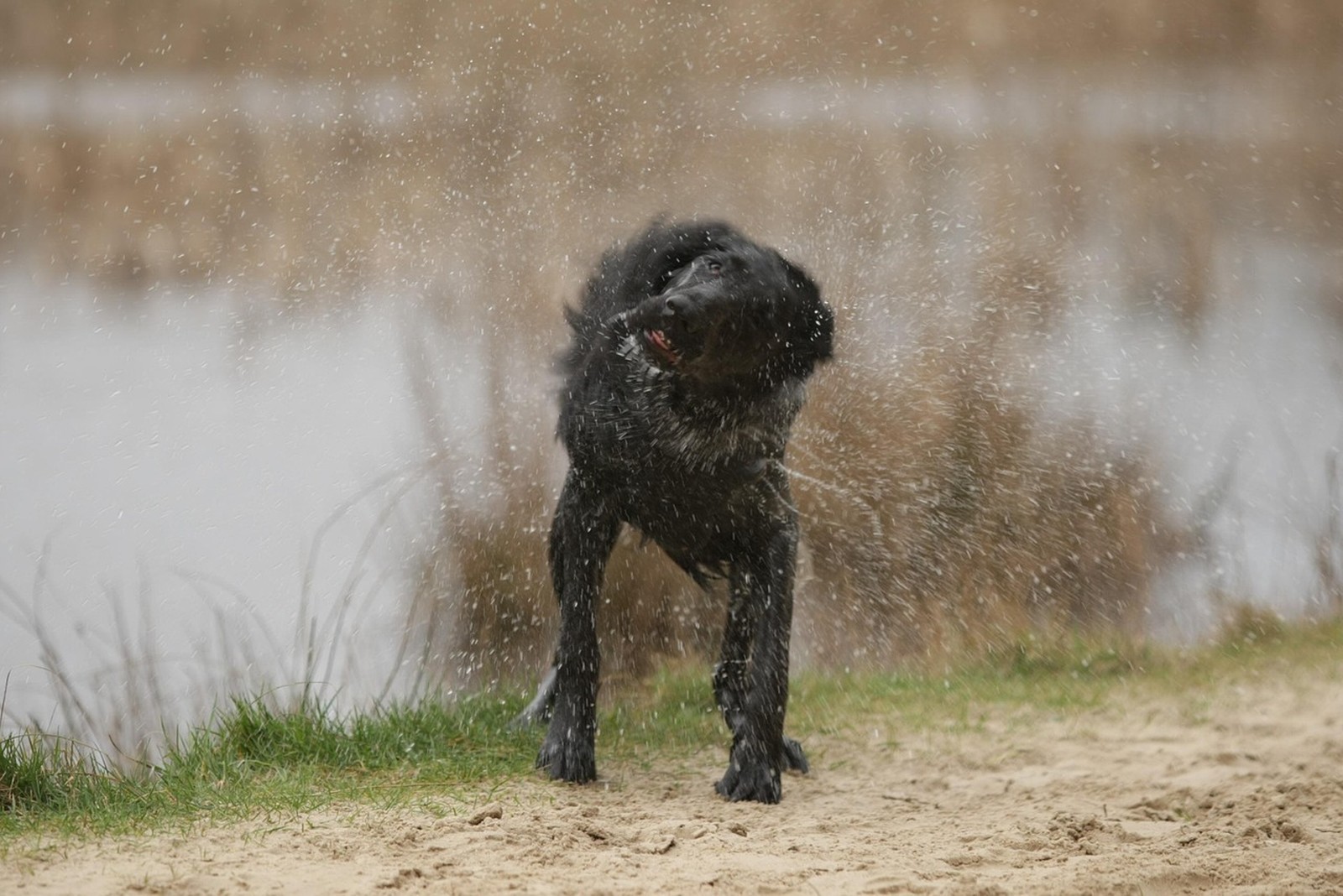
Around ninety minutes a day of active, varied exercise suits most adult Curly-Coated Retrievers, with a little more on days built around swimming or field work. The Curly is among the oldest of the retriever breeds, developed as an all-purpose gamekeeper's dog, and it shows in the whole package: a tall, athletic frame under that distinctive crisp coat of small curls, a love of water, and a notably independent, thoughtful way of working. A Curly does not simply want to be tired. This breed wants to have solved something by the end of the outing.
Why Variety Matters More for a Curly
Repetition is the Curly's enemy. The same loop, the same ball thrown the same way, the same field every day will bore a clever retriever who then starts making private decisions, such as extending a search, ignoring a recall that has become meaningless, or inventing games with wildlife. Rotate retrieving grounds, change the puzzle, and mix the week: land retrieves one day, swimming the next, a scent search in woodland after that. Blind retrieves, where the dog did not see the item fall and must use nose and direction, are especially satisfying for this breed and can be built up in easy stages in a garden or field.
That independent streak also shapes training style. Curlys respond to short, purposeful training with real rewards for thinking, and they switch off under drilling. Keep sessions inside the outing brief, successful, and finished while the dog is still engaged.
Water Work and That Singular Coat
Most Curlys take to water with enthusiasm, and swimming gives this big retriever hard exercise without pounding joints. Use water with safe sloping entries, watch for currents and cold in winter, and check the dog over afterwards. The tight curls protect the skin in cover and water, but they still trap seeds and burrs after work in long grass, so a post-exercise once-over with your fingers, especially around ears, armpits, and feet, should be part of the routine. Shake-off and air drying suit the coat; heavy perfumed washing after every swim is unnecessary and can strip the natural oils that make the curls weatherproof.
Reserve is normal in this breed with strangers, so exercise in places where the dog is not constantly pressed by unfamiliar people and dogs. A Curly can be perfectly civil without wanting a crowd, and respecting that keeps outings relaxed.
Young Curlys and Sensible Build-Up
Curly puppies grow tall quickly and should not be asked for adult mileage. Favour several short play and training outings on natural ground, let the puppy paddle where it can stand rather than swim out of depth, and avoid repetitive jumping and long stair work. Increase retrieve numbers slowly, because enthusiasm in a young retriever will always outrun what growing joints should be asked to repeat. Any ongoing limp, lagging that is new, or reluctance to enter water should be checked with a vet before workload increases.
A Week a Curly Would Choose
Aim for a substantial morning outing with retrieves or searching, a calmer evening walk, and water work woven in a few times a week when conditions allow. Change the map often enough that the dog arrives at each outing curious. KinsLe Care Teams helps keep that varied rota organised by assigning the main session, evening walk, and swim days to household members and logging each as done with a timestamp.