
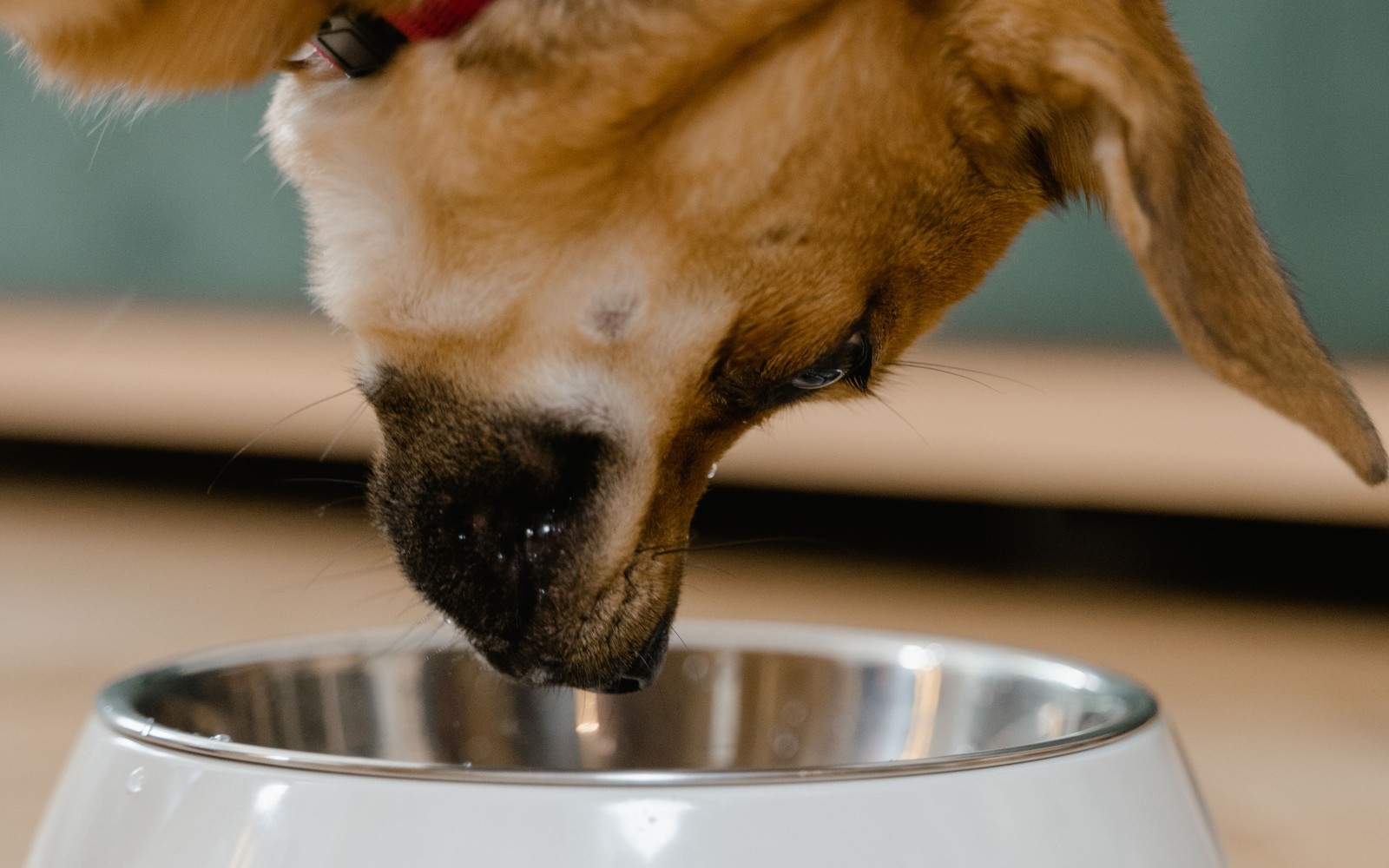
Handle resource guarding safely by doing less, not more: never reach for a guarded item, never corner your dog, and never punish the growl. If you must take something away, trade up — offer something clearly higher-value, let your dog move away to enjoy it, then remove the item calmly. Feed meals in a quiet, undisturbed spot, and give chews and treasured toys where your dog can relax instead of scanning the room for rivals.
What resource guarding actually looks like
Guarding is a dog protecting something they value — a bowl, a chew, a stolen sock, a favorite bed, sometimes even a person — because they worry it will be taken. Early signs are easy to miss: eating faster when someone approaches, going still over the bowl, hovering a head low over an item, or showing the whites of the eyes. The growl, snap, and lunge come later, after the quieter warnings were ignored or punished away.
Punishing a growl is especially risky. The growl is information, not defiance. Suppress it and you may get a dog who skips the warning next time. Your goal is to change how your dog feels about people approaching their treasures — from threat to predictor of good things — while managing the home so nobody gets put in a bad spot in the meantime.
Set up the house for safety first
Management comes before training, because every rehearsal of guarding makes the pattern stronger.
- Feed in a calm, low-traffic spot — behind a baby gate or in a crate your dog already likes, if other pets or children are in the home
- Pick up high-value chews when guests visit, and give long-lasting chews only in your dog's safe space
- Teach children never to approach a dog who is eating, sleeping, or enjoying a chew — no exceptions, even with a dog who has never guarded
- Keep prized contraband out of reach: shoes, remotes, and food waste stored away means fewer emergency removals
- In multi-dog homes, feed dogs separately and supervise toy time until you know each dog's triggers
If your dog guards from you specifically, from other dogs, or in many locations, treat that as a bigger case, not a DIY project.
Safer trades and approach practice
When you do need an item back, make it a trade, not a theft. Present a piece of cheese, chicken, or another favorite a short distance away, let your dog leave the item to take it, and only then pick the item up. Avoid looming directly over your dog or reaching toward their mouth.
For mild, early guarding of the food bowl, some owners — ideally with a trainer's guidance — practice brief approach-and-bonus reps: walk past at a distance your dog is relaxed about, toss an extra treat into or near the bowl, and walk away. Keep reps few, easy, and boring. If your dog is already growling, snapping, or guarding multiple things, skip home exercises and go straight to professional help — this is exactly the kind of case where well-meant practice can get someone bitten.
When to get hands-on help
Escalate promptly if there has been any bite or near-bite, if guarding is spreading to new items or people, if children live in the home, or if your dog guards unpredictably. A qualified trainer or veterinary behavior professional can assess the triggers in person, check for pain or medical contributors with your veterinarian, and build a plan matched to your dog's threshold. Ask what experience they have with guarding cases specifically, and walk away from anyone who wants to provoke a growl to "show the dog who's boss."
KinsLe's Pet Services Directory helps you find local trainers, and you can filter your search by asking the right questions about guarding experience before you book. Keep your dog's notes — triggers, what worked, what didn't — on their profile so everyone helping with the plan is working from the same page. Ready for more calm, practical guidance like this? Use your Pet Services Directory search on KinsLe to shortlist local trainers with hands-on guarding experience before booking.