
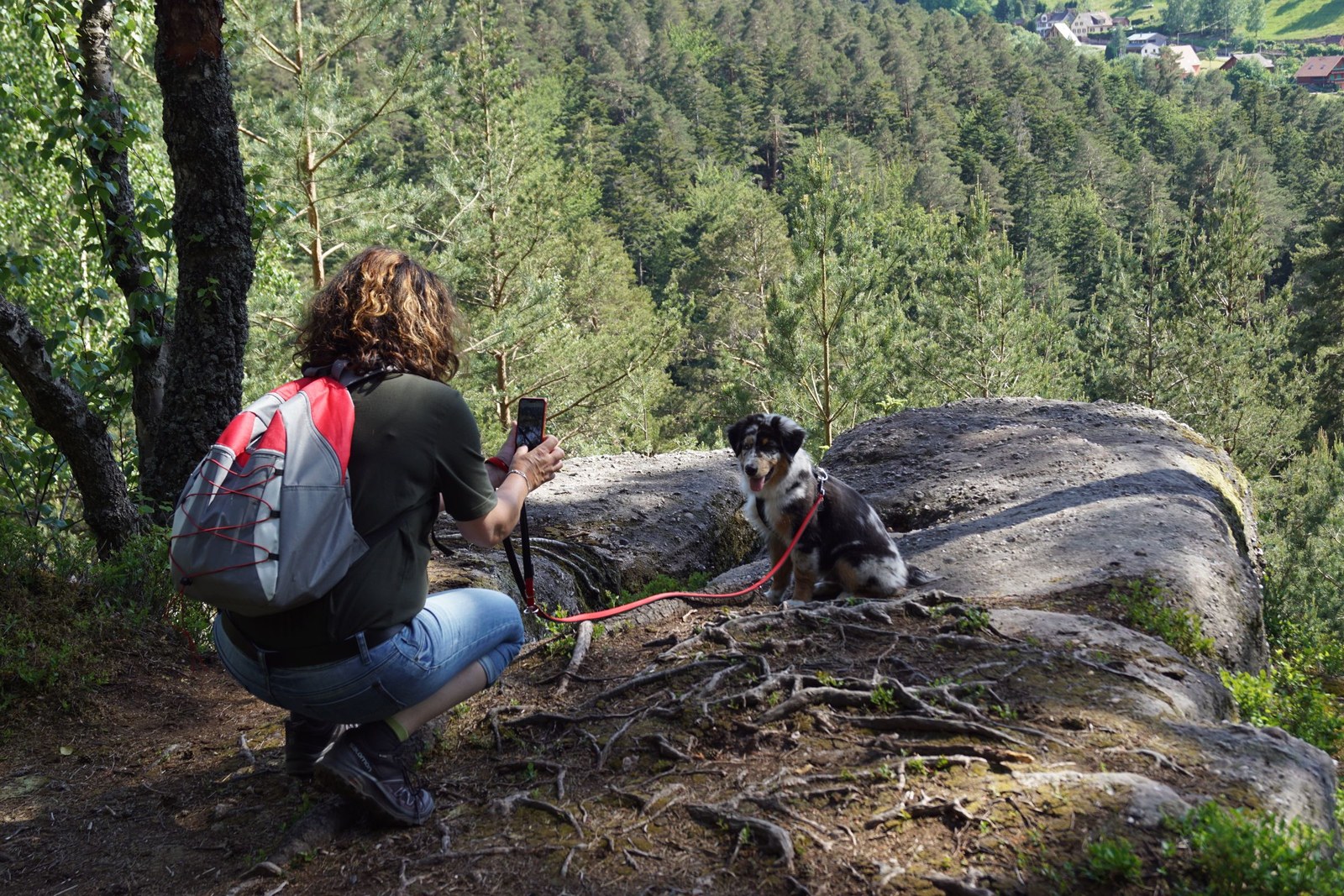
Yes, you can absolutely hike with your dog — but a good trail day is built before you ever reach the trailhead. Prepare by building your dog's fitness gradually, confirming dogs are allowed where you are going, packing water and basic first aid, and making sure identification is current. Dogs who are set up this way enjoy the miles; dogs who are dragged straight onto a long, hot trail are the ones who end up limping, overheated, or lost.
Build trail fitness gradually
A dog who strolls twenty minutes around the neighborhood is not automatically ready for six hilly miles. Start with shorter, easier trails and add distance and elevation over several outings, watching how your dog recovers the next day — soreness and stiffness are signs you increased too fast. Young puppies and senior dogs need especially conservative progressions, and flat-faced breeds and overweight dogs should be cleared by your veterinarian before ambitious hikes. Conditioning paws matters too: gradual time on varied surfaces toughens pads better than one long first outing on rough rock.
Check the rules before you go
Not every trail welcomes dogs, and among those that do, leash rules vary — some require a physical leash at all times, others restrict dogs to certain paths or seasons, and some parks ban them from boardwalks or beach sections. Check the land manager's current rules, trail conditions, and any seasonal closures for wildlife or mud. Knowing the rules protects your dog, the wildlife, and your right to keep hiking there.
Pack for the dog you have
At minimum, bring:
- Plenty of water and a collapsible bowl — dogs should never be expected to rely on streams or puddles, which can carry parasites.
- A leash (plus a spare), waste bags, and a small first aid kit with basics for cuts and paw injuries.
- Snacks or a portion of food for longer hikes, since trail miles burn real calories.
- Booties or paw protection if the terrain is hot, sharp, or snowy.
Offer water at every stop you take for yourself, and schedule shade and rest breaks before your dog asks for them by lagging or panting hard.
Identification is your trail insurance
New places are exactly where dogs bolt — a deer, a sudden noise, an off-leash stranger dog. Before any hike, confirm your dog's collar ID and profile information are current and that the collar fits snugly enough not to slip over the head during a lunge. Then know your backup plan before you set off: with KinsLe, the Lost Pet Alert System sits free inside every profile, ready before you reach unfamiliar country. If a careful trail search still leaves your dog unaccounted for, her alert appears on a map in KinsLe's Lost Pet Alert System, and whoever finds her can reach you with a direct message through it.