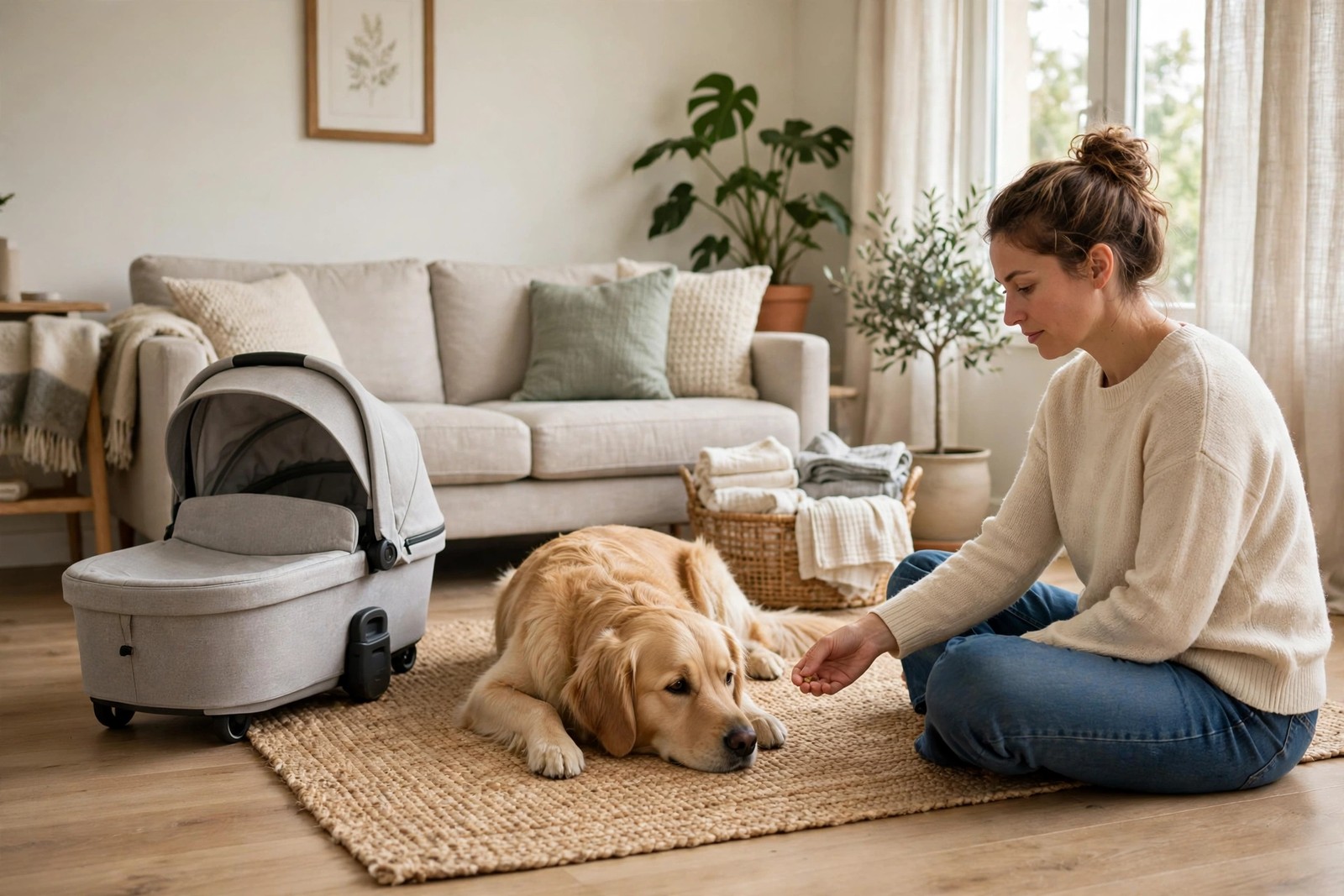
Your dog does not need to love the baby on day one. They need the baby's arrival to feel like a change they have already rehearsed: familiar sounds, familiar equipment, clear boundaries, and a routine that still includes them. Starting during pregnancy, in small calm steps, is what makes the first meeting uneventful — and uneventful is the goal.
Refresh the Skills the Baby Will Need From Your Dog
Do not teach new behaviour in the newborn weeks; polish it now. Practise settle on a mat until your dog can lie there relaxed while you sit, stand, and move around, because that mat becomes their station during feeds. Sharpen leave it, drop it, and a polite wait at doorways and stairs, and practise loose-lead walking at a slower, distracted pace.
If your dog jumps up for greetings, guards toys, or is unsettled by being approached while resting or chewing, work on those habits well before the birth, with a qualified trainer if any of them involve growling or snapping. A dog who is already worried needs professional support early, not experiments beside a newborn.
Make Baby Things Boring in Advance
Assemble the cot, pram, bouncer, and changing setup weeks ahead so they are furniture, not a one-day invasion. Let your dog investigate them calmly, then teach the boundaries: the nursery is entered by invitation, baby blankets and toys are not dog toys, and the dog's own bed and toys stay theirs.
Introduce the new smells gradually with items the baby will use, and play recordings of baby crying, gurgling, and screaming at low volume during relaxed moments, pairing the sounds with treats and normal activity. Raise the volume over days and weeks only while your dog stays relaxed. Practise walking the pram with the dog beside it before there is a baby in it, including turns, kerbs, and stopping.
Rehearse the New Routine
Shift feeding, walking, and playtimes gradually toward the pattern you expect after the birth, including whoever will cover the early weeks. Line up the dog walker, family help, or boarding option before you need it, and do a trial. Keep a basket of the dog's treats and a long-lasting chew ready for feeding times, so the baby being fed also predicts something good happening on the mat.
Plan the homecoming itself. Ideally the dog is walked and settled first, greets the returning parent without the baby in arms, then meets the baby in a calm room: lead on if you need it, dog free to approach and sniff briefly, rewarded for calm interest and for turning away. Keep it short and end it well.
Living Together in the First Months
Never leave a dog and baby together unsupervised, however gentle the dog, and use gates so the dog can see family life without always being in the middle of it. Watch your dog's body language — lip licking, yawning, moving away, freezing over the baby — and increase distance and rest if you see it. Give the dog a genuinely undisturbed retreat and keep their walks and one-to-one time protected; a dog whose life still contains them copes far better.
New rules fail when tired adults each enforce a different version. Chosen relatives can open the profile themselves via KinsLe Family Sharing.