
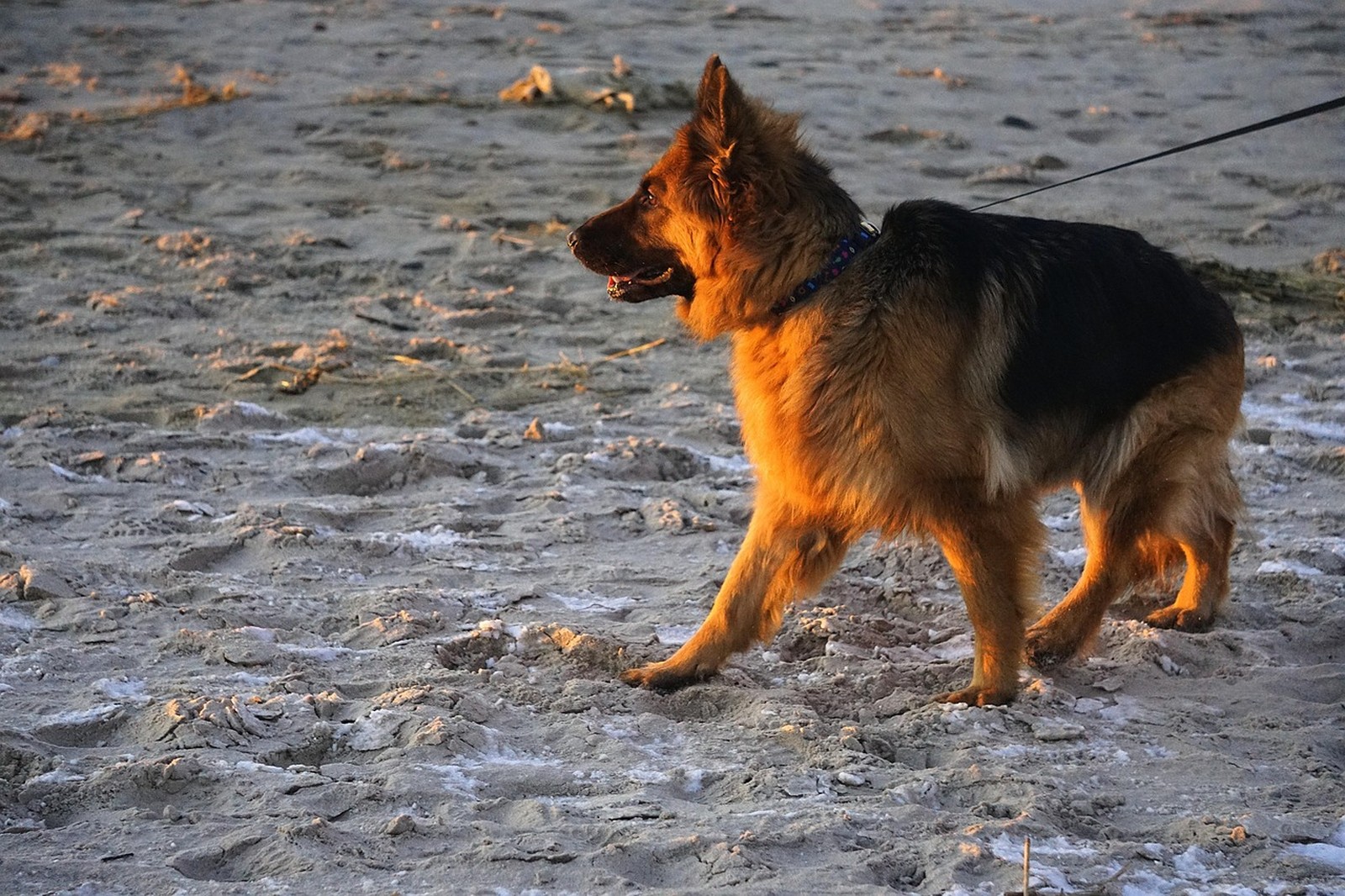
Territory Is Not a Detail to a Shepherd
A German Shepherd organises his life around a perimeter and a pack, and a house move removes both and rebuilds them somewhere that smells wrong. His preparation is therefore methodical: keep his training, exercise and feeding schedule running exactly as usual, keep handling cues identical whoever holds his lead, and give him early information about the new territory. Walk him to the new house if it is close, let him patrol the empty rooms on a lead, work a few familiar commands in the new garden, and leave while he is calm, so the first real arrival is a return to a place already filed in his mind.
His bed and blankets travel unwashed in your car, and his sleeping spot is the first thing established at the new address — a Shepherd who knows where he sleeps and where his post is has the framework he needs to relax.
The Garden Fence Audit Comes Before the Dog
Do the perimeter check before he ever sets paw in the new garden. Shepherds are tall, strong and motivated: a fence that contained a previous owner's smaller dog may be a suggestion to him, and a gate latch he can watch you operate is a latch he may learn. Walk the boundary looking for gaps at ground level, loose panels and anything stacked near the fence that works as a step. Check the front door and side gate habits of the new house too, because moving week means doors standing open, and a Shepherd heading out to investigate a strange street is gone at a speed nobody in the house can match.
On moving day he should be settled in a closed room with a sign on the door, or spending the day with someone he knows — never loose among the movers, where his size, his watchfulness and the constant open door form a bad combination. Brief the crew that he is on the premises.
Work Is What Drains the Vigilance
A Shepherd under-exercised during a stressful week becomes more vigilant, not less: pacing the fence line, barking at every new-house sound, shadowing you from room to room and sleeping lightly. Protect his full ration of exercise and training as non-negotiable appointments. Tracking and scent games suit the moving period particularly well — hide toys or treats in whichever garden is currently home and let him work the problem — because a Shepherd whose brain and nose are tired is a Shepherd who can switch off in a strange house at night.
Introduce new neighbours and their dogs on neutral ground on lead, briefly and calmly, during the first week. He will classify the street faster if his first encounters happen away from his own gate, where his guarding instincts are loudest.
First Fortnight: Patrols Become Routine
Walk the same routes morning and evening until they bore him slightly, then extend them. Expect the evening alertness — ears up at the new pipes, the new neighbours' car, the different pattern of footsteps outside — to fade as the sounds repeat without consequence. Keep evenings predictable, his bed in its place, and visitors briefed to let him approach them rather than crowding a dog still drawing his map.
If he slips a gate during the unsettled days, minutes matter and a dog this size can cover serious ground, so have his profile details and your current phone number up to date before moving day, and search the routes he already knows first — Shepherds head for the familiar, which may mean back towards the old house.
If the vigilance does not soften after a couple of weeks, his appetite drops, or reactivity to ordinary passers-by is growing rather than shrinking, loop in your vet; this breed carries tension in the body long after the boxes are gone.
For that worst-case moment, the free KinsLe Lost Pet Alert System can alert nearby Circle of Love members that he is missing and lets anyone who finds him message you directly through his alert.