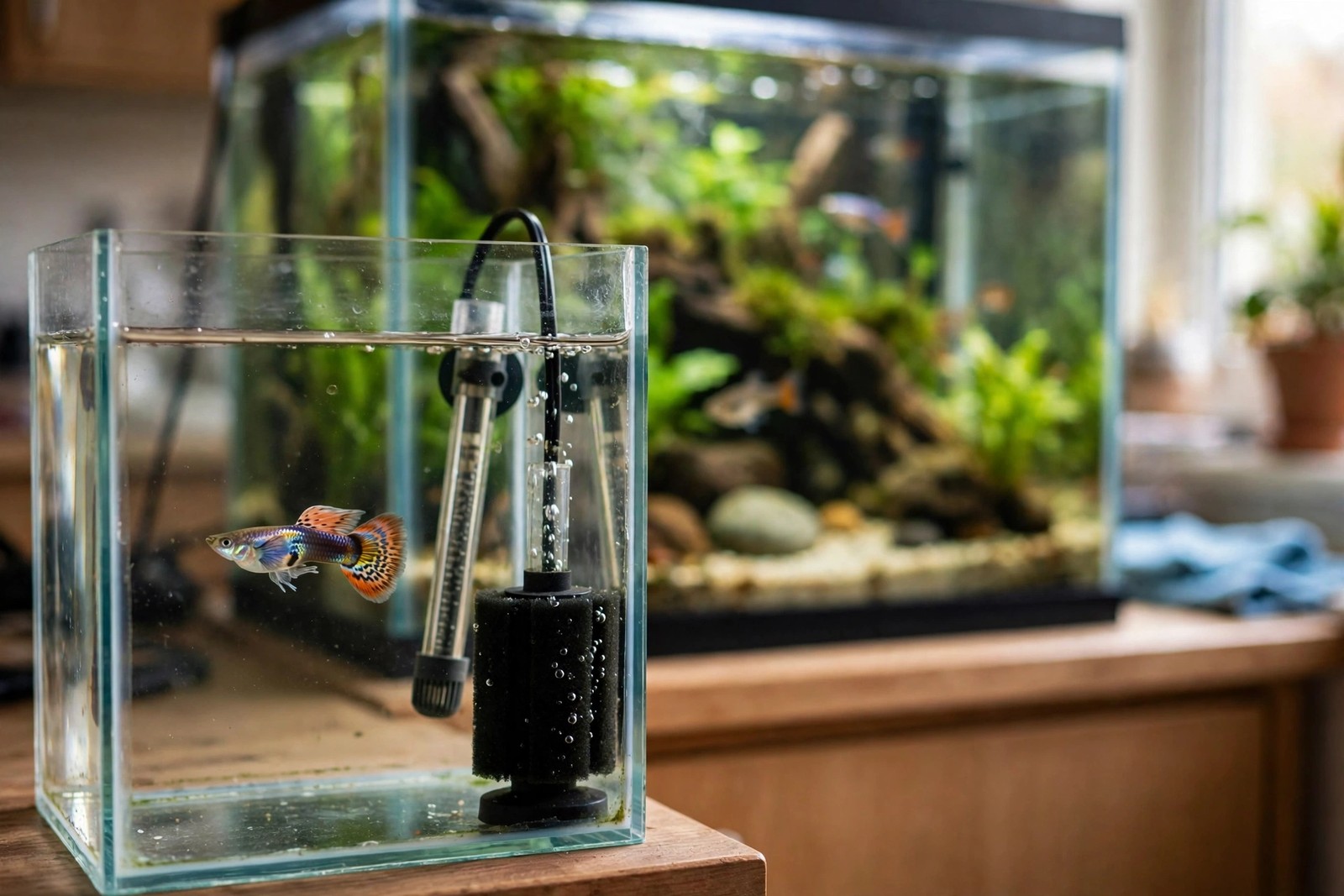
A separate observation tank is the barrier that keeps one new purchase from becoming a whole display tank's illness. Keep each arrival there for several weeks of watching before any introduction to your established stock. The setup can be simple: a modest bare-bottomed tank with its own heater and a sponge filter seeded from your main tank (or run with daily water attention), a cover, and places to hide, so the fish is calm enough to show its true behaviour. Observe daily for the quarantine period: appetite, swimming, fin condition, spots, fungus, flashing, and droppings. The point is ruthless and simple — most fish diseases arrive on new fish, and it is vastly easier to treat one fish in a bare tank than a whole community in a planted display.
Rules That Make Quarantine Actually Work
Separate means separate: no shared nets, siphons, or wet hands between tanks without washing and drying, because water carries the diseases you are screening for. Treat nothing 'just in case' unless you see something — prophylactic medication stresses fish and masks the symptoms you are watching for — but act decisively on real signs: extend the quarantine and treat in the quarantine tank on proper advice. Quarantine every addition, not just fish: new plants and invertebrates can carry hitchhikers and some fish pathogens, and a rinse-and-observe period protects the tank. At the end of a clean quarantine, acclimate the fish properly (temperature and water chemistry matched gradually) before release. Keep the quarantine tank available rather than packing it away: it doubles as your hospital tank, and its existence is one of the clearest markers of a serious fish keeper.
Turning quarantine notes into vet-ready evidence
A quarantine log earns its keep when a fish changes. Write down the day a spot appears, the morning appetite drops, or flashing starts, alongside that day's water readings in the quarantine tank, because a vet reads a dated sequence very differently from a worried summary offered from memory. Photograph a mark or film a strange swimming motion on the day you first notice it; comparing that image with the fish a week later shows whether a patch is spreading, holding or fading. General reading can help you judge urgency and decide what to track, but a diagnosis belongs to a veterinarian who can examine the fish and its history together.
If a quarantined fish shows spots, fungus, rapid breathing, or stops eating, extend quarantine and get specific advice — do not graduate a symptomatic fish into the main tank to 'keep an eye on it'.
Keep the log focused on this fish's quarantine rather than the whole household: entry date and source, daily appetite, any symptom with its start date, water readings, and what changed in the tank that week. That narrow record is what makes the next decision — extend, treat, or release — a judgement based on evidence. At the appointment, open the Pet Passport in KinsLe instead of relying on memory — its packet holds the quarantined fish's records, dates and history together for the vet.