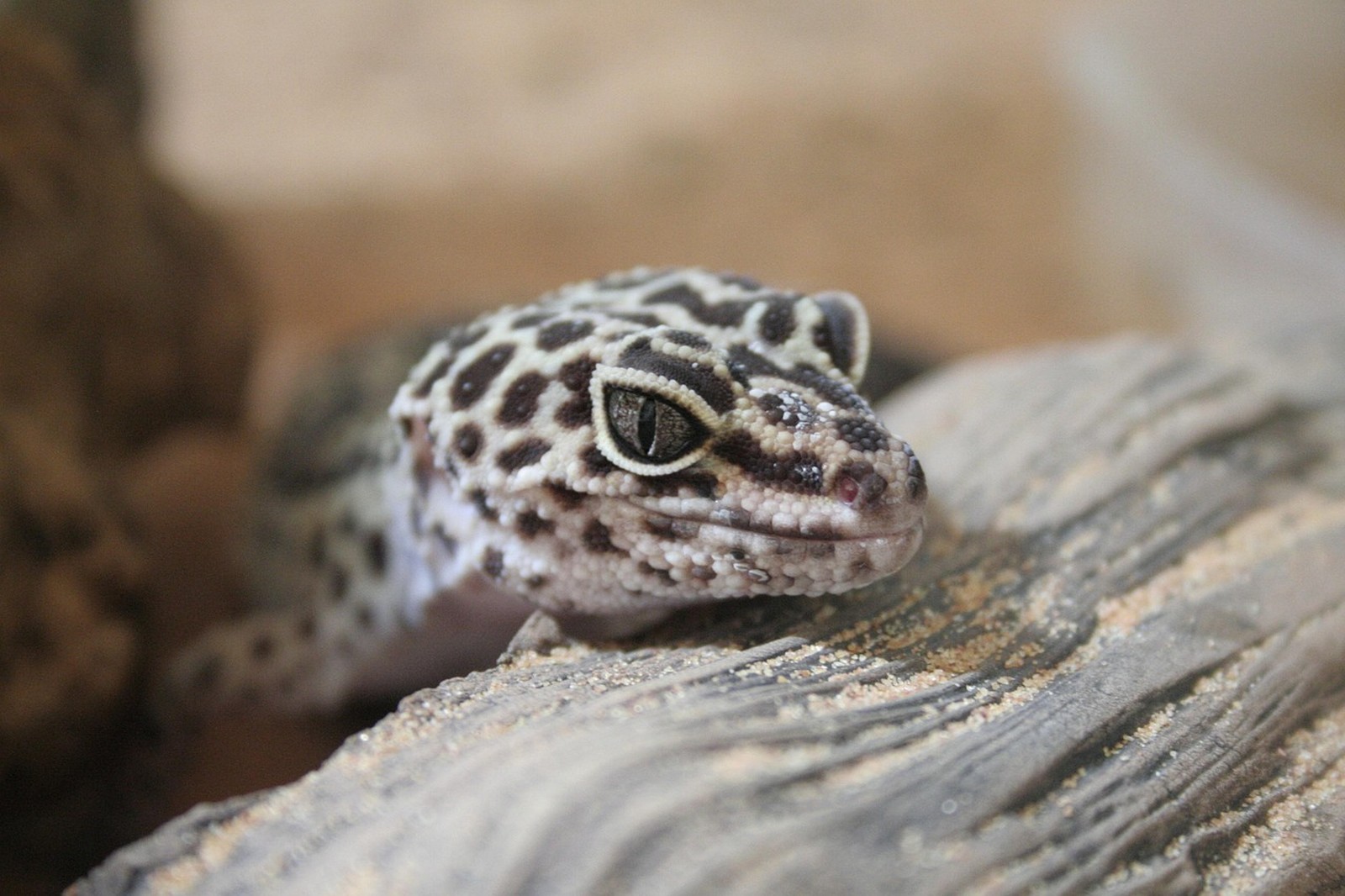
A humid hide is a small enclosed shelter whose damp lining creates a pocket of moist air inside an otherwise dry enclosure. Leopard geckos and crested geckos both benefit, though for different reasons: a leopard gecko needs the humidity boost at shedding time, while a crested gecko, which lives in a naturally humid enclosure, uses the hide as a consistently moist retreat. In both cases the hide does one job, softening old skin so it releases cleanly, and it only works if it stays damp, warm, and clean.
Choose and Position the Hide
Pick a hide with solid walls, a solid roof, and a single entrance just large enough for your gecko to enter without squeezing, since it is the solid walls, roof and single entrance that trap the moisture inside. A purpose-made humid hide, a plastic container with a smooth entrance hole cut in the side, or a ceramic cave all work, provided the edges are smoothed and the hide cannot tip. Set it on the warm side of the enclosure for a leopard gecko, where the heat turns the damp lining into warm humidity, and in a sheltered middle zone for a crested gecko, where the temperature stays comfortable without drying the lining too fast. The hide should be large enough for your gecko to turn around inside, and small enough that the interior stays humid rather than airy. Do not place it over a heat mat's hottest point, and keep the entrance facing away from the enclosure's main light.
Line It and Keep It Damp
Line the floor of the hide with damp sphagnum moss or a folded damp paper towel. Moss holds moisture longer and gives a natural texture, while paper towel is simpler to replace and makes shed skin easy to spot. Either way, the lining should feel moist when squeezed, never dripping: wring out excess water before placing it, and check that no standing water pools inside the hide, since a wet floor chills a gecko and breeds bacteria. Check the lining daily, and re-dampen it with a spray bottle whenever the surface feels dry to the touch. Replace a paper towel lining at least twice a week, and replace moss before it smells musty, darkens, or develops visible mould. Clean the hide itself weekly with plain warm water, rinsed thoroughly, and let it dry before relining it.
How the Hide Helps Shedding
A gecko sheds by rubbing against surfaces and then peeling the skin away in pieces, and dry skin tears instead of releasing. Inside the humid hide, the moist air softens the old skin, and the gecko's own movement through the moss does the rest. Watch the toes and the tail tip most closely after a shed, because those narrow parts are where stuck skin constricts blood flow and, over repeated sheds, can cause a toe or tail tip to be lost. If a small piece remains after a shed, a short lukewarm soak and a damp towel crawl will usually finish it, and the humid hide should stay in place through the next shed cycle as well. A gecko that never uses the hide may need a smaller entrance, a darker hide, or a different position, so try one change at a time.
Keep It Working All Year
A humid hide is not a shedding-season gadget. Keep it in the enclosure permanently, with the daily moisture check built into the feeding routine, so it is ready when a shed begins rather than assembled after stuck skin appears. Note in your care log when the lining was changed and whether your gecko used the hide, because a sudden refusal of a previously favoured hide can signal a temperature change or a dirty lining. KinsLe's Care Teams turns the daily moisture check and the lining change into assigned duties for a named keeper, marked complete with a timestamp, so the hide stays damp even when care is shared.