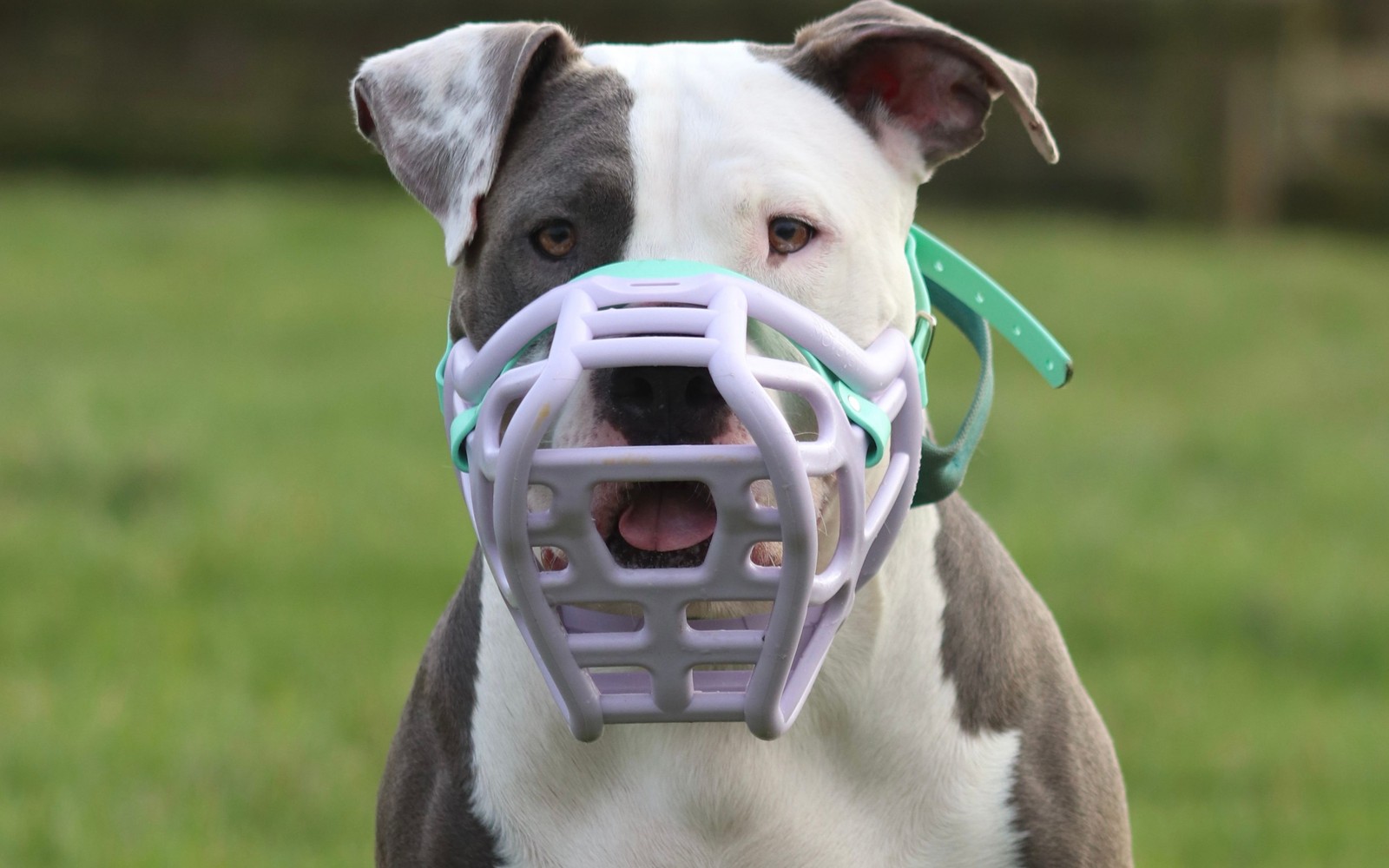
Start muzzle training by choosing a basket-style muzzle your dog can pant, drink, and take treats through, then spend days — not minutes — teaching your dog that the muzzle itself predicts good things. Let them sniff it, reward them for touching it with their nose, and only gradually add straps and wear time. Never debut a muzzle by strapping it on for a stressful vet visit or nail trim; that teaches your dog the muzzle means trouble.
Pick the right muzzle first
Fit matters more than speed. A basket muzzle — wire, plastic, or biothane — holds its shape away from the nose, so your dog can open their mouth to pant fully, lap water, and accept small treats. Cloth or mesh muzzles that hold the mouth shut are only for very brief procedures under professional guidance; a dog who cannot pant cannot cool down, which is dangerous in heat or stress.
Measure your dog's snout length and circumference following the maker's guide, and check that the basket doesn't press the eyes or rub the top of the nose. Greyhound-long snouts, flat-faced breeds, and broad-headed dogs often need different shapes, so expect a little trial and error. A muzzle your dog will wear happily for a walk is worth the extra fitting time.
Days one to three: the muzzle is a treat cup
Set the muzzle on the floor and reward your dog for investigating it. Then hold it like a cup, smear a little soft food or peanut butter (xylitol-free) inside, and let your dog push their own nose in to lick it out. Nobody fastens anything. Repeat in short bursts — eight to ten easy reps is plenty — then put the muzzle away.
The details that make this work:
- Let your dog choose to approach and insert their nose; never push the muzzle onto their face
- Mark the moment the nose goes in — a cheerful "yes!" or a click — then feed through the basket
- End while your dog still wants more, ideally before any pawing or backing away
- Practice in a boring room first, not the vet's parking lot
Days four to seven: straps, seconds, and movement
Once your dog is diving in eagerly, rest the strap behind the ears without fastening it, reward, and remove. Then fasten it for two or three seconds, feed generously, and take it off. Build duration in small jumps — ten seconds, thirty, a minute — mixing in easy movement: a lap of the garden, a few steps on leash, a game your dog enjoys. If your dog paws at the muzzle or goes still and tense, you moved too fast; drop back to the last easy step next session.
Some dogs take two weeks to reach a relaxed ten minutes, and that's fine. A Dachshund worried by handling and a confident young Labrador will not share a timeline.
Troubleshooting and safety checks
Check the fit weekly on growing puppies, and inspect straps for chewing damage. Never leave a muzzled dog unsupervised, never use a muzzle to push a dog into situations they're not ready for, and remember a muzzle is management, not training by itself — a dog who is terrified at the vet still needs a behavior plan, not just equipment. If your dog panics despite a slow build-up, a trainer can spot what you're missing.
Consistency is what turns this from a project into a habit, and that's where KinsLe helps: Kimmy, the built-in AI assistant, can remind you to run those short daily practice sessions and nudge you when a few days slip by. Log your dog's muzzle size and what rewards worked best on their profile so anyone in the family can repeat the same routine. Want more step-by-step training help like this? Kimmy on KinsLe can answer follow-up questions about a dog who paws at the straps or stalls at thirty seconds, with replies drawn from the KinsLe Answers library.