
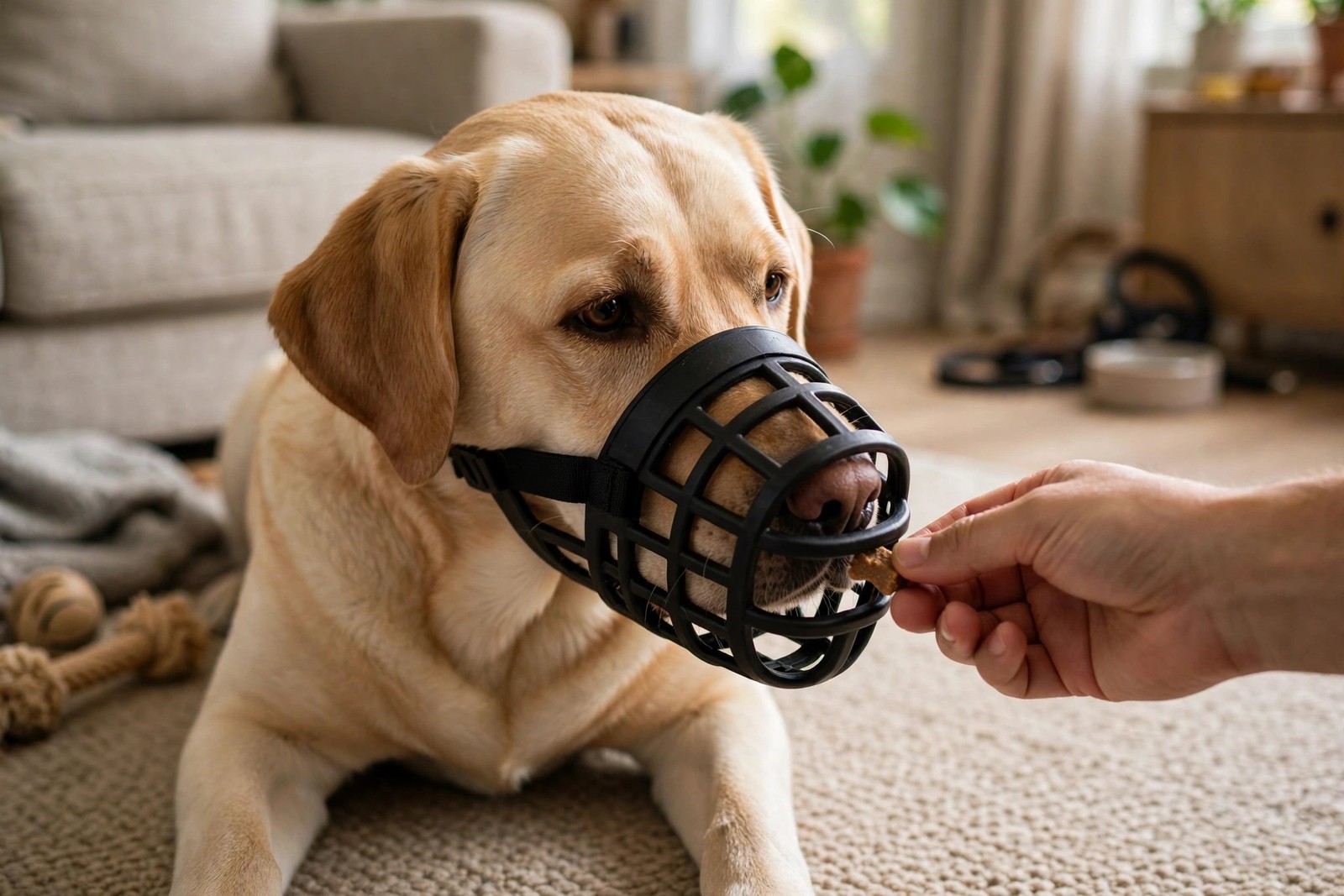
A muzzle-trained dog walks into the vet wearing something familiar and boring. A dog whose muzzle appears only in the waiting room has learned the opposite lesson, and no amount of reassurance on the day will undo it. The whole job is done at home, in advance, in steps so small the dog barely notices them adding up.
Choose the Right Muzzle First
Fit governs everything, so choose a basket muzzle — a rigid or sturdy framed design with a cage over the mouth — rather than a fabric sleeve that holds the jaws shut. A dog in a basket muzzle can pant with his mouth open, drink, and accept treats through the bars, which makes training possible and wearing it safe for more than a few minutes; a sleeve muzzle prevents proper panting and belongs, if anywhere, only in brief, supervised handling at the clinic itself. Measure the snout's length and circumference as the maker directs, and check the fit honestly: the basket should clear the eyes, sit without pressing the nose tip, and stay on when the dog shakes and lowers his head, with the strap secure behind the ears. If he will wear it on hot days or through a long appointment, that panting room is not a comfort detail — it is how dogs regulate temperature.
The Steps, Across Days Not Minutes
Spread soft food inside the basket and let him push his own nose in to lick it out, holding the muzzle still and letting him withdraw freely — his choice to enter is the foundation everything else sits on. Repeat across several short sessions until the muzzle appearing means he pushes forward eagerly. Only then add the strap, fastened for two or three seconds while a treat arrives, then off again. Build duration in small increments over days, and once he wears it calmly for a minute, attach the wearing to good things: a walk around the garden, gentle play, a wander to the car. Sessions stay short — a few minutes, several times a day beats one long drill — and every session ends while he is still relaxed. Pawing, freezing, or rubbing at the muzzle means the last step was too big; go back one stage, not forward.
Practise the Vet Visit, Not Just the Muzzle
A muzzle alone does not prepare a dog for what actually happens at the clinic. At home, pair the muzzle with calm mock handling: a hand resting on the shoulder, ears lifted briefly, a paw picked up, standing still on a mat while someone leans over him — each followed by a treat through the basket. Practise the car journey and a short wait in an unfamiliar place with the muzzle on, so its first public outing is not the highest-stress day of his year. Tell the clinic in advance that he will arrive muzzled and is trained to it; good practices note it on the record and it saves an awkward negotiation in the waiting room.
What Never to Do
Never force a muzzle onto a frightened dog for the first time in the car park, never use it as punishment or leave a muzzled dog unsupervised, and never assume that because he tolerates it at home he is finished — refresh the training with a few easy, rewarded repetitions in the days before each appointment, especially if months have passed. Puppies can start the nose-in game young, treating it purely as a treat dispenser long before straps matter. Consistency across the household is what makes the steps stick, and KinsLe's Care Teams helps you hold it: set the daily practice as an assigned duty, rotate who runs it, and each completed session is marked with a timestamp so everyone can see the training progressing rather than guessing.