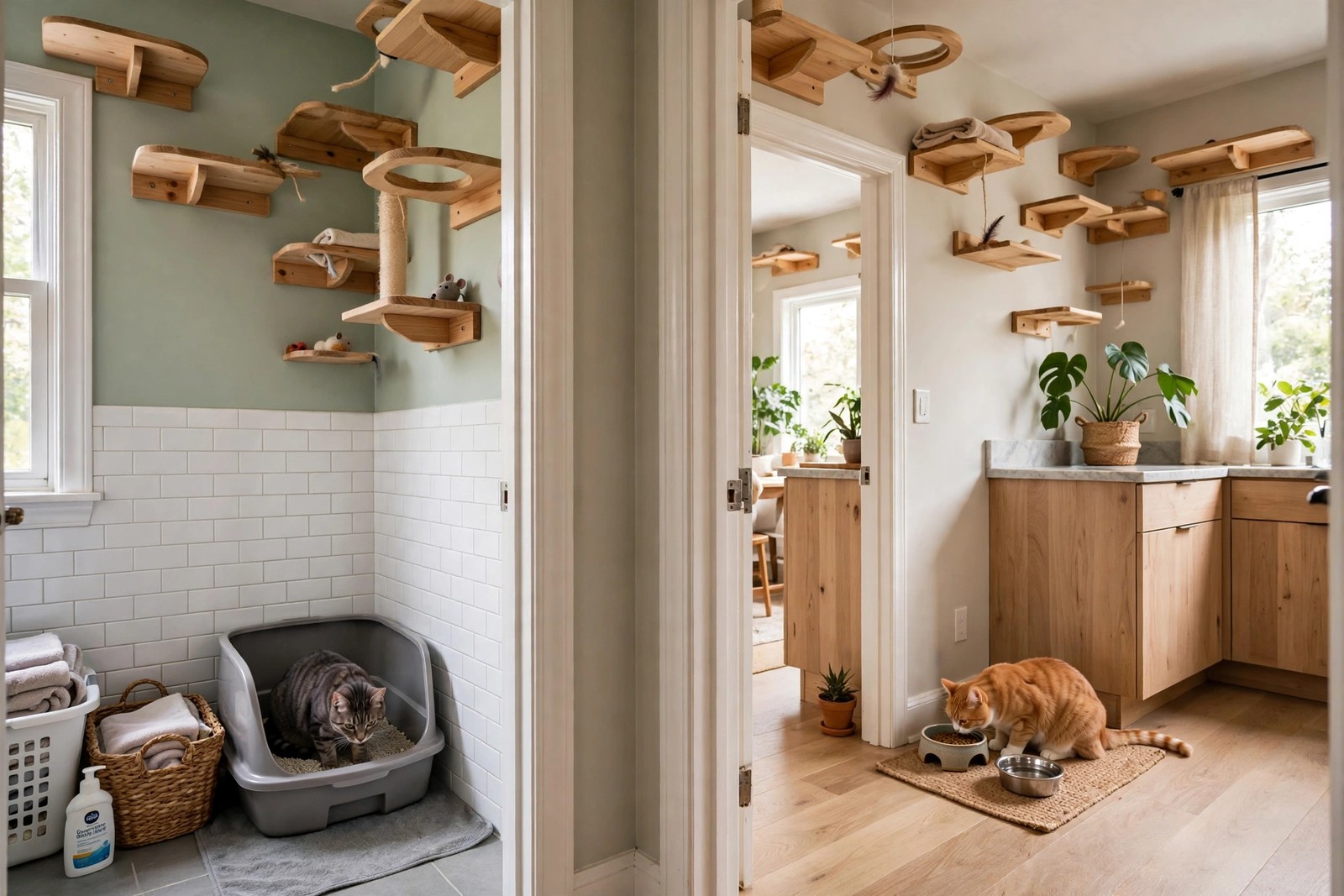
A cat who guards every litter tray is not being spiteful — it has decided the home's key resources sit in places it can control. The fix is not scolding and it is certainly not punishment, which only raises the tension around the trays. The fix is geography. Spread the stations through the home until there is nothing left worth guarding, and the guarding cat's whole strategy quietly stops paying.
Spread the Litter Trays Apart
Begin with the trays, because they are the prize. Trays lined up in one room can be guarded from a single doorway, so move them into genuinely separate areas: one near where the cats sleep, one at the far end of the home, one in a quiet corner the guarding cat rarely visits. The common guidance is one tray per cat plus a spare, and in a guarding situation the spare matters most — it is the tray nobody has claimed yet, placed where the guarded cat can reach it without an ambush.
Keep the new trays inviting: scooped often, filled with the litter the cats already accept, and positioned so a cat using one can see the room rather than facing a wall with its back to approaching trouble. A tray in an open, observable spot feels safer to a nervous cat than a hidden one it can be cornered in.
Separate Food and Water the Same Way
Guarding usually extends beyond litter. If all food sits in one kitchen corner, the same cat controls breakfast too, and the quieter cat learns to eat in anxious bursts or skip meals. Double the feeding arrangement: two food stations in different rooms, fed at the same time, so the guarding cat cannot be in both places and must choose one. Do the same with water, placing a second bowl well away from food and from the guarding cat's favorite resting spots.
Watch the first days closely: the guarded cat eating a full, relaxed meal at the far station is the clearest sign the pressure is lifting.
Add Vertical Territory and Escape Routes
Floor space is what gets guarded; height is harder to monopolize. Add vertical territory — shelves, perches, or a tall cat tree positioned along the routes cats travel — and you add a second map of the home that the guarding cat cannot patrol all at once. Vertical routes also give the guarded cat dignified exits. Every room where confrontations happen should offer an escape route that does not require passing the guard: a second doorway, a perch-to-perch path overhead, or furniture arranged so a cat can slip behind and away.
Never Punish the Guard
It is tempting to scold the cat doing the guarding, but punishment teaches it that the tray area is even more stressful and contested than it believed, and guarding usually gets worse, sneakier, or both. If guarding escalates into attacks, or a cat stops eating or starts avoiding trays entirely despite the spread, a vet visit is the right next step to rule out pain or illness feeding the tension.
Running the Spread as a Household Plan
Write the plan down with names attached: one person scoops every tray each morning and notes which were used, another resets the food and water stations in the evening, and a third checks on weekends that perch routes and escape paths are still clear of moved furniture or stored boxes. Small, assigned, repeated — that is what keeps a spread of stations actually clean and available instead of drifting back to one neglected tray. Once the new layout settles, KinsLe keeps everyone's observations in view, and Care Teams divides litter scooping, water refreshes, and station resets among the household by name.