
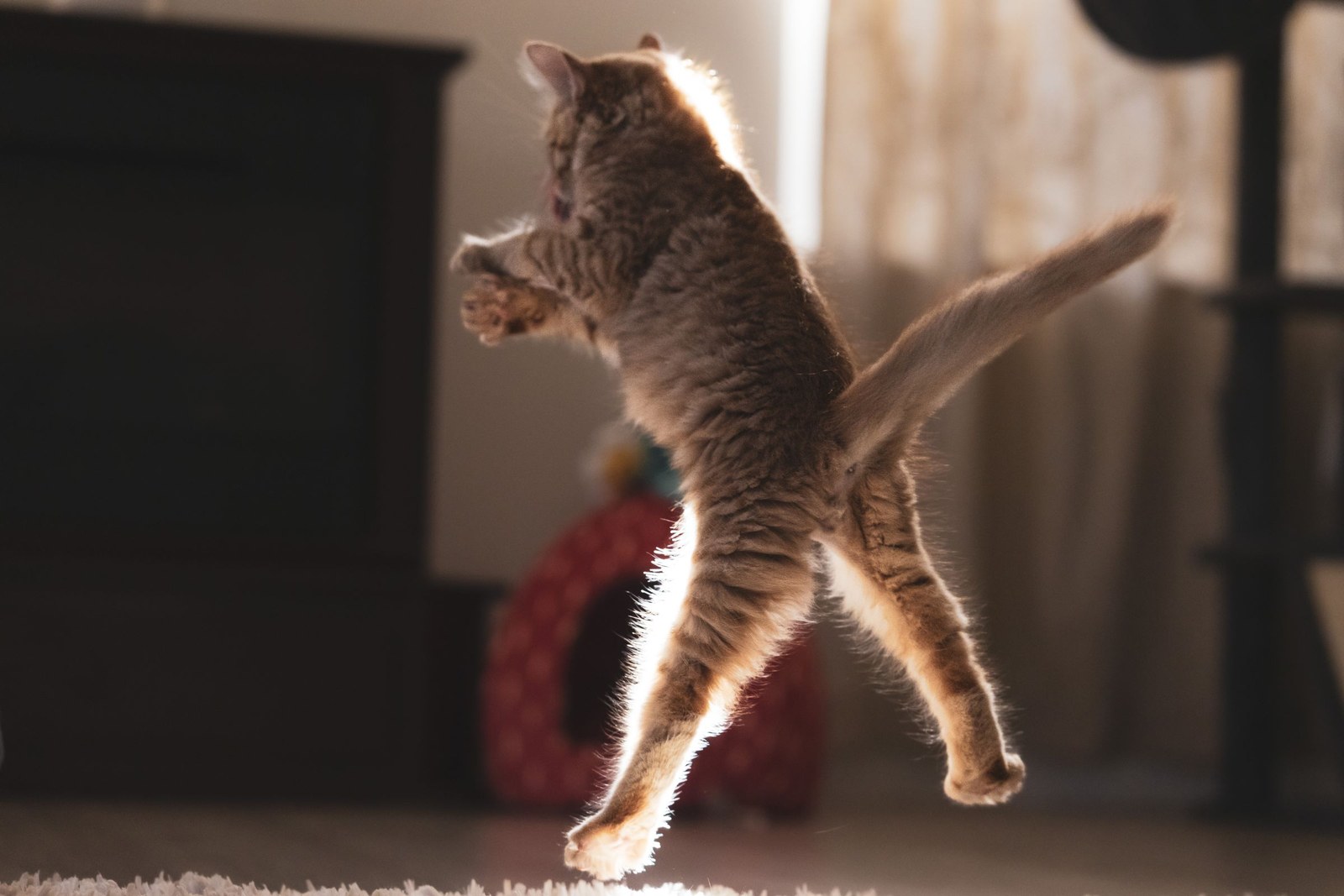
Your cat is wide awake at 3 a.m. because her body clock peaks at twilight, and a day spent dozing while you are out leaves her fully charged exactly when you want sleep. The racing, yowling, and furniture parkour are not spite. They are a hunting animal's energy with nowhere scheduled to go, and you can shift it earlier.
The crepuscular clock you are living with
Cats are crepuscular, meaning their natural peaks fall at twilight, when prey animals are active. Indoor life blurs that pattern but does not erase it. A cat who naps from breakfast until you get home, then dozes again while you watch television, has effectively had a long afternoon siesta before a night shift she fully intends to work. Age and health shape the pattern too. Kittens and young adults are the champion midnight sprinters. Senior cats are usually calmer at night, so a marked change in an older cat — new restlessness, loud night vocalizing, or pacing — deserves a conversation with your veterinarian rather than just a new toy.
The hunt, eat, sleep routine that actually helps
Work with the instinct instead of fighting it. In the hour before your bedtime, run a proper play session of ten to fifteen minutes with a wand toy: let your cat stalk, chase, catch, and "kill" the toy, slowing the pace at the end so the hunt winds down instead of stopping mid-chase. Follow it immediately with a small meal or the last portion of her dinner. That sequence — hunt, catch, eat, groom, sleep — mimics what a cat's body expects after activity, and it is far more effective than a tired toss of a toy mouse from the sofa. Split dinner if needed: part at your dinnertime, part after evening play. A cat put to bed hungry will simply move the party to 3 a.m. with added commentary.
Fix the daytime side of the equation
Night energy is partly a daytime boredom problem. Add stimulation while you are out: a window perch with a view of birds, rotating toys rather than the same five on the floor, cardboard boxes and paper bags (handles removed) to explore, and puzzle feeders for part of the daily ration. If you work from home, a short midday play burst helps too. Equally important: do not reward the 3 a.m. performance. Getting up to feed, play, or even scold teaches your cat that night noise summons you. Use earplugs through the adjustment period if you need them, keep bedroom-door policy consistent, and make sure litter, water, and a cozy sleeping spot are available outside your room so she is not waking you for a genuine need.
Safety during the zoomies
Most midnight racing is harmless, but do a quick sweep of the racetrack. Secure loose cords, put breakables off the usual launch pads, and check that heavy objects on shelves above favorite sprint routes are stable. Kittens especially can knock, chew, and swallow things in the dark that they would ignore by day, so small toys with detachable parts belong in a drawer overnight. Expect the shift to take a week or two of consistency, not one good evening. When you need another wind-down game to keep the sequence working, put a follow-up question to KinsLe's Kimmy; she answers using the KinsLe Answers library.