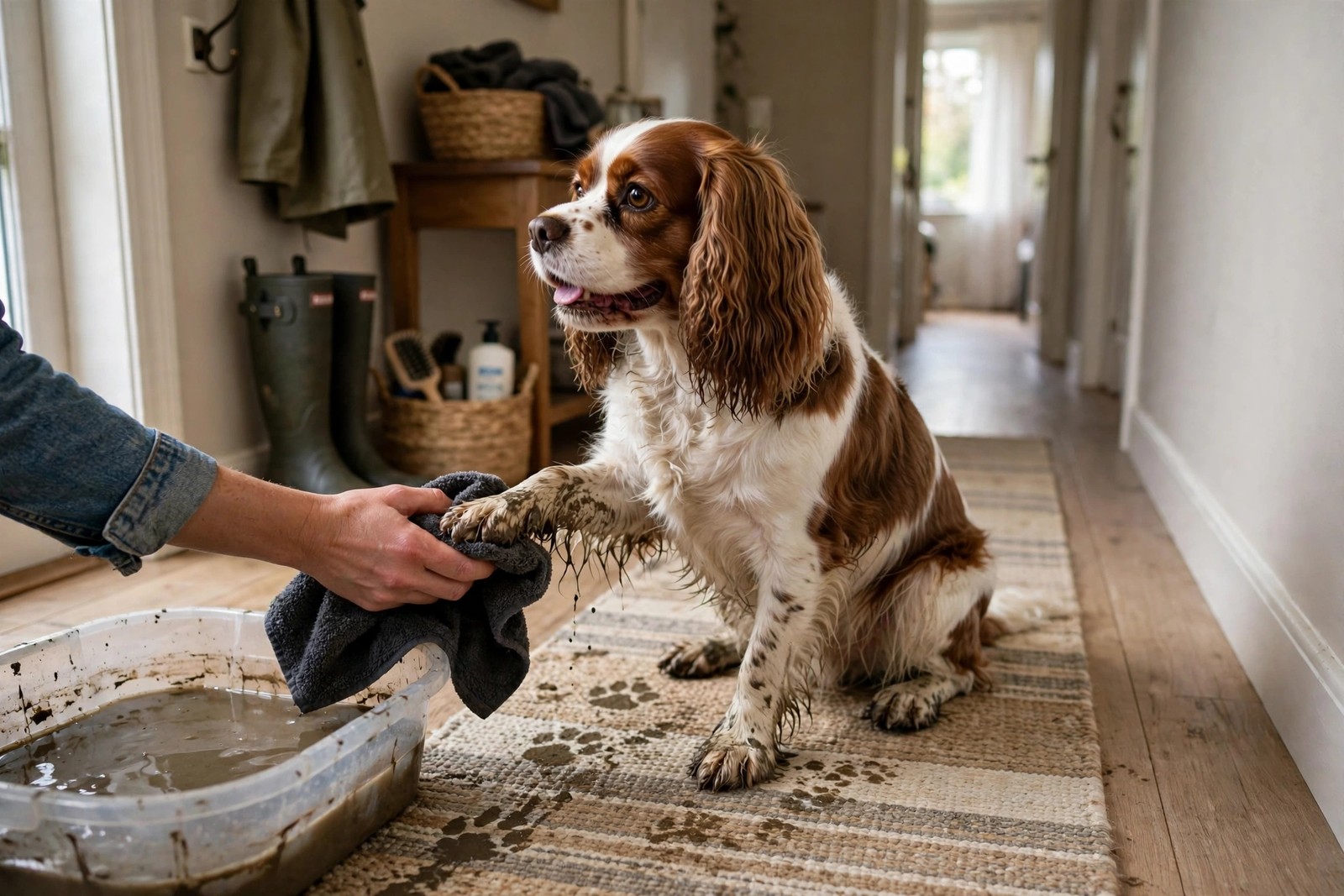
Muddy paw prints are not really a cleaning problem; they are a doorway problem. A dog crosses from garden to carpet in about four strides, so everything that stops the trail has to happen in those four strides — a surface that grabs mud, a pause long enough to wipe, and a routine every person in the house runs the same way.
Build the Station at the Door You Actually Use
Put a long, washable runner or mat inside the door the dog uses most, long enough that he takes several steps on it even without stopping — each step on a textured mat sheds a share of the mud. Add a mat outside the door too, so the worst comes off before the threshold. Within arm's reach, keep a stack of dark towels, a shallow tub or wide bowl for paw-dunking, and a hook for a lead so he cannot wander off mid-wipe. In very wet spells, a washable runner continuing down the hallway to his usual settling spot catches what the doorway missed, and hard flooring in that first room beats carpet you cannot hose down.
Teach the Pause, Then Wipe Properly
A wipe only happens if the dog waits for it. Practise on dry days: come in, cue a sit or stand-stay on the mat, reward, then release — so the pause is trained before it is muddy and urgent. When he is wet, work paw by paw: cup the paw in the towel and squeeze gently, then spread the toes and wipe between them and around the pads, where mud packs and grit hides. For caked mud, dunk each paw in the lukewarm water, swish, and towel dry; plain water is enough for everyday dirt. Finish with the belly splash zone on low-slung dogs, and check between the pads for grit, seeds or small stones before he walks on.
Reduce the Mud Before the Door
Trim the tufts of fur between his pads level with the pads — that fur acts like a mop and holds mud and snow. Keep nails short so they pick up less soil. In the garden, a strip of gravel, bark or paving on the muddiest run to the door, and a fence panel closing off the boggiest corner in winter, cut the load at the source. Dogs who hate wiping often accept purpose-made boots after a few indoor practise sessions with treats, and boots turn the worst weather into a thirty-second job — but introduce them paw by paw, not all four on the first walk.
Keep Floors and Paws Healthy While You Are at It
Wash runners and towels on rotation so the station never smells like the swamp it stops. Paw washing has a limit: daily soaking with harsh products dries pads out, so save full washes for real mud, use plain water mostly, and watch for cracked pads, redness between the toes or persistent licking, which deserve a vet's look rather than more washing. Salt and grit in winter should always be rinsed off, since dogs lick it from their feet. The routine only survives if nobody skips it when they are in a hurry. His profile can be shared with family members you select, using KinsLe Family Sharing.